Uncategorized

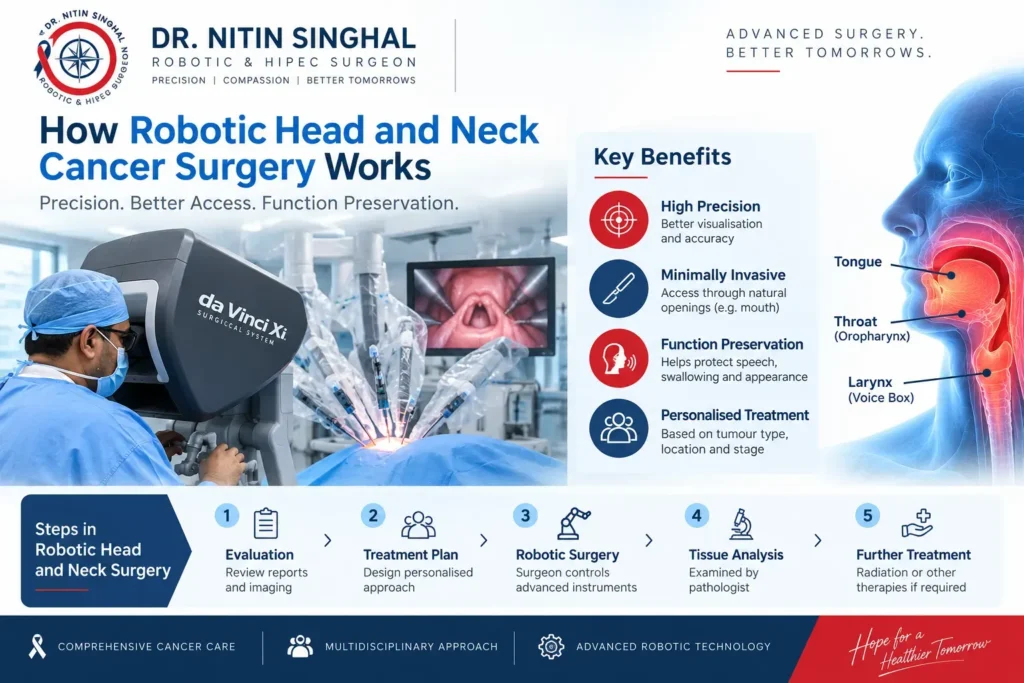
How robotic head and neck cancer surgery works, showing robotic-assisted surgery, treatment planning, tumour evaluation and minimally invasive surgical techniques

Robotic Head and Neck Cancer Surgery: A Modern Approach to Precise Cancer Treatment

Head and neck cancers can affect important areas involved in speaking, swallowing, breathing and eating. Because these structures are closely connected, treatment needs to address the cancer while considering the preservation of important functions whenever possible. Depending on the type, location and stage of cancer, treatment may involve surgery, radiation therapy, chemotherapy, targeted therapy, immunotherapy, or a combination of treatments. In selected patients, robotic-assisted surgery may be considered as a minimally invasive surgical approach. One example is Transoral Robotic Surgery (TORS), where the surgeon uses robotic instruments through the mouth to reach certain tumours in the throat and related areas. For patients searching for a robotic head and neck cancer surgeon in Ahmedabad, understanding the procedure, potential benefits, limitations and recovery process can help them have a more informed discussion with their cancer specialist. What Is Head and Neck Cancer? Head and neck cancer is a broad term used for cancers that develop in different areas of the head and neck. These may include cancers of the: One of the common groups of head and neck cancers is squamous cell carcinoma, which develops from the thin cells lining areas such as the mouth and throat. Risk factors can include tobacco use, heavy alcohol use and certain HPV infections. However, having a risk factor does not necessarily mean a person will develop cancer. What Is Robotic Head and Neck Cancer Surgery? Robotic head and neck cancer surgery is a type of robotic-assisted minimally invasive surgery used in selected cases. The robotic system does not independently perform the operation. Instead, the surgeon controls the robotic instruments from a console. A camera provides a magnified view of the surgical area, while specialised instruments allow controlled movements. For some tumours in the throat and oropharynx, Transoral Robotic Surgery (TORS) may allow the surgeon to approach the tumour through the mouth rather than making a traditional external neck incision. However, robotic surgery is not appropriate for every head and neck cancer. The decision depends on factors such as tumour location, size, cancer stage, involvement of surrounding structures, previous treatments and the patient’s overall health. How Does Robotic Head and Neck Cancer Surgery Work? The exact procedure varies according to the location and type of cancer. A typical treatment pathway may include the following steps: 1. Detailed Evaluation The surgeon reviews your symptoms, medical history, biopsy reports and previous treatment. 2. Imaging and Cancer Staging Tests such as CT, MRI or PET scans may be recommended to understand the location and extent of the disease. 3. Treatment Planning The cancer team determines whether surgery is appropriate and whether a robotic approach may be suitable. 4. Robotic-Assisted Procedure If robotic surgery is appropriate, the surgeon controls specialised robotic instruments to remove the tumour. 5. Lymph-Node Assessment Depending on the cancer, lymph nodes in the neck may need to be assessed or removed as part of treatment. 6. Pathology Examination The removed tissue is examined by a pathologist. The findings can help determine tumour characteristics, margins and whether additional treatment may be required. 7. Additional Cancer Treatment Depending on the pathology and cancer stage, some patients may require radiation therapy, chemotherapy, targeted therapy or immunotherapy. What Is Transoral Robotic Surgery (TORS)? Transoral Robotic Surgery, commonly called TORS, is a robotic-assisted technique in which selected tumours of the mouth and throat are approached through the mouth. The surgeon controls the robotic instruments while viewing the surgical area through a specialised camera system. One potential advantage of this approach is that selected patients may avoid a traditional external incision in the neck. However, TORS is not suitable for every tumour. The tumour’s location, size, extent and relationship with surrounding structures need to be evaluated before this approach is considered. Which Head and Neck Cancers May Be Considered for Robotic Surgery? Robotic techniques may be considered for selected cancers depending on their location and stage. Oral Cavity and Tongue Cancer Cancers affecting parts of the mouth or tongue may require surgery depending on their size, location and extent. Treatment planning also considers how surgery could affect functions such as speech, swallowing and eating. Oropharyngeal Cancer Selected cancers involving the oropharynx, including certain tonsil and tongue-base tumours, may be evaluated for transoral robotic surgery. Throat Cancer Some tumours involving areas of the throat may be approached using minimally invasive techniques when anatomically suitable. Laryngeal Cancer Treatment for laryngeal cancer depends heavily on the tumour location and stage. Surgery, radiation therapy and other treatments may be considered. Neck Lymph-Node Disease Some patients with head and neck cancer require surgery to evaluate or remove lymph nodes in the neck. The extent of surgery depends on the cancer and lymph-node involvement. Salivary Gland Tumours Salivary gland tumours may require surgery depending on their type, location and whether they are benign or malignant. Potential Benefits of Robotic Head and Neck Surgery Robotic surgery can offer technical advantages in appropriately selected patients, although the potential benefits vary from person to person. Smaller or Hidden Incisions Some robotic approaches allow access through natural openings such as the mouth or through smaller incisions. Enhanced Visualisation The robotic system provides a magnified view of the operative area, which may help the surgeon work around delicate anatomical structures. Instrument Flexibility Specialised robotic instruments can provide controlled movement in confined surgical spaces. Minimally Invasive Approach When appropriate, a minimally invasive approach can reduce the amount of tissue disruption compared with certain open procedures. Consideration of Functional Outcomes Head and neck cancer treatment requires careful consideration of functions such as swallowing, speech and breathing. It is important to understand that robotic surgery does not guarantee better cancer outcomes for every patient. The suitability of the approach depends on the individual cancer. Robotic Surgery vs Traditional Open Surgery Robotic and open surgery are different approaches, and the appropriate method depends on the patient’s cancer. Feature Robotic-Assisted Surgery Open Surgery Surgical access Minimally invasive in selected procedures May require a larger external incision Visualisation Camera-assisted magnified view Direct surgical view Instruments Robotic-assisted instruments Conventional

Robotic Head and Neck Cancer Surgery: A Modern Approach to Precise Cancer Treatment Read More »
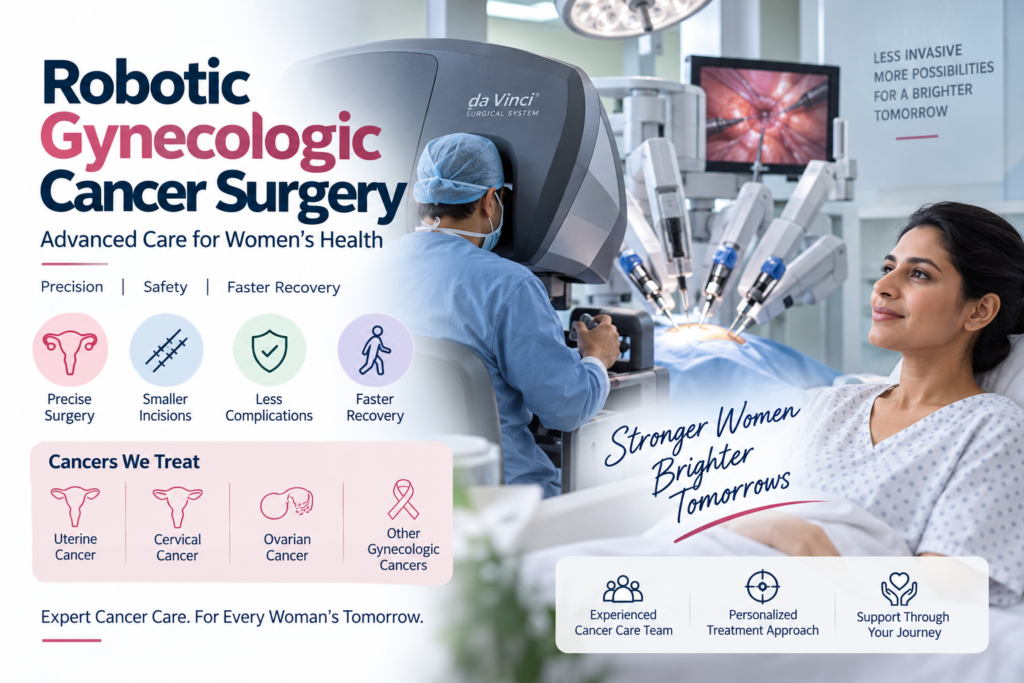
Robotic Gynecologic Cancer Surgery in Ahmedabad

Robotic Gynecologic Cancer Surgery in Ahmedabad: A Complete Guide

A diagnosis of gynecologic cancer can be overwhelming. Along with understanding the cancer itself, patients and families often have questions about surgery, recovery, treatment options, and whether minimally invasive techniques may be suitable. Advances in surgical technology have introduced robotic-assisted surgery as an option for selected patients with gynecologic cancers. Robotic surgery allows a trained surgeon to operate through small incisions using a specialized robotic platform that provides magnified, high-definition visualization and precise instrument control. However, robotic surgery is not automatically the best choice for every patient. The appropriate surgical approach depends on the type and stage of cancer, tumour location, anatomy, previous treatments, overall health, and the surgeon’s assessment. For patients considering treatment in Gujarat, understanding robotic gynecologic cancer surgery in Ahmedabad can help them have a more informed discussion with their cancer surgeon. What Is Robotic Gynecologic Cancer Surgery? Robotic gynecologic cancer surgery is a minimally invasive surgical approach used in selected cases of cancer affecting the female reproductive system. The robotic platform does not independently perform the operation. The surgeon controls the instruments from a console and guides every surgical movement in real time. The system can provide: These features can be useful when performing technically demanding pelvic procedures. The goal is not simply to use advanced technology. The goal is to select the surgical approach that can safely and effectively treat the cancer while considering the patient’s recovery and quality of life. Which Gynecologic Cancers May Be Considered for Robotic Surgery? Robotic surgery may be considered for selected patients with certain gynecologic cancers. Depending on the diagnosis and stage, this can include: Uterine Cancer Uterine or endometrial cancer develops in the lining or other tissues of the uterus. For selected patients, minimally invasive surgery may be considered for removal of the uterus and other structures or lymph nodes when clinically appropriate. Cervical Cancer Cervical cancer develops in the cervix, the lower part of the uterus. Treatment depends significantly on the stage and characteristics of the cancer. Surgery may be appropriate for selected early-stage cases, while other patients may require radiation, chemotherapy, or combined treatment. The surgical approach should be decided after proper staging and evaluation. Ovarian Cancer Ovarian cancer requires careful assessment because it can spread within the abdomen and pelvis. Surgery for ovarian cancer may involve more extensive procedures depending on the stage and spread of disease. Robotic surgery may be considered in selected situations, but it is not appropriate for every ovarian cancer patient. Other Gynecologic Malignancies Some other cancers affecting the female reproductive system may also require surgery as part of treatment. Because each cancer behaves differently, treatment should be individualized rather than choosing robotic surgery simply because it is available. How Does Robotic Gynecologic Cancer Surgery Work? During robotic-assisted surgery, the patient is placed under general anesthesia. The surgeon makes several small incisions through which specialized instruments and a camera are introduced. The surgeon then operates using a robotic console. The robotic system can translate the surgeon’s hand movements into controlled movements of the instruments inside the body. One important advantage is the combination of magnified visualization and precise instrument movement, which can be particularly useful during surgery in the confined pelvic region. The surgeon remains responsible for planning and performing the procedure throughout the operation. What Are the Potential Benefits of Robotic Surgery? When robotic surgery is appropriate for a particular patient, the minimally invasive approach may offer several potential advantages compared with some open procedures. Smaller Incisions Robotic procedures generally use several small incisions rather than one large abdominal incision. This may result in smaller scars. Less Surgical Trauma Smaller access points can reduce the amount of tissue disruption associated with the surgical approach. Potentially Less Blood Loss In selected procedures, the precision and visualization offered by robotic surgery may help surgeons perform delicate surgical steps with controlled movements. Reduced Postoperative Discomfort Patients undergoing minimally invasive surgery may experience less postoperative discomfort compared with some open procedures, although pain varies from person to person. Earlier Mobility Smaller incisions and potentially less postoperative discomfort may help some patients become mobile sooner after surgery. Shorter Hospital Stay Some patients may be able to leave the hospital sooner following minimally invasive surgery, depending on the procedure, their recovery, and overall health. Faster Return to Routine Activities Recovery varies considerably, but minimally invasive surgery can allow some appropriately selected patients to return to normal activities sooner than they might after a major open operation. These benefits should be discussed in the context of the specific cancer and procedure. Robotic surgery does not guarantee a faster recovery or better cancer outcome for every patient. Is Robotic Surgery Better Than Open Surgery for Gynecologic Cancer? There is no single surgical technique that is best for every cancer patient. Open, laparoscopic, and robotic approaches each have a role in cancer surgery. The choice may depend on: For some patients, robotic surgery may offer the advantages of minimally invasive surgery. For others, open surgery may be more appropriate, particularly when extensive tumour removal or complex procedures are required. The most important consideration is safe and appropriate cancer treatment, not the use of technology for its own sake. Is Robotic Gynecologic Cancer Surgery Safe? Robotic surgery is performed under the control of a trained surgeon using a specialized surgical platform. Like every major operation, robotic cancer surgery has potential risks. Depending on the procedure, these may include: The actual risks depend on the patient’s health, the cancer, the extent of surgery, and the procedure being performed. Before surgery, your surgeon should explain the expected benefits, alternatives, possible complications, and recovery process. How Is a Patient Evaluated Before Robotic Cancer Surgery? Robotic surgery should begin with careful cancer assessment. Before recommending surgery, the cancer team may review: Pathology A biopsy or pathology report helps establish the type and characteristics of the cancer. Imaging Depending on the cancer, investigations may include CT, MRI, PET-CT, ultrasound, or other imaging studies. Cancer Stage Staging helps determine how advanced the cancer is and

Robotic Gynecologic Cancer Surgery in Ahmedabad: A Complete Guide Read More »

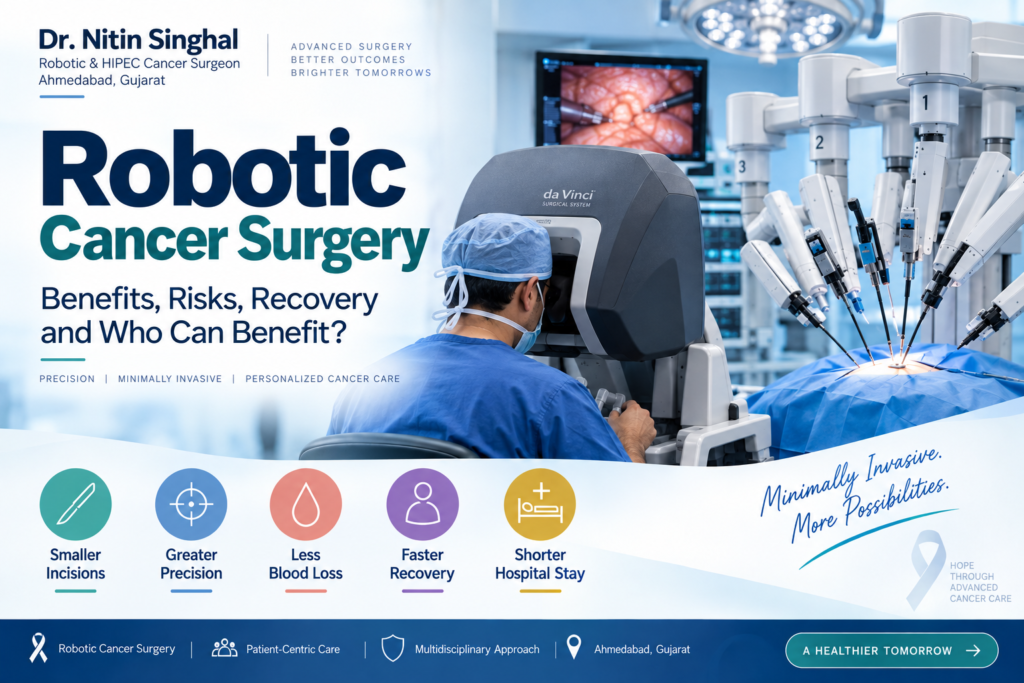
How robotic cancer surgery works with Dr. Nitin Singhal using advanced robotic surgical technology

Robotic Cancer Surgery: Benefits, Risks, Recovery and Who Can Benefit

Robotic cancer surgery is an advanced form of minimally invasive surgery used for selected cancer procedures. It combines the expertise of a trained cancer surgeon with robotic technology that can provide magnified visualization, precise instrument control and enhanced dexterity during surgery. For patients considering robotic cancer surgery in Ahmedabad, understanding how the procedure works, its potential benefits and risks, recovery process and suitability is important before making a treatment decision. Dr. Nitin Singhal, a robotic and HIPEC cancer surgeon in Ahmedabad, specializes in advanced robotic and minimally invasive cancer surgery. His website states that he has completed MCh in Surgical Oncology from Tata Memorial Centre, Mumbai, and has more than 18 years of experience and over 5,000 major cancer surgeries. His practice includes robotic treatment across gastrointestinal, gynecological, urological, thoracic, head and neck and other cancer specialties. Robotic surgery is not performed independently by a machine. The surgeon remains in control of the robotic system throughout the procedure. What Is Robotic Cancer Surgery? Robotic cancer surgery is a minimally invasive surgical approach in which a surgeon controls specialized robotic instruments from a console. The system generally includes: According to Mayo Clinic, robotic surgery can provide the surgeon with enhanced precision, flexibility, control and visualization during appropriately selected procedures. On Dr. Nitin Singhal’s robotic surgery website, the da Vinci robotic surgical system is described as one of the technologies used for advanced robotic cancer procedures. The site highlights 3D visualization, instrument flexibility and tremor-filtering technology as features that can assist the surgeon during complex procedures. The important point is that the robot does not decide how the operation is performed. Dr. Nitin Singhal or the operating surgeon controls the robotic system and performs the procedure with the support of the surgical team. How Does Robotic Cancer Surgery Work? Although the exact procedure differs according to the cancer and operation, robotic surgery generally follows several stages. 1. Detailed evaluation Before surgery, the cancer diagnosis and overall health are assessed. Depending on the cancer, this may include: The purpose is to determine the most appropriate treatment strategy. 2. Treatment planning Dr. Nitin Singhal and the multidisciplinary cancer team can evaluate whether surgery is appropriate and whether a robotic approach is suitable for the patient’s specific cancer. Not every patient or cancer is a candidate for robotic surgery. 3. Anesthesia Robotic cancer procedures are generally performed under anesthesia. The anesthesia plan depends on the type and complexity of the surgery. 4. Small surgical incisions For minimally invasive robotic surgery, the surgeon generally works through several small incisions through which the camera and surgical instruments are introduced. 5. Robotic-assisted surgery The surgeon operates from the console while viewing a magnified, high-definition image of the surgical area. The robotic instruments translate the surgeon’s hand movements into controlled movements inside the patient’s body. 6. Tumor removal The surgical team removes the tumor and, when medically appropriate, surrounding tissue and lymph nodes according to the planned cancer operation. Cancer surgery may be used to remove localized tumors, reduce tumor burden or relieve symptoms, depending on the individual situation. 7. Recovery and follow-up After surgery, the patient receives postoperative care and follow-up. Depending on the cancer type, pathology results and stage, additional treatments such as chemotherapy, radiation therapy or other systemic treatments may be recommended. What Types of Cancer Can Be Treated With Robotic Surgery? Robotic surgery is not appropriate for every cancer. However, it may be considered for selected procedures across several cancer specialties. At Dr. Nitin Singhal’s robotic cancer surgery practice in Ahmedabad, the website lists robotic procedures across several specialties. Robotic GI Cancer Surgery The website lists robotic treatment for selected gastrointestinal cancers, including: Robotic Gynecological Cancer Surgery Selected gynecological cancers include: Robotic Urological Cancer Surgery The website includes robotic treatment for selected: Robotic Thoracic Cancer Surgery Selected thoracic procedures may include: Robotic Head and Neck Cancer Surgery The practice also provides information about: Other Robotic Cancer Procedures Dr. Nitin Singhal’s website also highlights robotic breast cancer surgery and other advanced robotic cancer procedures, including selected sarcoma and HIPEC-related treatment pathways. Benefits of Robotic Cancer Surgery Robotic surgery can provide technical advantages to the surgeon and potential benefits associated with minimally invasive surgery. However, the benefits depend on the specific operation and patient. 1. Smaller incisions Robotic procedures are commonly performed through small incisions. Compared with some open operations, smaller incisions may mean less tissue disruption and smaller scars. 2. Magnified 3D visualization A robotic system can provide a magnified, high-definition 3D view of the surgical field. This can help the surgeon visualize anatomical structures during complex procedures. 3. Greater instrument control Robotic instruments can provide a range of motion and control that can be useful during technically demanding minimally invasive procedures. 4. Potentially less blood loss Minimally invasive approaches may be associated with less blood loss in selected procedures compared with certain open operations. 5. Potentially less postoperative pain Smaller incisions may contribute to less postoperative pain for some patients compared with comparable open procedures. 6. Potentially shorter hospital stay Some robotic procedures may allow patients to leave the hospital sooner than after comparable open surgery. However, hospital stay depends strongly on the type and complexity of the cancer operation. 7. Potentially faster recovery Minimally invasive robotic surgery can allow some appropriately selected patients to recover and return to normal activities sooner. This should not be interpreted as a guaranteed recovery time. Recovery varies from patient to patient. What Are the Risks of Robotic Cancer Surgery? Robotic surgery is still major surgery and is not risk-free. Potential complications can include: The National Cancer Institute notes that cancer surgery can involve risks such as pain, infection, bleeding, damage to nearby tissues and reactions to anesthesia. Robotic surgery can carry many of the same general surgical risks as conventional minimally invasive or open surgery. Therefore, patients should discuss the specific risks of their proposed procedure with their surgeon. Is Robotic Cancer Surgery Better Than Open Surgery? There is no single surgical technique that is best for

Robotic Cancer Surgery: Benefits, Risks, Recovery and Who Can Benefit Read More »

Patient considering a second opinion for cancer surgery while discussing diagnosis, treatment options, risks and robotic surgery with a specialist

Second Opinion for Cancer Surgery: When and How to Get One

A second opinion for cancer surgery is an independent review of your diagnosis, scans, pathology, and proposed operation by another qualified cancer surgeon — and it does not require switching doctors or delaying urgent treatment. Most patients are entitled to request one, and most oncologists expect and welcome it, especially before major or complex surgery. If you or a family member has just been told that surgery is the recommended treatment for cancer, it’s natural to want confirmation — or clarity on alternatives — before going ahead. This guide covers exactly when a second opinion makes sense, how to get one without losing time, and what to expect once you’re in the room with a second specialist. This article is for patient education and does not replace a consultation with your treating oncologist. What Is a Second Opinion for Cancer Surgery? A cancer surgery second opinion is a fresh, independent evaluation of your case by a different oncologist or surgical oncologist — someone who was not involved in your original diagnosis or treatment plan. The reviewing specialist typically looks at: Based on this review, the second specialist may confirm the original plan, suggest a modified surgical approach, recommend additional tests, or raise treatment options that weren’t discussed the first time. Seeking this input does not obligate you to change doctors — you stay in control of the final decision. Considering whether robotic surgery specifically is right for your case? See our Robotic Cancer Surgery page for how the approach works and who it suits. Why Get a Second Opinion Before Cancer Surgery? A second opinion adds clarity, confirms or challenges the original plan, and surfaces options you may not have known about — without costing you your first doctor’s trust. It clarifies a complex diagnosis Cancer type, stage, size, and spread all shape the treatment recommendation. A second specialist can walk you through what your specific reports mean in plain language. It confirms the treatment plan When a second oncologist independently arrives at the same recommendation, it gives you real reassurance that you’re on the right path — not just agreement for its own sake. It surfaces alternative treatment paths Depending on the cancer, there may be more than one reasonable route: surgery, systemic therapy, radiation, minimally invasive or robotic surgery, or some combination. Which one fits your case is a decision for your care team, but a second opinion widens the picture. It lets you weigh risks and benefits properly Before any cancer operation, it’s reasonable to want clear answers on expected benefit, possible complications, recovery time, hospital stay, impact on normal function, and whether more treatment will follow. It matters most for rare or complex cases A second opinion carries the most value when the cancer is uncommon, hard to stage, or when the surgery being proposed is major — situations where surgical volume and specific experience matter. When Should You Get a Second Opinion? There’s no rule that says every cancer patient needs one before surgery. Consider it if any of the following apply to you: Situation Why a second opinion helps Major or extensive surgery has been recommended Confirms the extent of surgery is necessary, not more than needed Your cancer is rare or in a complex location Specialist experience varies widely for uncommon cancers You’ve been given multiple possible treatment paths Helps you compare reasoning, not just recommendations You’re unsure about the diagnosis or stage A second radiologist or pathologist reading can resolve ambiguity Robotic or minimally invasive surgery has been proposed Confirms whether you’re a genuine candidate for that approach You simply want more confidence before deciding You don’t need to distrust your doctor to want reassurance How to Get a Second Opinion for Cancer Surgery: 4 Steps 1. Gather your medical records Ask your current hospital for copies of: biopsy/pathology reports, imaging reports and scan files (CT/MRI/PET-CT), blood work, prior treatment records, operative notes (if you’ve already had surgery), discharge summaries, current medications, and the proposed treatment plan. 2. Choose the right specialist Look for someone with specific, current experience in your cancer type — a surgical oncologist, robotic cancer surgeon, medical oncologist, radiation oncologist, or pathologist, depending on what you need reviewed. 3. Send your reports ahead of the appointment Sharing records before the consultation lets the specialist study your actual case rather than reconstructing it from memory during the visit. 4. Write your questions down in advance A short, prepared list makes sure you don’t leave the appointment without answers to what mattered most to you. Useful starting questions: What Happens During the Consultation? Expect the specialist to review your history, imaging, and pathology, then discuss: What If the Two Opinions Disagree? Two different recommendations don’t mean one doctor is wrong. Cancer treatment decisions can hinge on how a case is read — stage, imaging detail, overall health, and treatment goals can all shift the recommendation. If you get different answers, ask both doctors directly: Will a Second Opinion Delay My Treatment? This is the concern that stops most patients from asking. The honest answer: it depends on your specific cancer and how urgent treatment is — some cancers need fast decisions, others allow more time. The right move is to tell your current doctor you’re considering a second opinion. They can tell you whether there’s a safe window and help expedite your records. Never postpone urgent cancer treatment on your own — make timing part of the conversation with your treating team, not a decision you make alone. Can You Get a Second Opinion After Treatment Has Already Started? Yes. It isn’t limited to the pre-treatment stage. Patients commonly seek one when: How to Choose the Right Surgeon for a Second Opinion Beyond the surgeon’s title or the technology available, look for someone who: Second Opinions Don’t Mean You Distrust Your Doctor Many patients hold back from asking because they worry it will offend their current doctor. In practice, most oncologists treat a second opinion as a normal, expected

Second Opinion for Cancer Surgery: When and How to Get One Read More »

Second Opinion for Cancer Surgery: When and How to Get One

A second opinion for cancer surgery is an independent review of your diagnosis, scans, pathology, and proposed operation by another qualified cancer surgeon — and it does not require switching doctors or delaying urgent treatment. Most patients are entitled to request one, and most oncologists expect and welcome it, especially before major or complex surgery. If you or a family member has just been told that surgery is the recommended treatment for cancer, it’s natural to want confirmation — or clarity on alternatives — before going ahead. This guide covers exactly when a second opinion makes sense, how to get one without losing time, and what to expect once you’re in the room with a second specialist. This article is for patient education and does not replace a consultation with your treating oncologist. What Is a Second Opinion for Cancer Surgery? A cancer surgery second opinion is a fresh, independent evaluation of your case by a different oncologist or surgical oncologist — someone who was not involved in your original diagnosis or treatment plan. The reviewing specialist typically looks at: Based on this review, the second specialist may confirm the original plan, suggest a modified surgical approach, recommend additional tests, or raise treatment options that weren’t discussed the first time. Seeking this input does not obligate you to change doctors — you stay in control of the final decision. Why Get a Second Opinion Before Cancer Surgery? A second opinion adds clarity, confirms or challenges the original plan, and surfaces options you may not have known about — without costing you your first doctor’s trust. It clarifies a complex diagnosis Cancer type, stage, size, and spread all shape the treatment recommendation. A second specialist can walk you through what your specific reports mean in plain language. It confirms the treatment plan When a second oncologist independently arrives at the same recommendation, it gives you real reassurance that you’re on the right path — not just agreement for its own sake. It surfaces alternative treatment paths Depending on the cancer, there may be more than one reasonable route: surgery, systemic therapy, radiation, minimally invasive or robotic surgery, or some combination. Which one fits your case is a decision for your care team, but a second opinion widens the picture. It lets you weigh risks and benefits properly Before any cancer operation, it’s reasonable to want clear answers on expected benefit, possible complications, recovery time, hospital stay, impact on normal function, and whether more treatment will follow. It matters most for rare or complex cases A second opinion carries the most value when the cancer is uncommon, hard to stage, or when the surgery being proposed is major — situations where surgical volume and specific experience matter. When Should You Get a Second Opinion? There’s no rule that says every cancer patient needs one before surgery. Consider it if any of the following apply to you: Situation Why a second opinion helps Major or extensive surgery has been recommended Confirms the extent of surgery is necessary, not more than needed Your cancer is rare or in a complex location Specialist experience varies widely for uncommon cancers You’ve been given multiple possible treatment paths Helps you compare reasoning, not just recommendations You’re unsure about the diagnosis or stage A second radiologist or pathologist reading can resolve ambiguity Robotic or minimally invasive surgery has been proposed Confirms whether you’re a genuine candidate for that approach You simply want more confidence before deciding You don’t need to distrust your doctor to want reassurance How to Get a Second Opinion for Cancer Surgery: 4 Steps 1. Gather your medical records Ask your current hospital for copies of: biopsy/pathology reports, imaging reports and scan files (CT/MRI/PET-CT), blood work, prior treatment records, operative notes (if you’ve already had surgery), discharge summaries, current medications, and the proposed treatment plan. 2. Choose the right specialist Look for someone with specific, current experience in your cancer type — a surgical oncologist, robotic cancer surgeon, medical oncologist, radiation oncologist, or pathologist, depending on what you need reviewed. 3. Send your reports ahead of the appointment Sharing records before the consultation lets the specialist study your actual case rather than reconstructing it from memory during the visit. 4. Write your questions down in advance A short, prepared list makes sure you don’t leave the appointment without answers to what mattered most to you. Useful starting questions: What Happens During the Consultation? Expect the specialist to review your history, imaging, and pathology, then discuss: What If the Two Opinions Disagree? Two different recommendations don’t mean one doctor is wrong. Cancer treatment decisions can hinge on how a case is read — stage, imaging detail, overall health, and treatment goals can all shift the recommendation. If you get different answers, ask both doctors directly: Will a Second Opinion Delay My Treatment? This is the concern that stops most patients from asking. The honest answer: it depends on your specific cancer and how urgent treatment is — some cancers need fast decisions, others allow more time. The right move is to tell your current doctor you’re considering a second opinion. They can tell you whether there’s a safe window and help expedite your records. Never postpone urgent cancer treatment on your own — make timing part of the conversation with your treating team, not a decision you make alone. Can You Get a Second Opinion After Treatment Has Already Started? Yes. It isn’t limited to the pre-treatment stage. Patients commonly seek one when: How to Choose the Right Surgeon for a Second Opinion Beyond the surgeon’s title or the technology available, look for someone who: Second Opinions Don’t Mean You Distrust Your Doctor Many patients hold back from asking because they worry it will offend their current doctor. In practice, most oncologists treat a second opinion as a normal, expected part of cancer care — and many will actively help arrange it. The goal isn’t to find someone who tells you what you want to

Second Opinion for Cancer Surgery: When and How to Get One Read More »

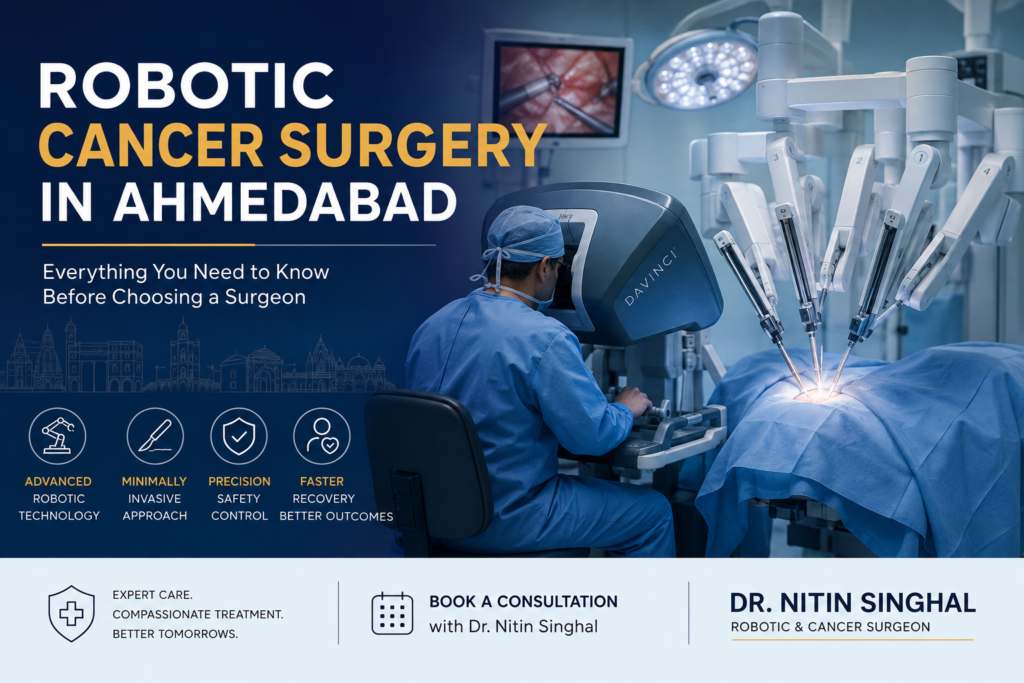
Robotic cancer surgery in Ahmedabad by Dr Nitin Singhal

Robotic Cancer Surgery in Ahmedabad: Everything You Need to Know Before Choosing a Surgeon

A cancer diagnosis can lead to many questions, especially when surgery is recommended. Patients often want to know which surgical approach is appropriate, whether robotic surgery is suitable for their cancer, how recovery may differ, and most importantly, how to choose the right surgeon. Robotic cancer surgery is an advanced form of minimally invasive surgery in which a surgeon controls specialised robotic instruments from a console. Systems such as the da Vinci Surgical System can provide magnified three-dimensional visualisation and precise instrument movement during selected procedures. However, robotic surgery is not automatically the right choice for every patient or every cancer. The suitability of robotic surgery depends on factors such as the type and stage of cancer, tumour location, anatomy, previous treatments, overall health, and the surgeon’s assessment. For patients considering robotic cancer surgery in Ahmedabad, understanding the technology is only the first step. The surgeon’s experience, hospital infrastructure, multidisciplinary cancer care, and treatment planning are equally important. What Is Robotic Cancer Surgery? Robotic cancer surgery is a minimally invasive surgical approach used for selected cancer procedures. Unlike traditional open surgery, which may require a larger incision, robotic-assisted procedures are generally performed through several small incisions. The surgeon operates the robotic instruments rather than the robot performing surgery independently. The robotic platform can provide: It is important to understand that robotic surgery is surgeon-controlled surgery. The robotic system does not independently diagnose cancer, decide where to operate, or perform surgery without the surgeon. How Is Robotic Surgery Different From Open Surgery? The main difference is the surgical approach. Open Cancer Surgery Open surgery generally involves a larger incision that allows the surgeon direct access to the area being treated. It can still be the most appropriate approach for certain cancers, particularly when extensive access or removal is required. Robotic Cancer Surgery Robotic surgery generally uses smaller incisions and specialised instruments controlled by the surgeon. For appropriately selected patients, minimally invasive surgery may offer advantages such as smaller incisions and potentially easier postoperative recovery. However, the benefits vary between procedures and individual patients. Is Robotic Surgery Always Better Than Open Surgery? No. A common misconception is that robotic surgery is automatically superior to open surgery. The most appropriate technique depends on the individual patient’s disease and treatment plan. In some cases, open surgery may be more suitable. In others, robotic or conventional laparoscopic surgery may be considered. The important question is not simply: “Is robotic surgery better?” Instead, patients should ask: “Is robotic surgery appropriate for my specific cancer and situation?” Why Are Patients in Ahmedabad Considering Robotic Cancer Surgery? Ahmedabad has developed into an important healthcare destination for patients from Gujarat and surrounding regions. Patients may consider Ahmedabad for cancer treatment because they can access specialised surgical oncology services, advanced surgical technology, diagnostic facilities, intensive care, and multidisciplinary treatment teams. Robotic surgery can be one part of this broader cancer-care system. For patients travelling from other parts of Gujarat, the decision should not be based only on the availability of a robotic system. The complete treatment pathway matters, including diagnosis, staging, surgery, pathology, oncology consultation, postoperative care, and follow-up. What Cancers Can Be Treated With Robotic Surgery? Robotic surgery can be used in selected cancer procedures across different specialties. Depending on the patient’s diagnosis and the surgeon’s assessment, robotic-assisted surgery may be considered for conditions involving areas such as: Gastrointestinal Cancers Robotic techniques may be used in selected procedures involving cancers of the digestive system, including certain colorectal, stomach, oesophageal, pancreatic, and other gastrointestinal cancers. Urological Cancers Robotic surgery can be considered for selected procedures involving cancers such as prostate, kidney, and bladder cancer. Gynecological Cancers Certain cancers affecting the female reproductive system may be treated using minimally invasive or robotic-assisted approaches in appropriately selected patients. Thoracic Cancers Robotic-assisted approaches may be considered for selected cancers involving structures within the chest, depending on tumour characteristics and the planned procedure. Head and Neck Cancers The availability and suitability of robotic surgery should always be determined after reviewing the patient’s imaging, pathology, stage, anatomy, and overall health. Robotic techniques may be used in selected head and neck cancer procedures, depending on the tumour’s location and extent. Potential Benefits of Robotic Cancer Surgery When robotic surgery is appropriate, minimally invasive surgery may provide certain advantages. Smaller Incisions Robotic procedures generally use small surgical openings rather than the larger incision associated with many open procedures. Enhanced Visualisation The robotic platform can provide magnified, three-dimensional visualisation, which may help the surgeon identify anatomical structures during technically demanding procedures. Precise Instrument Control Robotic instruments are designed to allow controlled movements within the surgical field. Potentially Less Surgical Trauma Because the procedure is minimally invasive, selected patients may experience less tissue disruption compared with some open procedures. Recovery Some patients may experience a shorter hospital stay and faster return to normal activities after minimally invasive surgery. However, recovery varies significantly according to the type and complexity of surgery, the patient’s health, and whether additional treatments are required. These potential benefits should not be interpreted as a guarantee of a particular outcome. What Should You Look for in a Robotic Cancer Surgeon? Choosing the surgeon may be one of the most important decisions you make. Instead of choosing a doctor solely because a hospital has robotic technology, consider several factors. 1. Cancer Surgery Training Ask about the surgeon’s formal training and experience in surgical oncology and the specific cancer procedure being considered. Robotic technology is a tool. Expertise in cancer surgery remains essential. 2. Experience With Your Specific Procedure A surgeon may have experience with robotic surgery generally, but patients should also ask about experience with the specific type of cancer and operation they require. For example, experience in robotic prostate surgery does not necessarily mean the same level of experience in robotic gastrointestinal cancer surgery. 3. Surgical Volume and Case Experience Experience with relevant procedures can be an important consideration. Patients can ask: 4. Hospital Infrastructure Robotic cancer surgery should be supported by appropriate hospital infrastructure.

Robotic Cancer Surgery in Ahmedabad: Everything You Need to Know Before Choosing a Surgeon Read More »

Doctors reconstruct tongue with flesh from the thigh.

Read more at: Doctors reconstruct tongue with flesh from thigh Using flesh from the thigh, doctors at a private hospital have reconstructed the tongue of a patient suffering from oral cancer. Though the patient’s speech quality has improved post surgery, his new tongue is devoid of taste buds. The patient, a native of Faridabad, was suffering with pain in the mouth, inability to eat and difficulty in speech for the last two and half months. “On evaluation, he was found to be having cancer arising from ventral aspect of the tongue going into the floor of mouth involving almost entire tongue and abutting the jaw bones in its entire extent,” said Dr Nitin Singhal, surgical oncologist at Fortis Hospital. The patient was a chronic smoker and tobacco chewer and also took alcohol occasionally. The patient was diagnosed with cancer in the tongue at some other hospital and was given the option of surgery but he did not opt for it fearing it would lead to a significant deformity of his face. He was also told that his entire jaw bone might have to be removed for removal of cancer. However, as his condition worsened and pain became unbearable, the patient approached the doctors at Fortis Hospital in October. “He was in tremendous pain and was unable to eat at all. After complete evaluation, we convinced him that we can give a try to remove the tumour while preserving his jaw bone. But surgery was a must to save his life,” Dr Singhal said. So as a part of the surgery, his entire tongue and the floor of mouth along with upper half of the entire jaw bone was removed by marginal mandibulectomy while preserving the lower contour of the jaw bone. “What made the surgery challenging was that when you try to do this marginal mandibulectomy for such a long segment, it is technically difficult as there is significant risk of fracture of the jaw bone. Fracture of jaw bone would have defeated the purpose of surgery for which patient had come to us,” Dr Singhal explained. A new tongue and floor of the mouth was made with the help of skin and flesh from the thigh. The surgery took place on October 25. agencies “We did the reconstruction with anperolateral thigh flap. The patient was started on oral feeds on day 5 and discharged on day 8,” said Dr Surendra Chawla, senior consultant, Plastic and Reconstructive Surgery, Fortis. Post surgery he is able to take all liquids and most of the semi solid food. “The final report showed complete removal of the tumour and patient is on radioterapy,” Dr Chawla said.India has high incidence of oral cancers as 4 in 10 of all cancers are mouth cancers. As many as 14 deaths occur every hour in India because of oral cancers.

Doctors reconstruct tongue with flesh from the thigh. Read More »

Ahmedabad Surgeons set record, remove ‘heaviest’ kidney tumour in child

Ahmedabad surgeons set record, remove ‘heaviest’ kidney tumour in child A team of doctors led by senior surgical oncologist Dr. Nitin Singhal, has set the record for surgically removing the “heaviest kidney tumor” in a child and has been recognised by the India Book of Records (IBR). Notably, the team successfully removed a large Wilms’ tumor weighing 3.1 kg from the left kidney of a 3-year-old child, providing a new lease of life to her.  Following the surgery, a claim was registered with the IBR. It was thoroughly scrutinised by a team from the IBR after which a post-attempt felicitation and final approval have been provided.  Commenting on the development, Dr. Singhal said, “It was a very challenging surgery for us, but thankfully, we could successfully execute it. After one-and-a-half-year of the surgery, the child is living a normal life like any other kid.”  As per the case details, the child was brought to hospital when her parents noticed a huge increase in the size of her belly over a period of 2-3 weeks. On consulting senior pediatrician Dr. Pushkar Srivastava, they were referred to consultant pediatric oncologist Dr Hemant Meghani.  Dr. Meghani investigated the child and found a rare condition in which a huge mass was arising from the horseshoe kidney. The mass was pushing the diaphragm, causing the child to have severe breathing difficulties. The case was then discussed with the Multidisciplinary Tumor Board. In normal circumstances, such huge masses are generally diagnosed by a biopsy and treated by chemotherapy respectively. But since there were several risks with this approach, emergency surgery was decided in this case as an exception.   The four-hour long surgery was performed by Dr. Singhal and his team which included anesthetist Dr. Ankit Chauhan and pediatric surgeon Dr. Kirti Prajapati.  Dr. Singhal said, “This case highlights the lack of awareness in our society in relation to paediatric tumours which have a good prognosis if treated properly and on time. In fact, it is interesting to know that such tumours in this age group have much better survival chances than adult tumours.”  The surgery was done at Apollo hospital, Ahmedabad.

Ahmedabad Surgeons set record, remove ‘heaviest’ kidney tumour in child Read More »

Sterling Hospitals achieves milestone with complex Robotic Whipple Surgery

Sterling Hospitals achieves milestone with complex Robotic Whipple Surgery Sterling Hospitals, Ahmedabad – has successfully performed a highly complex Robotic Whipple Surgery, marking a significant advancement in minimally invasive pancreatic cancer treatment. Led by renowned Robotic Surgeon Dr. Nitin Singhal and his team, the procedure offered new hope to a 55-year-old female patient from Anand district, Gujarat. The patient presented with persistent jaundice, fever with chills, and intermittent pain over several months. Initially suspected to be gallstones, thorough diagnostics revealed an ampullary mass with pancreatic involvement. A biopsy confirmed malignancy, prompting bile duct stenting for jaundice relief. After consulting multiple doctors locally – who deemed open surgery risky due to anatomical challenges involving a critical vein from the heart to the liver – the family sought advanced care at Sterling Hospitals following social media recommendations. Dr. Nitin Singhal, Consultant Robotic Onco-surgeon, Sterling Hospitals, explained, “This was an extremely challenging case requiring utmost precision. The tumour’s location demanded careful preservation of vital vascular structures to avoid life-threatening complications. We had recommended robotic-assisted surgery for its superior accuracy, minimal invasiveness, and enhanced recovery profile.” The intricate Robotic Whipple procedure lasted 8-10 hours. Utilizing cutting-edge robotic technology, the team meticulously removed the tumour while preserving the essential vein, reconstructing digestive organs, and ensuring no internal leakage. Only a six-centimetre incision was required, resulting in negligible blood loss, no need for painkillers, and virtually scar-less outcomes. The surgery’s complexity lies in its technical demands which involves precise organ reconnection, management of anatomical variations, and liver preservation. Sterling Hospital’s expertise ensured a seamless execution. Post-operatively, the patient’s recovery was remarkable. She required no prolonged ICU stay, resumed normal oral intake swiftly, and was discharged in stable condition – just 12 days after surgery, with impressive mobility and minimal discomfort. Mr Santosh Marathe, MD & CEO Sterling Hospitals said that this procedure represents the first such complex Robotic Whipple at Sterling Hospitals, underscoring the institution’s pioneering role in robotic oncology. Sterling Hospitals comprehensive Oncology services at 3 locations in Gujarat envisions a future where robotic assistance becomes standard for complex surgeries, including those for lung and liver cancers, offering patients precision, reduced pain, and faster returns to normal life. Sterling Hospitals continues to lead in advanced oncological care, combining state-of-the-art technology with expert multidisciplinary teams to deliver life-changing outcomes. In Western India, Sterling Hospitals, a private hospital network, dominates the market and offers top-notch medical care. Since its founding in 2001, the hospital has been a leader in the field by offering patients the best possible medical and surgical care. The Sterling Group has successfully constructed state-of-the-art secondary care facilities in Ahmedabad, Vadodara, Rajkot and Gandhidham, as well as tertiary care multi-specialty hospitals. The fact that Sterling Hospitals is the first corporate hospital in Gujarat to receive NABH accreditation is evidence of its dedication to providing the highest quality medical treatment. The hospital offers a variety of crucial disciplines, such as cardiology and CVTS surgery, neurology and neurosurgery, nephrology and urology, Orthopaedics and Trauma, liver and renal transplantation (cadaveric and live), GI medicine and surgery, haematology, bone marrow transplant, and oncology.

Sterling Hospitals achieves milestone with complex Robotic Whipple Surgery Read More »

The Robotic Whipple Procedure: High-Tech Precision for Complex Pancreatic Surgery

The Robotic Whipple Procedure: High-Tech Precision for Complex Pancreatic Surgery What Exactly Happens During a Whipple? To understand the value of the robot, we first have to understand the complexity of the task. The pancreas sits in a very “crowded neighborhood,” tucked behind the stomach and surrounded by major blood vessels. In a standard Whipple procedure, the surgeon must remove: The head of the pancreas. The first part of the small intestine (duodenum). The gallbladder and part of the bile duct. Nearby lymph nodes. Once the tumor is out, the “reconstruction” begins. The surgeon must carefully sew the remaining pancreas, bile duct, and stomach back to the small intestine so that the patient can still digest food. The Robotic Edge: Why “High-Tech” Means “Better Care” The da Vinci Robotic System used by Dr. Nitin Singhal isn’t a replacement for the surgeon; it is a sophisticated tool that enhances his natural capabilities. Here is how that precision translates to patient benefits: 1. 10x Magnified 3D Vision :In traditional surgery, the surgeon looks into the abdomen with the naked eye. The robot provides a high-definition, 3D view that magnifies the surgical field up to ten times. This allow Dr. Singhal to see tiny blood vessels and nerves that are nearly invisible during open surgery, ensuring the tumor is removed with “clear margins” while sparing healthy tissue.2. Wristed Dexterity in Tight Spaces :The human hand has limit – it can’t rotate 360 degrees or fit into the tiny crevices around the pancreas without a large opening. The robotic instruments have “EndoWrists” that can move with more agility than a human hand. This is particularly vital for the reconstruction phase, where the surgeon must make waterproof stitches in ducts that are sometimes only 3 millimeters wide.3. Eliminating the Tremor :Even the most skilled surgeon has a microscopic natural tremor in their hands. The robotic system filters this out completely, providing a level of steadiness that is critical when working near the portal vein and the aorta. Why Choose Robotic Over Traditional Surgery? For many patients, the choice of a robotic approach under an expert like Dr. Nitin Singhal comes down to the recovery experience. Feature Traditional Open Whipple Robotic Whipple Incision Size 6–10 inch large cut Several tiny “keyhole” ports Blood Loss Significant Minimal Pain Levels High (often requires epidural) Low to moderate Hospital Stay 10–14 days 5–7 days Recovery 2–3 months 4–6 weeks Who is ideal Patient for this surgery? While the robotic Whipple offers incredible benefits, Dr. Nitin Singhal emphasizes that the best surgery is the one that is safest for the individual. During a consultation, Dr. Singhal evaluates the tumor’s size, its proximity to major blood vessels, and the patient’s overall health to determine if the robotic approach is the most effective path forward A Message of Hope Pancreatic cancer is a formidable opponent, but technology is closing the gap. By combining world-class training from Tata Memorial Hospital with the precision of robotic surgery, Dr. Nitin Singhal is providing patients in Gujarat with treatment options that were once only available in the world’s most advanced medical centers. Are you or a family member seeking a second opinion on pancreatic surgery? Precision is the key to better outcomes. Reach out to Dr. Nitin Singhal’s team to schedule an in-depth evaluation and see if the robotic approach is right for your journey to recovery.

The Robotic Whipple Procedure: High-Tech Precision for Complex Pancreatic Surgery Read More »