
Introduction
When a patient is advised to undergo robotic cancer surgery, one of the first questions they may have is: What tests will I need before the operation? Before recommending surgery, the surgical team needs to understand the cancer’s location, size and extent, as well as the patient’s overall health. This information helps doctors plan the procedure, assess anaesthesia-related risks and determine whether robotic-assisted surgery is an appropriate option.
Preoperative evaluation may include blood tests, imaging scans, heart and lung assessments, and a review of previous medical records. However, not every patient requires the same investigations. The tests depend on the cancer type, its stage, the planned operation and the patient’s medical history.
In this guide, we explain the common tests and medical evaluations that may be required before robotic cancer surgery.
Why Are Tests Important Before Robotic Cancer Surgery?
Robotic cancer surgery is performed using specialised instruments controlled by a surgeon through a robotic surgical system. Although the technology assists with precise movements and visualisation, the surgeon must first establish whether the patient is medically fit for the procedure and whether the tumour can be approached safely.
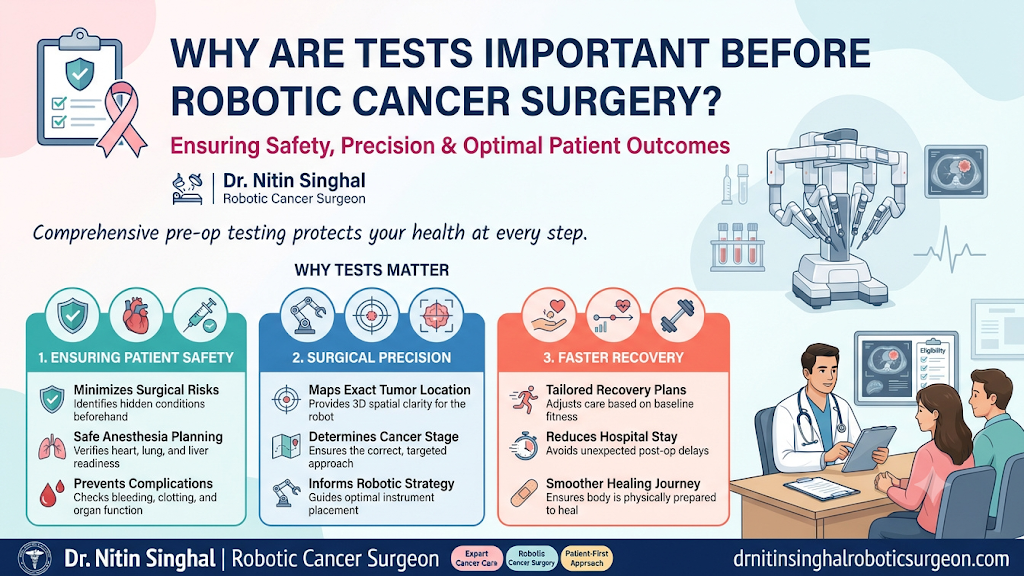
Preoperative tests help doctors:
Confirm the diagnosis and understand the extent of cancer.
Assess the tumour’s size, location and relationship with nearby structures.
Evaluate kidney, liver, heart and lung function when relevant.
Identify conditions such as anaemia, infection or uncontrolled diabetes.
Assess potential anaesthesia-related risks.
Plan the surgical approach and anticipate possible complications.
The purpose of these investigations is to support safe and informed treatment planning, not simply to complete a routine checklist.
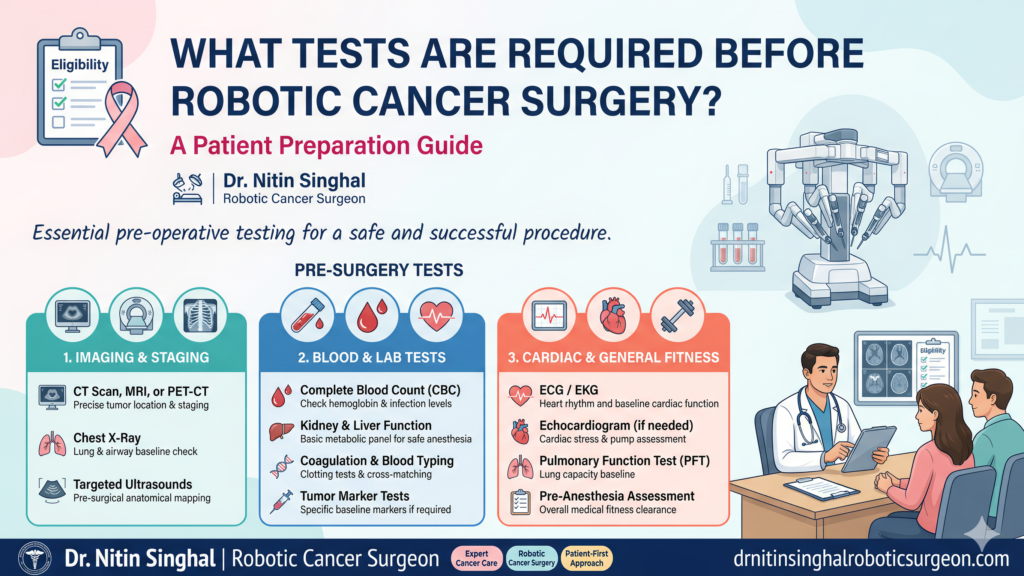
1. Blood Tests Before Robotic Cancer Surgery
Blood investigations are commonly part of the preoperative assessment, particularly before major cancer operations. They help doctors understand the patient’s general health and identify problems that may need attention before surgery.
Complete Blood Count (CBC)
A complete blood count measures haemoglobin, white blood cells and platelets. Haemoglobin helps identify anaemia; white blood cells may provide information about infection or inflammation; and platelets help the blood form clots. Abnormal results may need further evaluation or precautions.
Kidney Function Tests
Tests may include serum creatinine, blood urea and estimated glomerular filtration rate (eGFR). They help doctors understand kidney function, which is particularly important for kidney cancer surgery and when contrast-enhanced imaging or certain medicines are required.
Liver Function Tests (LFT)
These measure substances such as liver enzymes, bilirubin and proteins. They may be recommended when there is a history of liver disease, abnormal previous results or another clinical reason.
Blood Sugar and HbA1c
Blood glucose testing identifies high or low blood sugar. HbA1c may be recommended for patients with diabetes or suspected blood sugar control problems. Uncontrolled diabetes can affect wound healing and increase infection risk.
Blood Group and Crossmatching
Blood grouping and compatibility testing may be arranged depending on the planned operation and the possibility of blood loss.
Coagulation Profile
Tests such as PT, INR and aPTT may be requested when there is a history of bleeding, liver disease, relevant medication use or another clinical reason to assess clotting.
Not every patient needs every blood test. The surgeon and anaesthesiologist select investigations according to individual needs.
2. Imaging Tests to Understand the Cancer
Imaging investigations help doctors understand where the cancer is located and whether it has spread to nearby tissues, lymph nodes or distant organs. The imaging plan varies depending on the suspected or confirmed cancer type.
CT Scan (Computed Tomography)
A CT scan uses X-rays to create detailed cross-sectional images. Depending on the cancer, doctors may recommend a scan of the chest, abdomen or pelvis to assess tumour size and location, nearby structures, possible lymph node involvement and signs of disease elsewhere. Kidney function and previous contrast reactions may be reviewed before contrast-enhanced imaging.
MRI Scan (Magnetic Resonance Imaging)
MRI uses magnetic fields and radio waves to create detailed images of selected body structures. It may be useful for evaluating soft tissues and the local extent of certain cancers. Prostate MRI, pelvic MRI and selected kidney or liver MRI examinations may be considered depending on the clinical question.
PET-CT Scan
PET-CT combines metabolic and anatomical imaging. It may be recommended for selected cancers when doctors need additional information about disease activity, possible spread or treatment response. It is not required for every cancer patient.
Ultrasound
Ultrasound uses sound waves to produce images of internal organs. It may help evaluate abnormalities in the abdomen, pelvis, kidneys, thyroid or other areas and can guide certain biopsies.
CT, MRI, PET-CT and ultrasound are not interchangeable tests. The treating team selects the most appropriate investigation based on the cancer type and the information needed for surgical planning.
3. Biopsy and Histopathology Reports
A biopsy involves collecting a small tissue sample for examination under a microscope. A pathologist studies the sample to determine whether cancer is present and, when possible, identify its type and characteristics. Depending on the suspected cancer, a biopsy may be performed using a needle, an endoscope or another approach.
The histopathology report may provide information about tumour type and grade. For certain cancers, immunohistochemistry or molecular testing may also be recommended to help guide decisions about surgery, chemotherapy, targeted therapy or immunotherapy. A biopsy is not always performed before every operation; the specialist may recommend a different diagnostic or treatment pathway in selected situations.
4. Heart Evaluation Before Robotic Cancer Surgery
Robotic cancer operations are generally performed under general anaesthesia. The anaesthesia team assesses whether the patient’s heart and circulation can safely tolerate the planned procedure.
Electrocardiogram (ECG)
An ECG records the electrical activity and rhythm of the heart. It may identify abnormal rhythms or other findings requiring evaluation. Whether it is needed depends on age, medical history, symptoms and the planned operation.
Echocardiogram (2D Echo)
An echocardiogram uses ultrasound to examine the heart’s structure and pumping function. It may be recommended for patients with certain heart conditions, symptoms or abnormal findings.
Additional Cardiac Tests
Some patients may need a cardiac stress test or cardiology consultation when their history, symptoms or initial assessment indicate a need. These tests are not automatically required for everyone.
5. Lung Function and Respiratory Assessment
The anaesthesiologist may review respiratory history, smoking history, breathing symptoms and previous lung conditions.
Chest X-ray
A chest X-ray may be requested when there is a specific clinical indication, such as respiratory symptoms or relevant medical history. It is not necessary for every patient simply because surgery is planned.
Pulmonary Function Tests (PFT)
PFTs measure how well the lungs move air and transfer oxygen. They may be useful for selected patients with chronic lung disease or those undergoing certain thoracic operations.
6. Urine Tests and Other Cancer-Specific Investigations
Urine testing may be recommended to check for urinary infection, blood in the urine or other abnormalities, particularly in patients being evaluated for kidney, bladder or prostate-related conditions.
Prostate cancer: PSA testing, prostate MRI and biopsy reports may be reviewed.
Kidney cancer: CT or MRI imaging and kidney function tests may be important.
Bladder cancer: Cystoscopy findings, biopsy reports and relevant imaging may be assessed.
Colorectal cancer: Colonoscopy, biopsy and staging scans may be required.
Gynaecological cancers: Pelvic imaging, histopathology and selected tumour markers may be considered.
These are examples, not fixed testing packages. The treating specialist decides which investigations are appropriate for each patient.
7. Pre-Anaesthesia Assessment Before Robotic Cancer Surgery
The anaesthesiologist may review previous surgeries and anaesthesia experiences; existing conditions such as diabetes and high blood pressure; heart and lung health; current medicines and supplements; allergies; bleeding or clotting history; and smoking, alcohol use or sleep-related breathing conditions.
The team may also check blood pressure, pulse, oxygen levels, weight and other relevant measurements. Additional consultation with a cardiologist, pulmonologist, physician or another specialist may be recommended. This helps plan anaesthesia, monitoring and postoperative care.
8. How to Prepare for Robotic Cancer Surgery
Share Your Medical History
Inform your medical team about previous operations, chronic illnesses, allergies and any history of complications during anaesthesia.
Provide a Complete Medication List
Tell your doctor about prescription medicines, over-the-counter drugs, herbal products and supplements. Blood thinners and certain other medicines may require special instructions. Never stop or change a prescribed medicine without guidance.
Follow Eating and Drinking Instructions
Your anaesthesiologist will explain when you must stop eating and drinking before surgery. Follow the hospital’s instructions carefully.
Discuss Smoking and Alcohol
Smoking and alcohol use can affect surgical and anaesthesia-related risks. Ask your doctor whether you should stop or reduce these before the operation.
Maintain Suitable Nutrition and Activity
Follow your doctor’s advice about food, hydration and physical activity. Report unexplained weight loss, poor appetite or unusual weakness.
Bring Previous Reports
Keep biopsy reports, imaging scans, blood test results, prescriptions and discharge summaries ready. Complete records can help avoid unnecessary repeat investigations.
9. Does Every Patient Need the Same Tests Before Robotic Cancer Surgery?
No. There is no single set of tests that applies to every patient. Investigations depend on several factors:
| Factor | How it affects testing |
| Cancer type | Determines which biopsy, imaging and disease-specific tests may be required. |
| Cancer stage | Helps establish the extent of disease and the need for staging investigations. |
| Planned operation | Influences assessment of organ function and surgical risks. |
| Age and general health | May affect the need for additional medical evaluation. |
| Existing conditions | Heart disease, diabetes, kidney disease and respiratory conditions may require specific assessment. |
| Previous treatment | Chemotherapy, radiation therapy or previous surgery may influence further testing. |
For example, a patient undergoing robotic prostate cancer surgery may require a different evaluation from someone undergoing robotic kidney or colorectal cancer surgery. The aim is to order investigations that provide useful information for that patient’s treatment plan.
10. What Happens If a Test Result Is Abnormal?
An abnormal test result does not automatically mean that robotic cancer surgery cannot be performed. The medical team considers what the result means and whether it changes the patient’s surgical risk or treatment plan.
Repeat a test to confirm the result.
Recommend medication or treatment before surgery.
Request another scan or specialist consultation.
Improve blood sugar, blood pressure or anaemia management.
Modify the anaesthesia or postoperative monitoring plan.
Reconsider the timing or type of surgery if necessary.
The final decision is made after reviewing the complete clinical picture, not on the basis of one test result alone.
Frequently Asked Questions
1. What blood tests are required before robotic cancer surgery?
Depending on the operation and the patient’s medical condition, tests may include a complete blood count, kidney function, liver function, blood glucose, blood grouping and selected coagulation tests. Not everyone needs every investigation.
2. Is a CT scan necessary before robotic cancer surgery?
A CT scan may be recommended to understand the tumour’s location, size and possible spread. Whether it is necessary depends on the cancer type, previous imaging and the information required for surgical planning.
3. Is a PET-CT scan compulsory before robotic cancer surgery?
No. PET-CT is used in selected cancer cases when it can provide useful information about disease extent or treatment response. It is not routinely required for every patient.
4. Why is an ECG performed before cancer surgery?
An ECG records the heart’s electrical activity. It may be requested to assess heart rhythm and identify findings that could influence anaesthesia or surgical planning.
5. How many days before surgery should I complete my tests?
Timing depends on the hospital’s protocol, the type of investigation and whether the patient’s medical condition has changed. The surgical team will advise when reports should be completed and whether any need repeating.
6. Can robotic cancer surgery be postponed because of abnormal test results?
Yes, in some situations. If an abnormal result indicates a medical issue that needs attention, the team may recommend treatment, further evaluation or postponement. This decision is individualised.
7. Does robotic cancer surgery require more tests than open surgery?
Not necessarily. Investigations are determined by the cancer, planned operation and patient’s overall health. Choosing robotic or open surgery does not automatically determine the number of preoperative tests.
Meet the Expert
Dr. Nitin Singhal is a robotic and surgical oncologist in Ahmedabad. His clinical practice includes the surgical management of cancers involving the abdomen, chest, head and neck, breast, and gynaecological and urological organs.
Book a consultation with Dr. Nitin Singhal
Conclusion
Preparing for robotic cancer surgery involves more than choosing a surgical technique. Blood investigations, imaging scans, biopsy reports and medical fitness assessments help the surgical team understand the cancer and evaluate the patient’s readiness for an operation.
The required tests differ from one patient to another. Cancer type, stage, previous treatment, planned procedure and existing medical conditions all influence the evaluation. A detailed consultation with an experienced surgical oncologist and anaesthesiologist can help patients understand which investigations they need and why.