
Robotic & Oncoplastic Breast Cancer Surgery in Ahmedabad
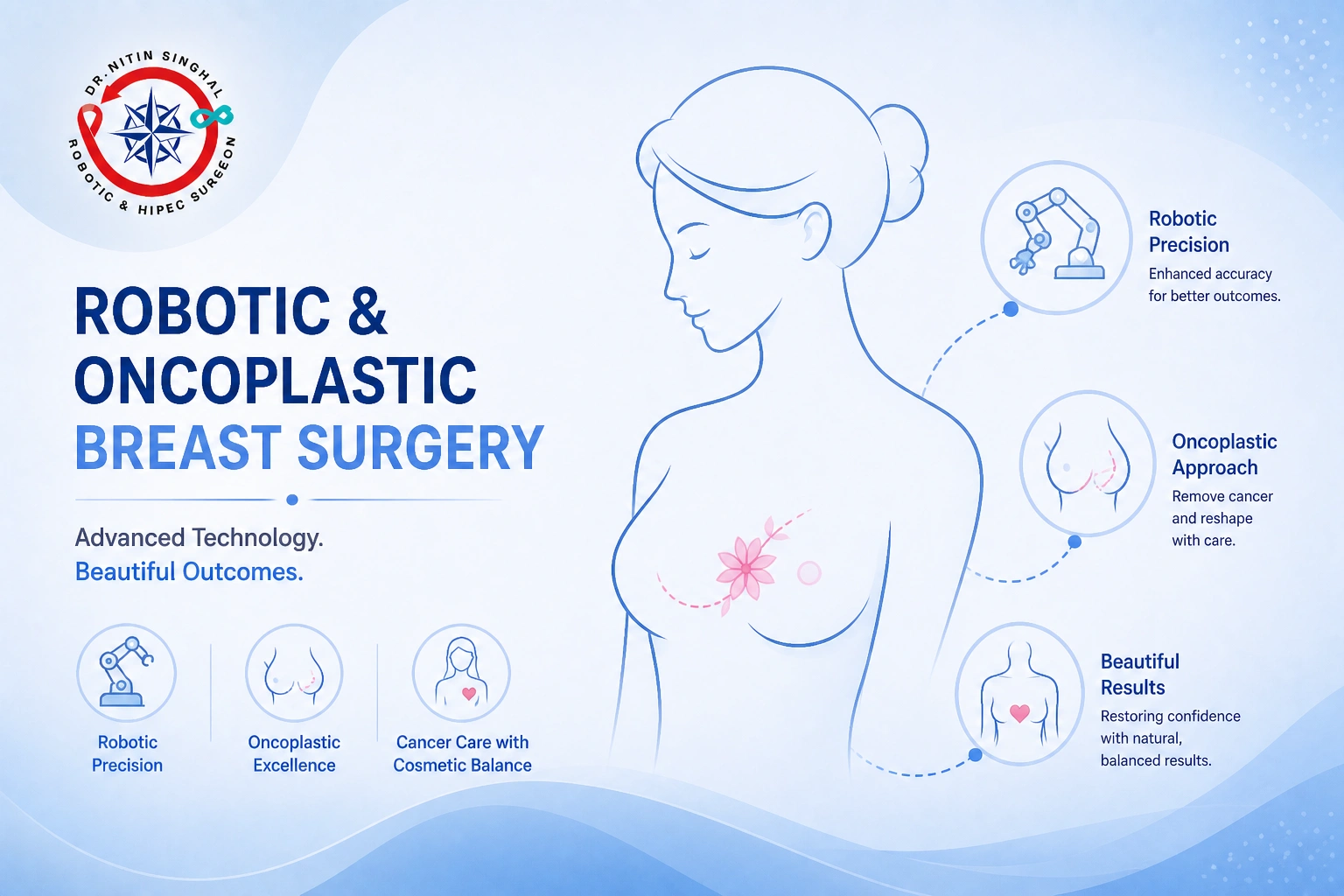
Dr. Nitin Singhal provides comprehensive breast cancer surgical care — from breast-conserving surgery and mastectomy to oncoplastic reconstruction and robotic-assisted technique — bringing 18+ years of experience, with an emphasis on precise cancer removal alongside aesthetic and emotional wellbeing.


Dr. Nitin Singhal
Dr. Nitin Singhal is a Robotic and HIPEC surgeon based in Ahmedabad, with a strong focus on breast surgical oncology alongside gastrointestinal, gynaecological and other complex cancers. He combines advanced robotic-assisted and oncoplastic techniques with a patient-first approach, aiming to remove cancer completely while preserving physical form and quality of life wherever possible.
Patients travel to Ahmedabad from across Gujarat and beyond for his expertise in breast-conserving surgery, mastectomy, oncoplastic reconstruction and sentinel lymph node biopsy — with treatment plans built around each patient's diagnosis, stage and personal priorities.
Precision That Shows Up In Recovery
Explore Related Cancer Care Programmes
Breast cancer surgery sits alongside our wider robotic oncology programme and second-opinion service — visit either page for more detail.
Robotic Cancer Surgery
An overview of Da Vinci robotic-assisted cancer surgery across specialities — GI, gynaecological, urological, thoracic, head & neck and breast oncology.
Visit Robotic Surgery Page →Second Opinion on Your Diagnosis
Share your imaging and pathology reports for a second opinion before deciding between breast conservation, mastectomy or reconstruction.
Get a Second Opinion →
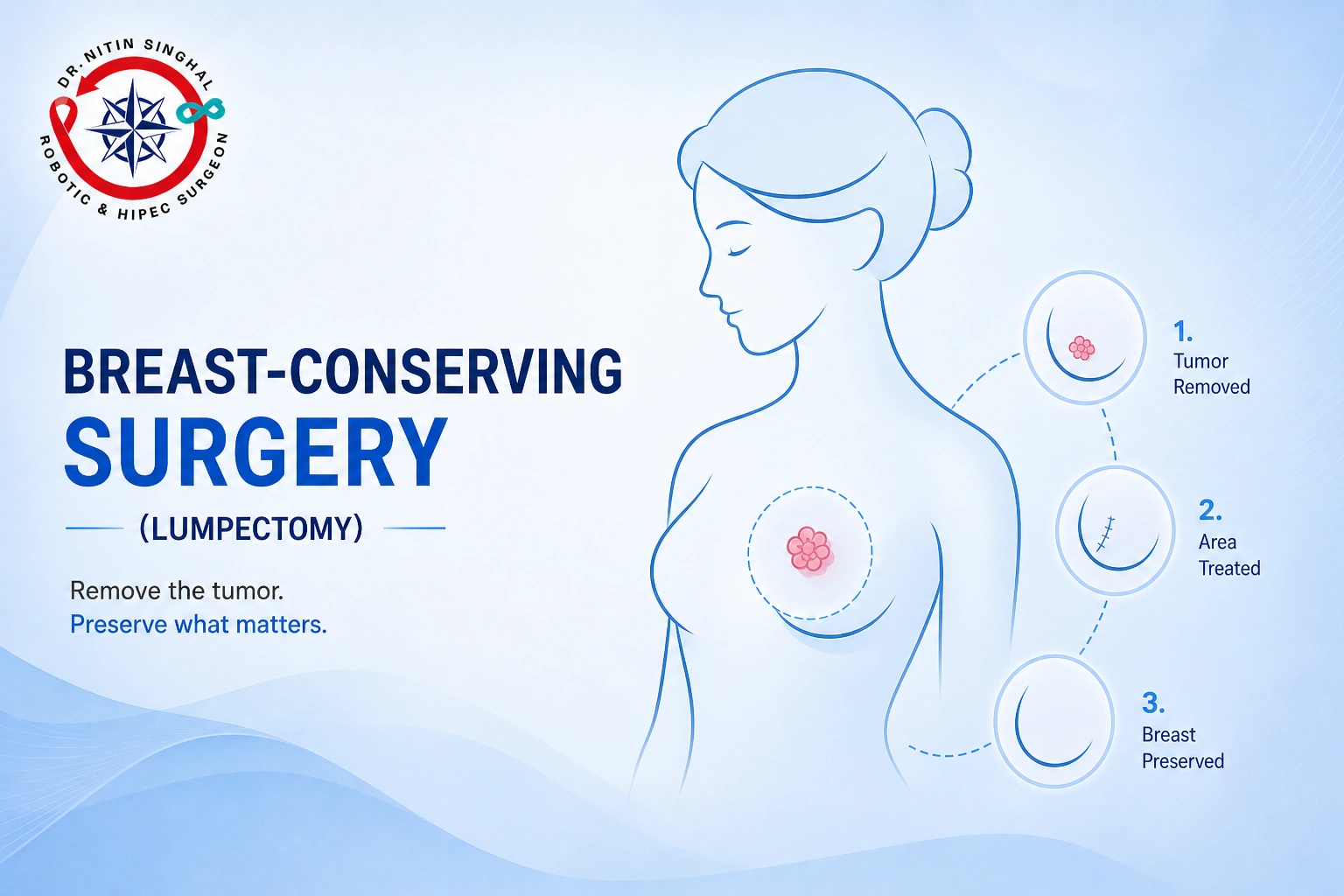
Breast-Conserving Surgery (Lumpectomy)
For many early-stage breast cancers, breast-conserving surgery removes the tumour along with a margin of healthy tissue, leaving the rest of the breast intact. It is usually followed by radiation therapy to reduce the risk of local recurrence.
Suitability depends on tumour size relative to breast size, location, whether the disease is in one area or multiple areas, and individual patient preference — all reviewed carefully during consultation before a recommendation is made.
Common Signs Prompting Evaluation
- A new lump or thickening in the breast or underarm
- Change in breast size, shape or skin texture
- Nipple discharge, retraction or skin dimpling
- Abnormal findings on a screening mammogram
Mastectomy
Mastectomy — removal of the entire breast — is considered when tumours are larger, multiple, involve a wide area, or when breast conservation is not a suitable option for other clinical reasons. Nipple-sparing and skin-sparing approaches are considered where appropriate.
Every case is reviewed by a multidisciplinary team, and the decision between mastectomy and breast conservation is made jointly with the patient after weighing safety, disease extent and personal priorities.
When Mastectomy Is Typically Considered
- Larger tumours relative to breast size
- Multiple tumours in different areas of the same breast
- Inflammatory or locally advanced breast cancer
- Genetic risk factors (such as BRCA1/BRCA2), assessed individually
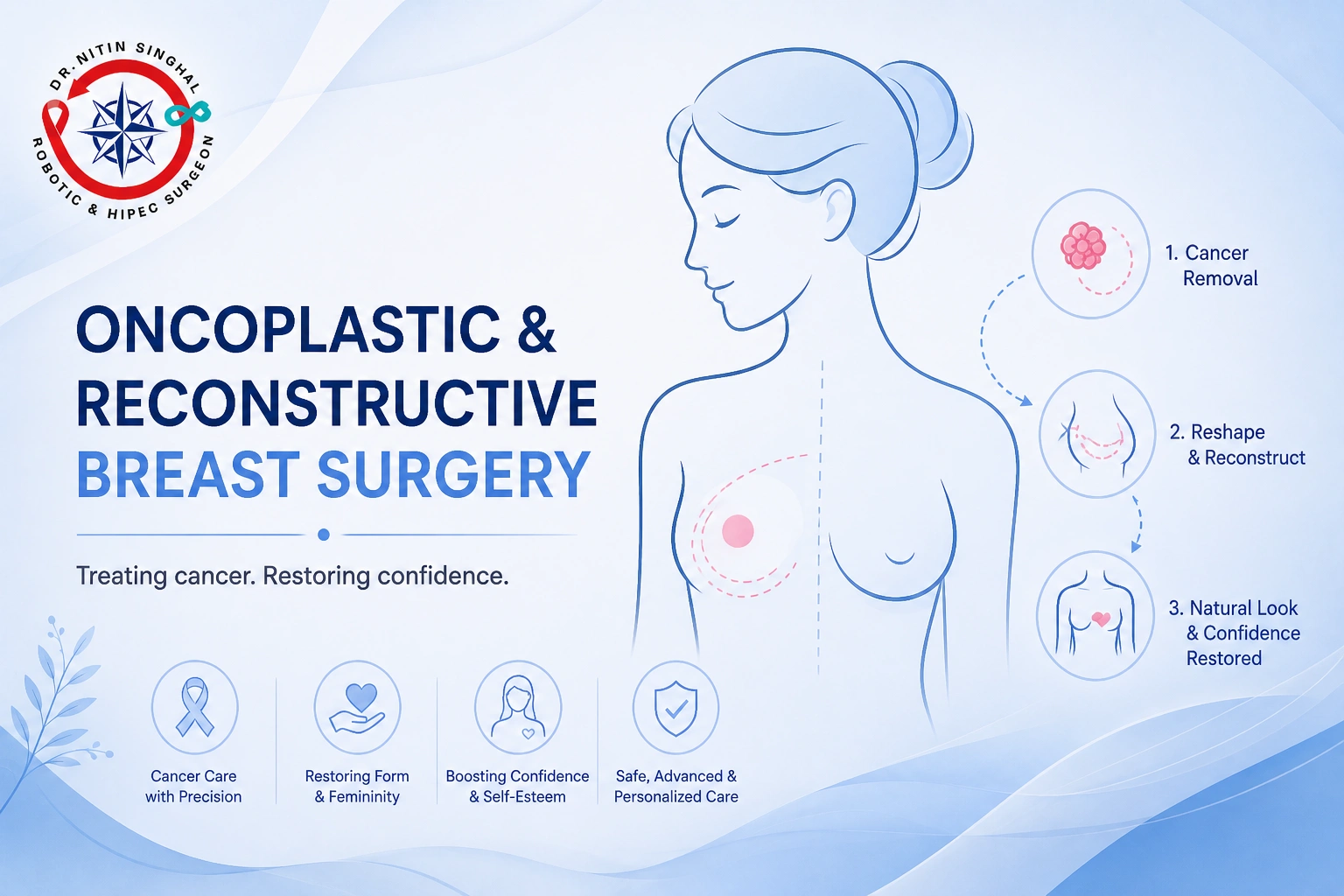
Oncoplastic & Reconstructive Breast Surgery
Oncoplastic surgery combines cancer removal with plastic-surgery reshaping techniques, aiming to maintain a natural breast contour at the time of the original operation. Reconstruction may also be planned for a later stage, depending on the treatment pathway.
This approach supports both physical recovery and emotional wellbeing after surgery, and is discussed as part of overall treatment planning rather than as an afterthought.
What This Can Involve
- Reshaping breast tissue at the time of lumpectomy
- Implant-based or tissue-based reconstruction after mastectomy
- Staged reconstruction planned over more than one procedure
- Coordination with a reconstructive/plastic surgery team as needed
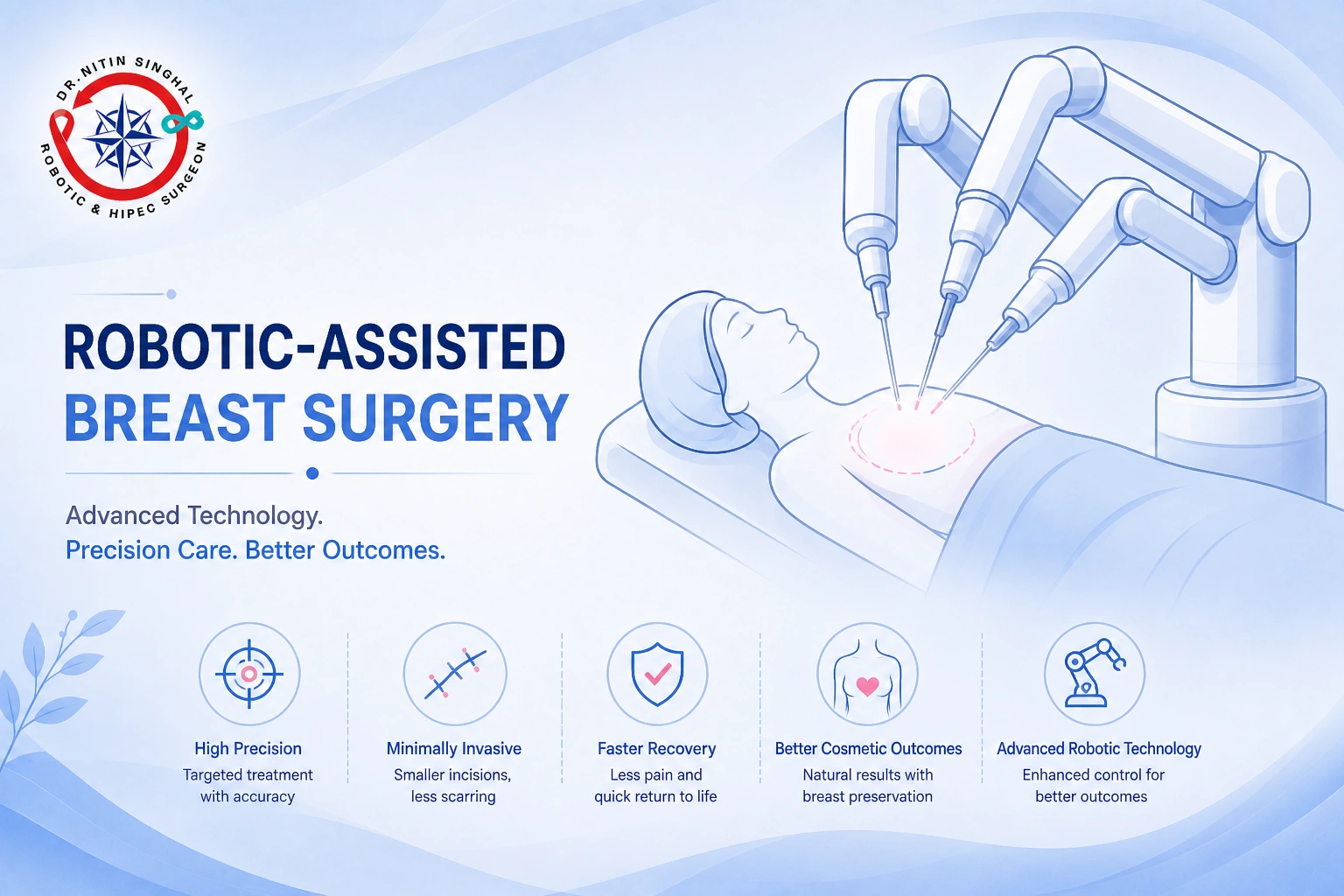
Robotic-Assisted Breast Surgery
In select suitable cases, robotic-assisted technique — using magnified 3D visualisation and wristed, tremor-free instruments — can support procedures such as nipple-sparing mastectomy through smaller, more discreetly placed incisions.
Robotic assistance is one tool among several rather than the right approach for every patient; suitability is assessed individually based on tumour characteristics, breast anatomy and overall treatment goals.
Potential Considerations
- More discreetly placed incisions in suitable cases
- Magnified visualisation supporting precise dissection
- Assessed case by case — not suitable for every diagnosis
- Performed alongside standard oncologic safety principles
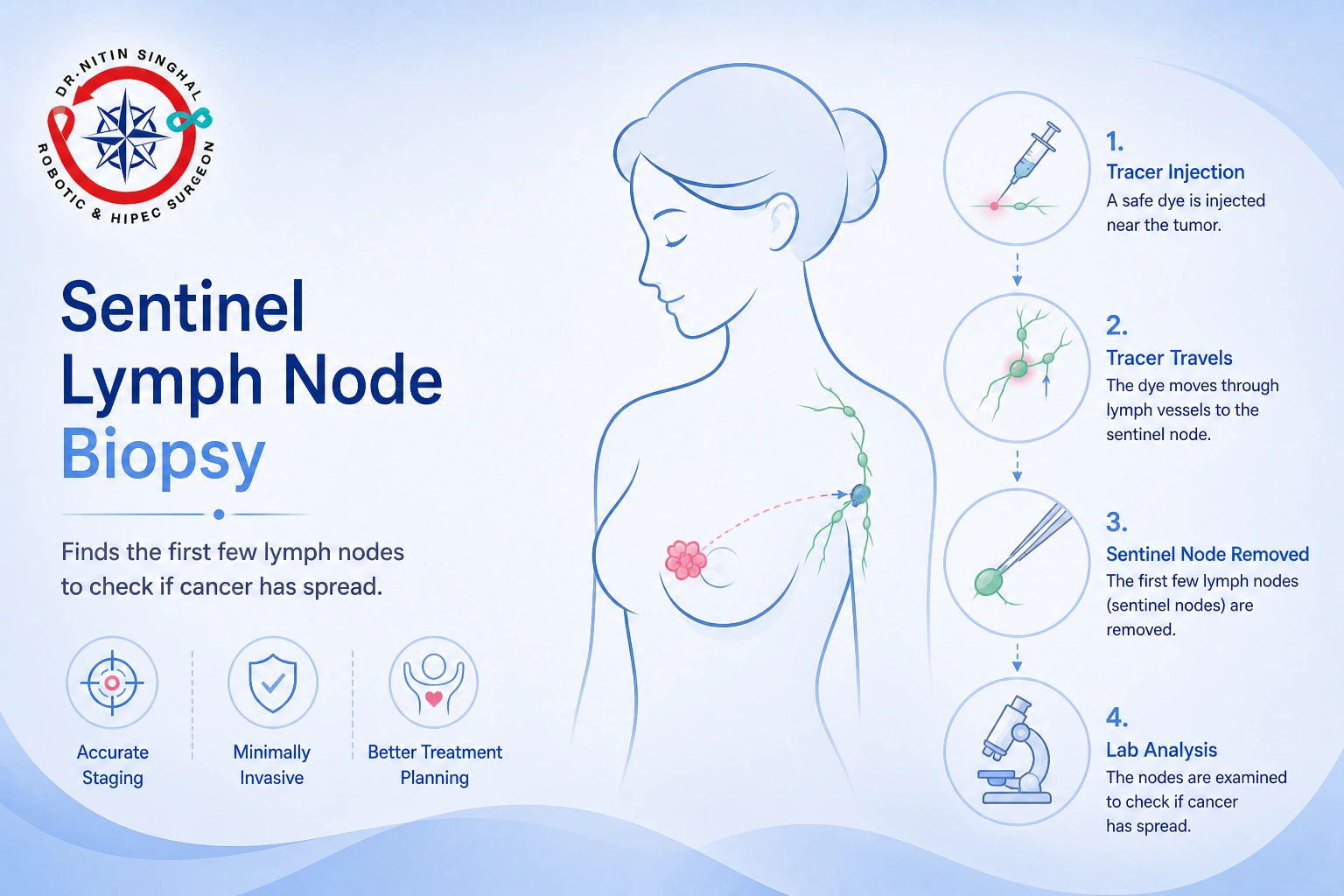
Sentinel Lymph Node Biopsy
A sentinel lymph node biopsy identifies and removes the first lymph node, or small group of nodes, that cancer cells would most likely reach first if the disease has spread beyond the breast — helping guide further treatment decisions.
This targeted approach helps avoid removing more lymph nodes than necessary when the sentinel node or nodes are found to be free of disease, which can reduce the risk of longer-term arm swelling (lymphoedema).
Common Indications
- Clinically node-negative early breast cancer
- Staging alongside breast-conserving surgery or mastectomy
- Assessed individually based on imaging and clinical exam
- May be followed by further axillary surgery if nodes are involved
What To Expect, Step By Step
Every breast cancer case moves through the same careful sequence — designed for an accurate diagnosis and a treatment plan that fits your priorities.
Consultation
Review of mammograms, ultrasound or MRI, biopsy results and symptoms to understand your specific case.
Diagnosis & Staging
Imaging and pathology review, with genetic counselling discussed where relevant, to confirm stage and plan.
Surgery ± Reconstruction
Breast-conserving surgery or mastectomy, with oncoplastic or robotic-assisted technique where suitable.
Recovery & Follow-up
Structured post-op care, coordination with oncology/radiation teams, and long-term monitoring.
Breast Cancer Surgery — Common Questions
What is the difference between breast-conserving surgery and mastectomy?
Can the breast be reconstructed after mastectomy?
What is robotic-assisted breast surgery?
What is a sentinel lymph node biopsy and why is it done?
Do I need a second opinion before deciding on breast cancer surgery?
What Our Patients Say
Live reviews collected from Google, reflecting real patient experiences with Dr. Nitin Singhal and his team.
Treated successfully for left breast cancer at Sterling Hospital. Very happy with the treatment and recovery, and grateful to Dr. Singhal and his entire team for their excellent care and guidance.
Dr. Singhal guided us clearly through an advanced colon cancer diagnosis and carried out HIPEC surgery for my father. We are thankful for his cooperation and would recommend him to anyone facing cancer.
From the first consultation through recovery, the entire team showed real professionalism and compassion. Dr. Singhal was able to explain a complex diagnosis in a way we could easily understand.
Discuss Your Diagnosis With Dr. Nitin Singhal
Share your mammogram, ultrasound or biopsy reports for an expert second opinion, or call to book a consultation directly.