
Anal Canal Cancer Treatment in Ahmedabad
Dr. Nitin Singhal offers comprehensive evaluation and treatment planning for anal canal cancer in Ahmedabad — including chemoradiation coordination and, where needed, salvage robotic surgery — bringing 18+ Years of Experience.
Dr. Nitin Singhal
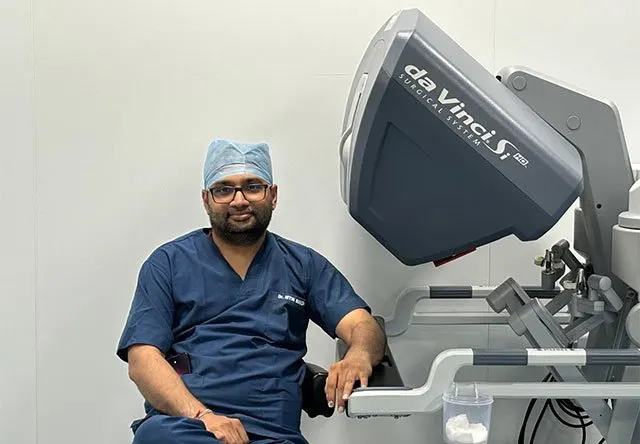
Dr. Nitin Singhal is a Robotic and HIPEC surgeon based in Ahmedabad, specialising in gastrointestinal oncology. For anal canal cancer, he coordinates care around chemoradiation as the primary treatment, and provides salvage surgical expertise, including robotic-assisted technique, for the smaller group of patients whose cancer persists or returns afterward.
Care Coordinated Around the Right Sequence
What Is Anal Canal Cancer?
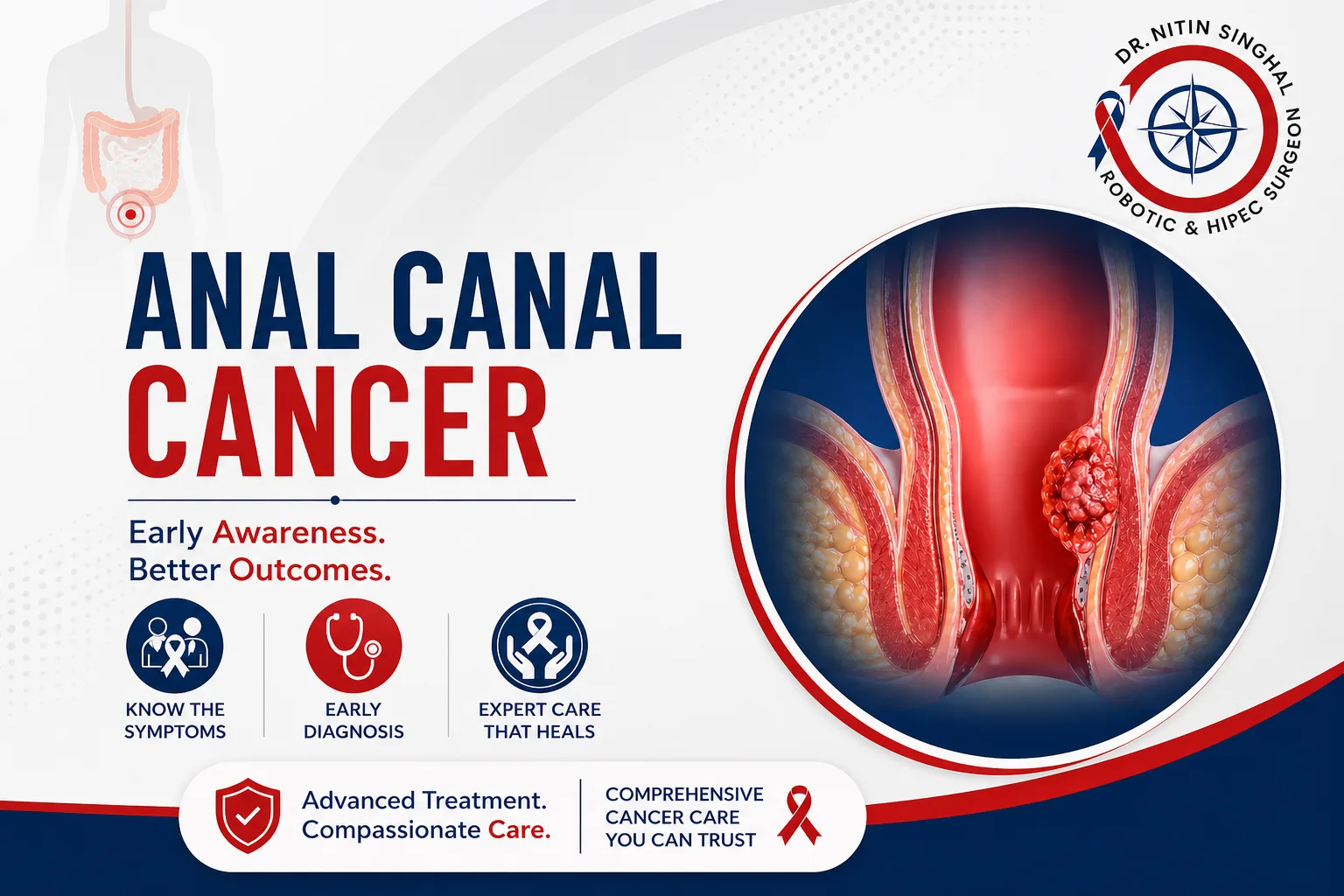
Anal canal cancer develops in the short segment of the digestive tract between the rectum and the anal opening. Although it sits close to the rectum, it is a distinct condition from colon or rectal cancer, with different underlying causes, a different most-common cell type (often squamous cell carcinoma), and a different first-line treatment approach.
Because of this, anal canal cancer is generally managed separately from colorectal cancer, even though the anatomy is adjacent. Most patients are treated primarily with chemoradiation rather than surgery, which is an important distinction from colon and rectal cancer treatment.
Symptoms to Watch For
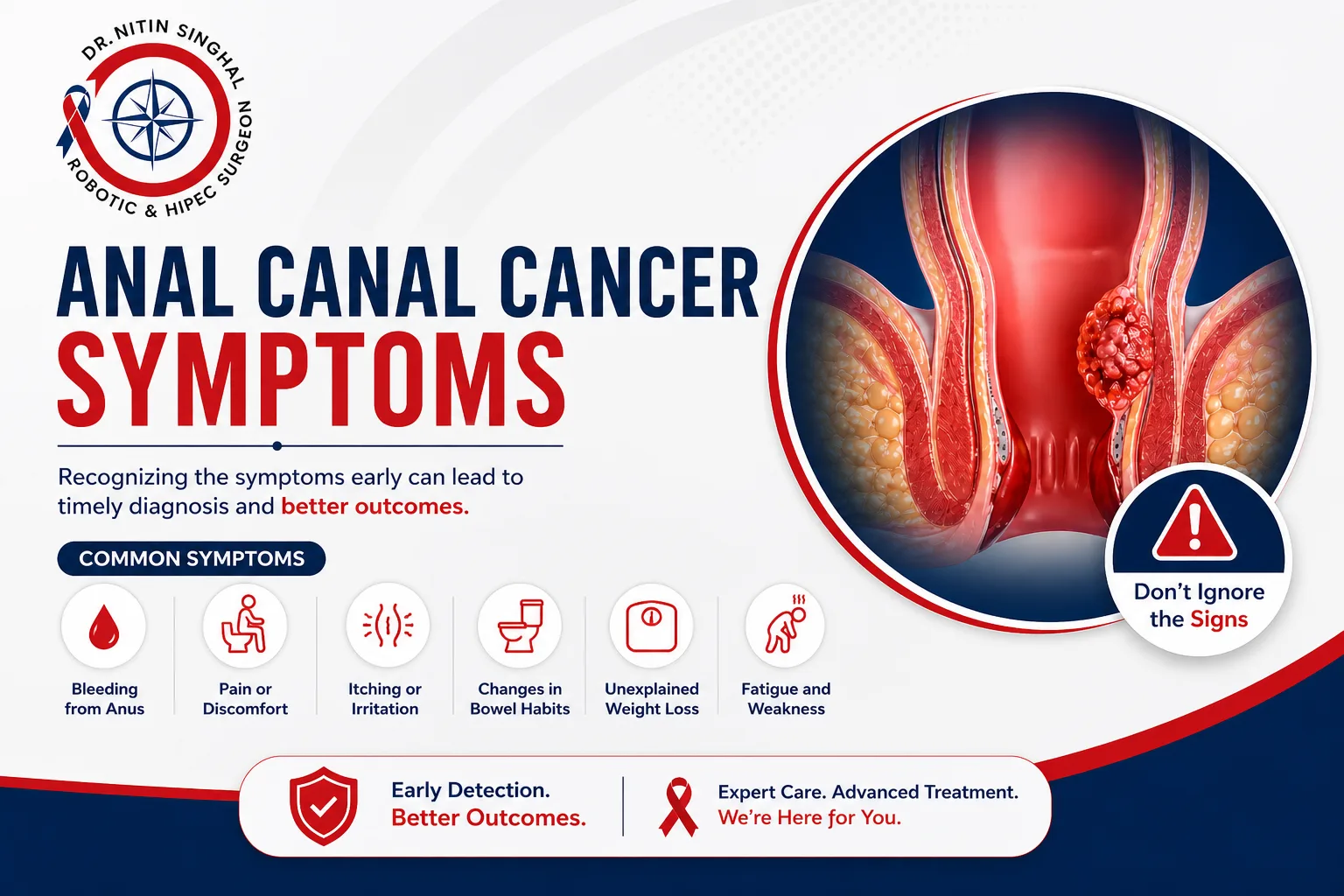
Symptoms can overlap with common, non-cancerous conditions such as haemorrhoids, which is why persistent symptoms should always be evaluated by a doctor rather than self-diagnosed.
Rectal Bleeding
Bleeding from the anus or rectum, often the first symptom noticed.
Anal Pain or Pressure
Persistent pain, discomfort or a feeling of pressure in the anal area.
A Lump Near the Anus
A new lump or growth felt at or near the anal opening.
Itching or Discharge
Persistent anal itching or unusual discharge.
Change in Bowel Habits
A change in the frequency or shape of bowel movements.
Swollen Lymph Nodes
Swelling in the groin, which can occur if the cancer has spread to nearby lymph nodes.
What Increases the Risk?
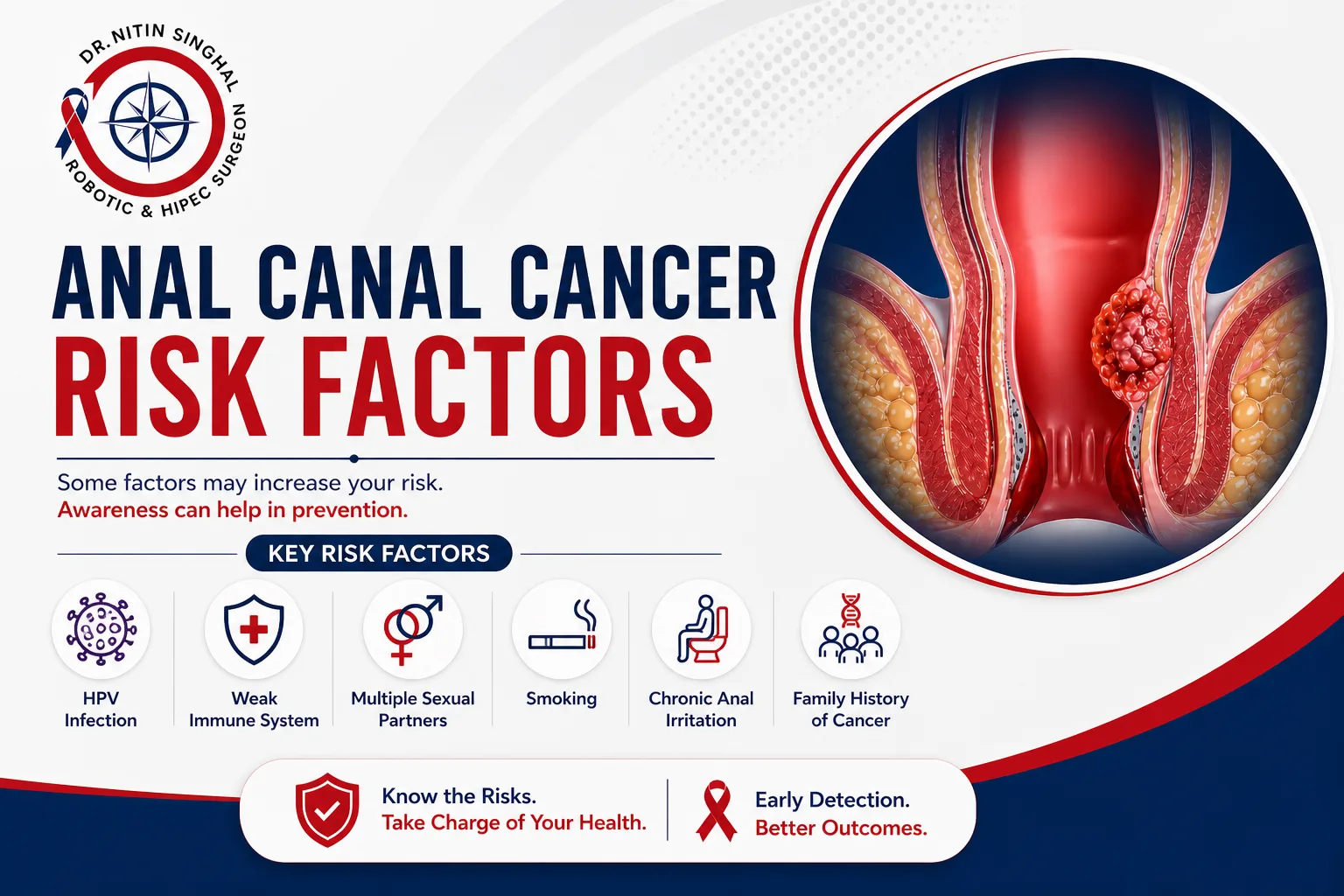
Anal canal cancer has a different risk profile from colon or rectal cancer. Having one or more risk factors does not mean a person will develop it — it means awareness and appropriate screening become more relevant.
HPV Infection
Persistent infection with certain strains of human papillomavirus (HPV) is the leading risk factor.
Weakened Immune System
Conditions that suppress immunity, including HIV infection or immunosuppressive medication, raise risk.
Smoking
Tobacco use is associated with a higher risk of anal canal cancer.
History of HPV-Related Cancer
A prior HPV-related cancer, such as cervical or vulvar cancer, increases risk.
Multiple Sexual Partners
A higher number of sexual partners is associated with increased HPV exposure and risk.
Age
Risk increases with age, most commonly diagnosed in older adults.
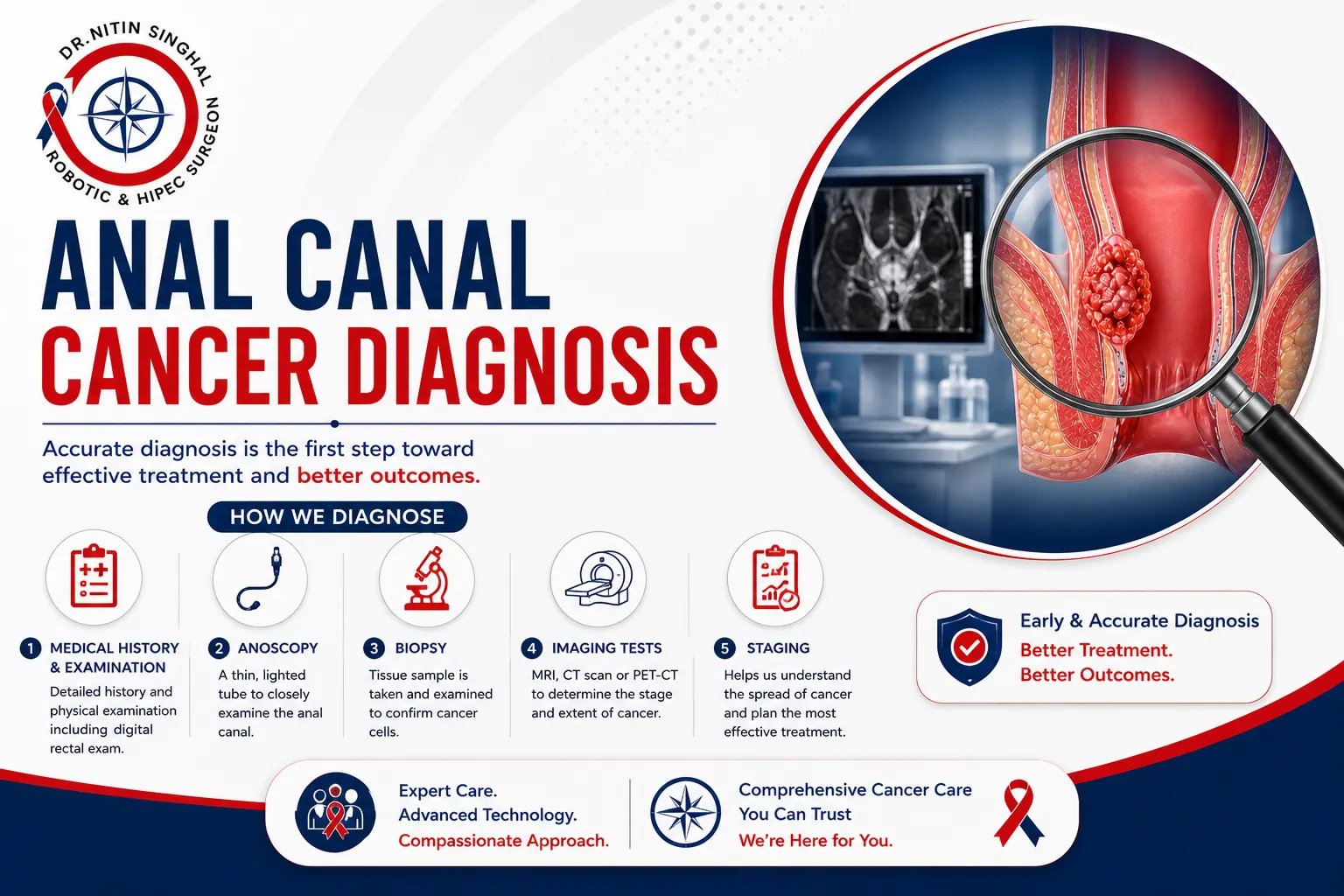
How Is Anal Canal Cancer Diagnosed?
Clinical evaluation — a review of symptoms and medical history, including a digital rectal examination.
Anoscopy — a direct examination of the anal canal using a small scope.
Biopsy — a tissue sample to confirm whether a growth is cancerous.
Imaging — MRI, CT or PET scans to assess tumour extent and check for spread to lymph nodes or elsewhere.
HPV testing — considered in some cases as part of the overall clinical picture.
Staging — combining the above to determine the cancer's stage and guide treatment planning.
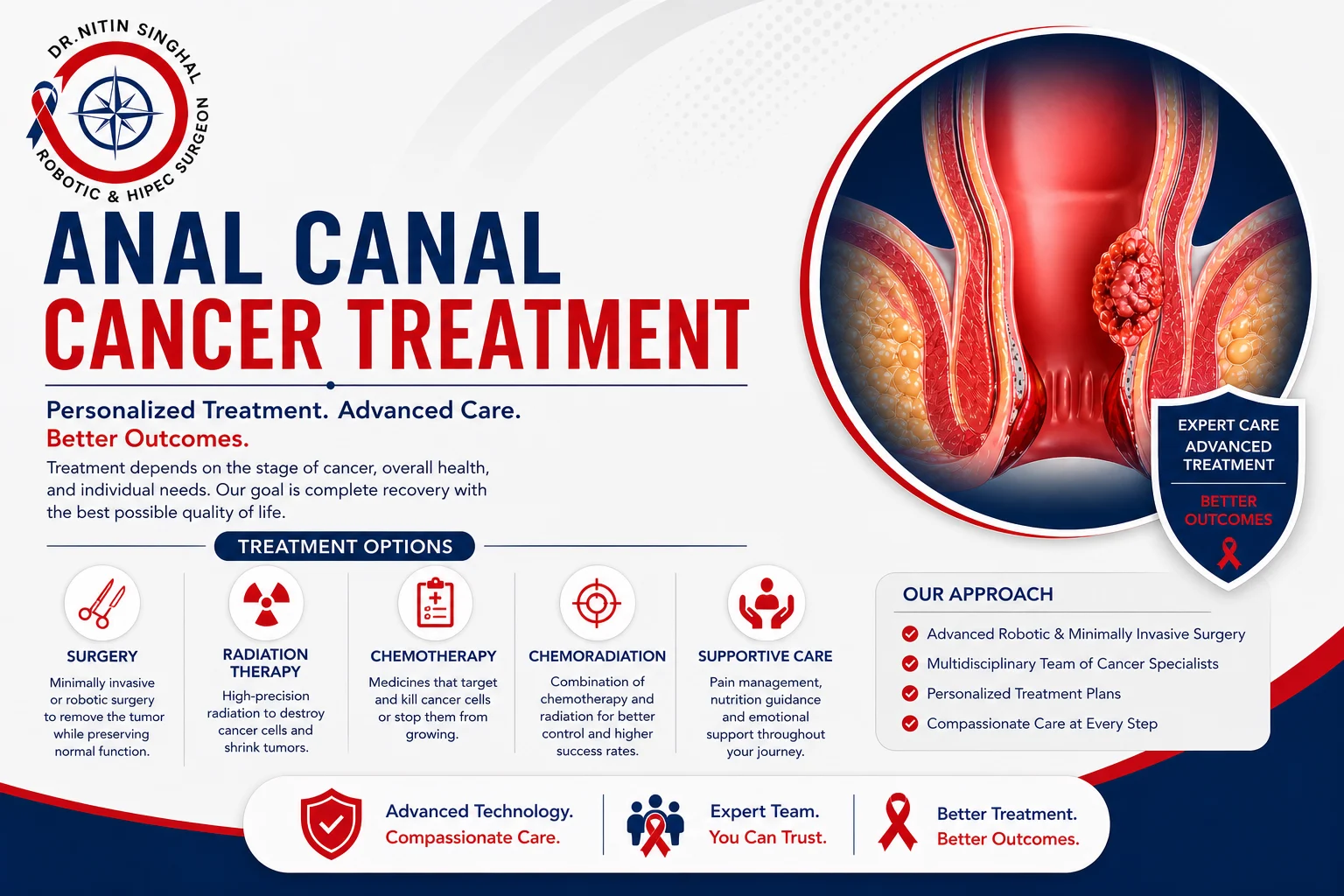
How Anal Canal Cancer Is Treated
Unlike colon or rectal cancer, anal canal cancer is usually treated with chemoradiation first — surgery is generally not the first step.
Chemoradiation
A combination of chemotherapy and radiation therapy is the standard first-line treatment for most patients.
Local Excision
For very small, early-stage tumours confined to the surface, limited surgical removal may be considered.
Salvage Surgery
Reserved for cancer that persists or returns after chemoradiation, typically abdominoperineal resection.
Systemic Therapy
Additional or alternative systemic treatment considered for advanced or metastatic disease.
Multidisciplinary Planning
Radiation oncology, medical oncology and surgical oncology teams plan treatment together.
Follow-Up Surveillance
Structured monitoring after treatment, including regular clinical examination, to check for recurrence.
Why Choose Dr. Nitin Singhal?
Robotic & HIPEC Cancer Surgeon
Focused practice in robotic-assisted and complex cancer surgery, including gastrointestinal oncology.
Multidisciplinary Coordination
Works alongside radiation and medical oncology teams to sequence chemoradiation and, if needed, surgery.
Training & Qualifications
MBBS, MS (General Surgery), MCh (Surgical Oncology) with training at Tata Memorial centre, Mumbai.
18+ Years of Experience
Focused specifically in surgical oncology.
Salvage Surgical Expertise
Experienced in complex salvage surgery for cancers that persist or recur after initial treatment.
Honest, Direct Guidance
Clear explanation of when surgery is — and is not — the right next step.

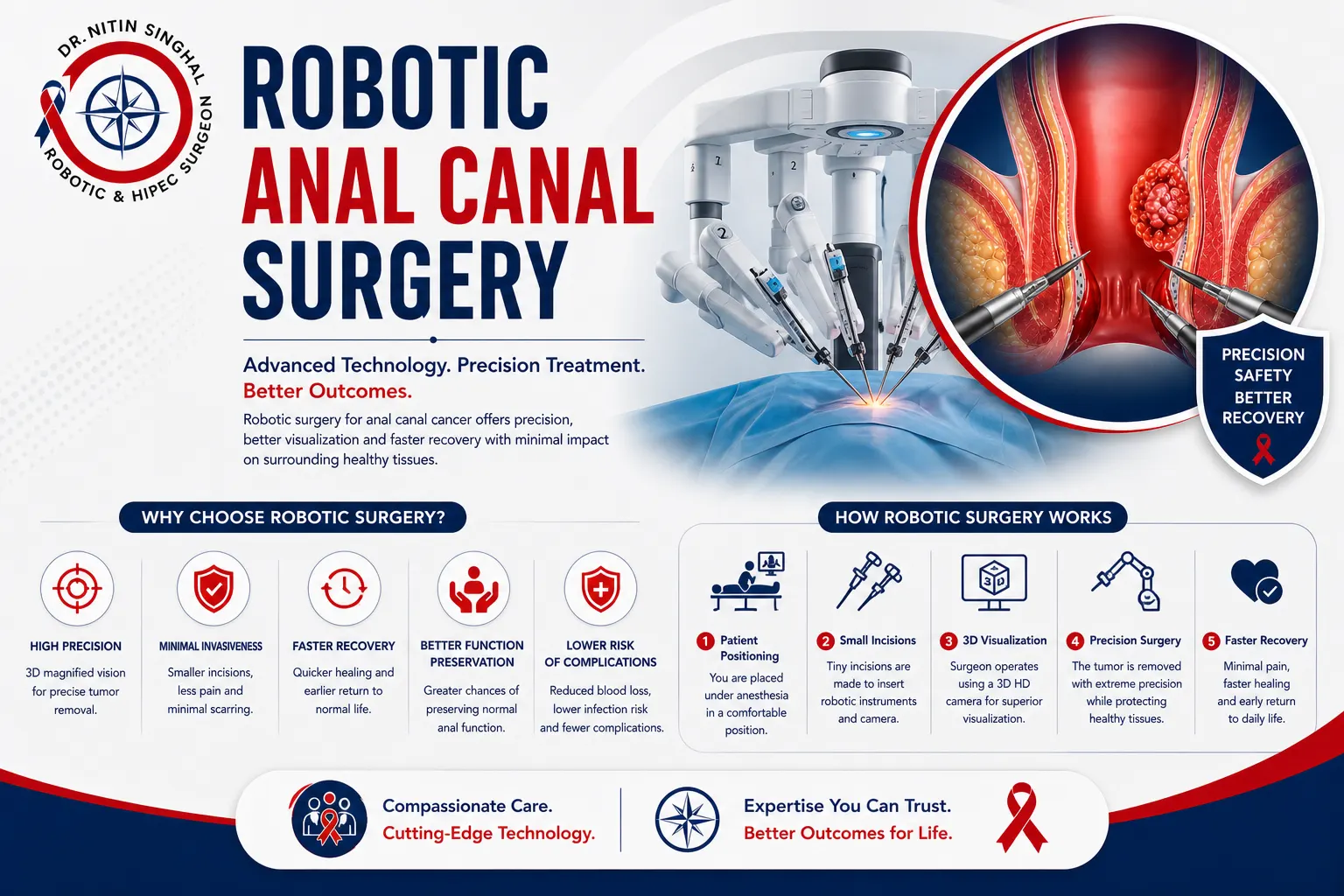
Salvage Surgery for Anal Canal Cancer
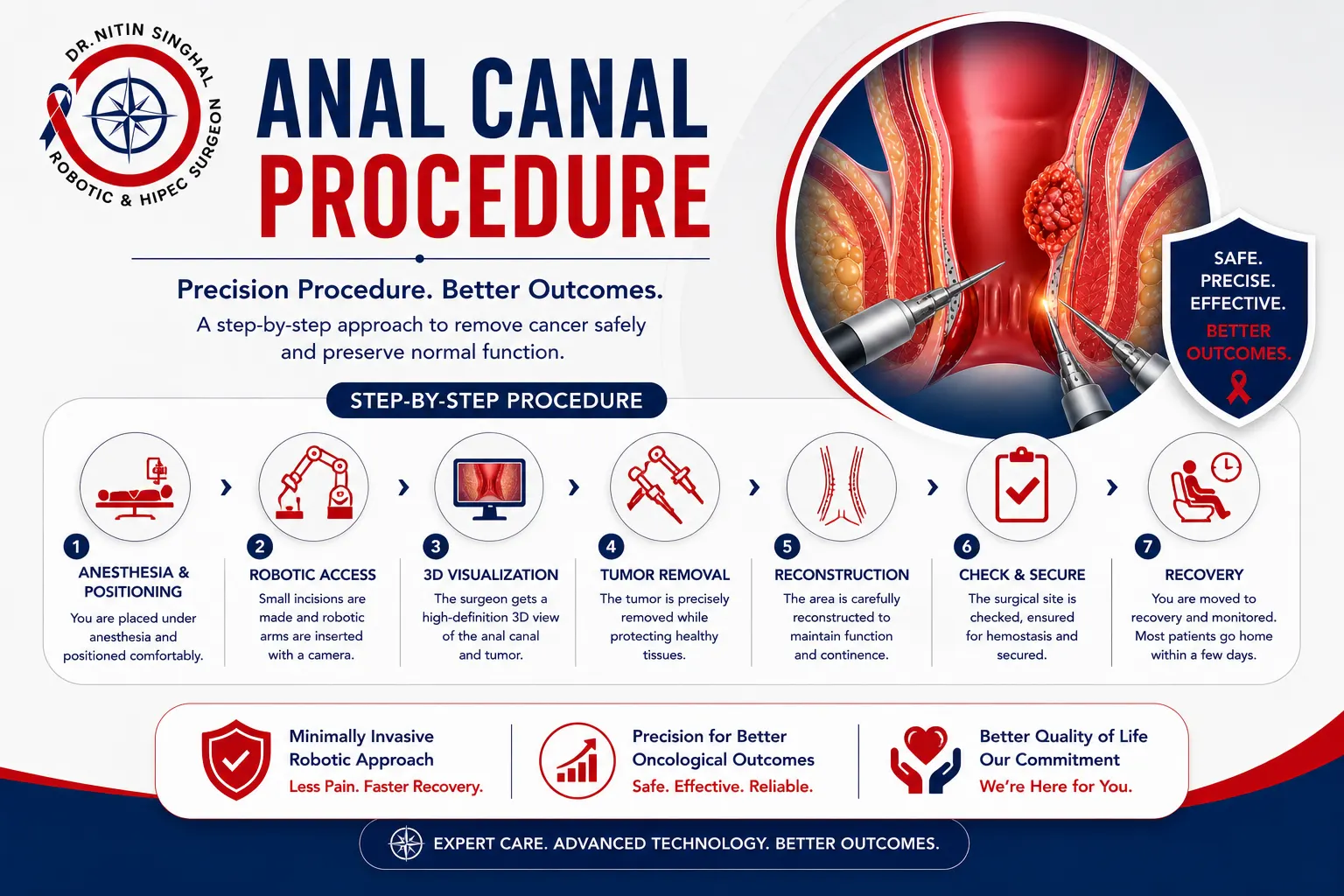
For most patients, chemoradiation successfully controls anal canal cancer without surgery. Salvage surgery — most often an abdominoperineal resection (APR), removing the anus, rectum and part of the sigmoid colon — is reserved for the smaller group of patients whose cancer does not fully respond to chemoradiation or returns afterward. This procedure usually requires a permanent colostomy.
In selected patients requiring salvage surgery, robotic-assisted technique may be used to perform the resection with magnified 3D visualisation and precise dissection. As with any surgery in this setting, suitability depends on the individual case, prior treatment and overall health, assessed carefully during consultation.
Types of Procedures Used
The right approach depends on tumour stage, response to chemoradiation, and individual patient factors.
Robotic vs Laparoscopic vs Open Surgery
Applicable when salvage surgery is needed — a general comparison of approach.
| Feature | Open Surgery | Laparoscopic Surgery | Robotic Surgery |
|---|---|---|---|
| Incisions | Larger | Smaller | Smaller |
| Visualisation | Direct | Camera-assisted, 2D | Enhanced 3D visualisation |
| Instrument Movement | Conventional, surgeon's hand | Limited range of motion | Wristed, surgeon-controlled robotic instruments |
| Recovery | Procedure-dependent | Procedure-dependent | Procedure-dependent |
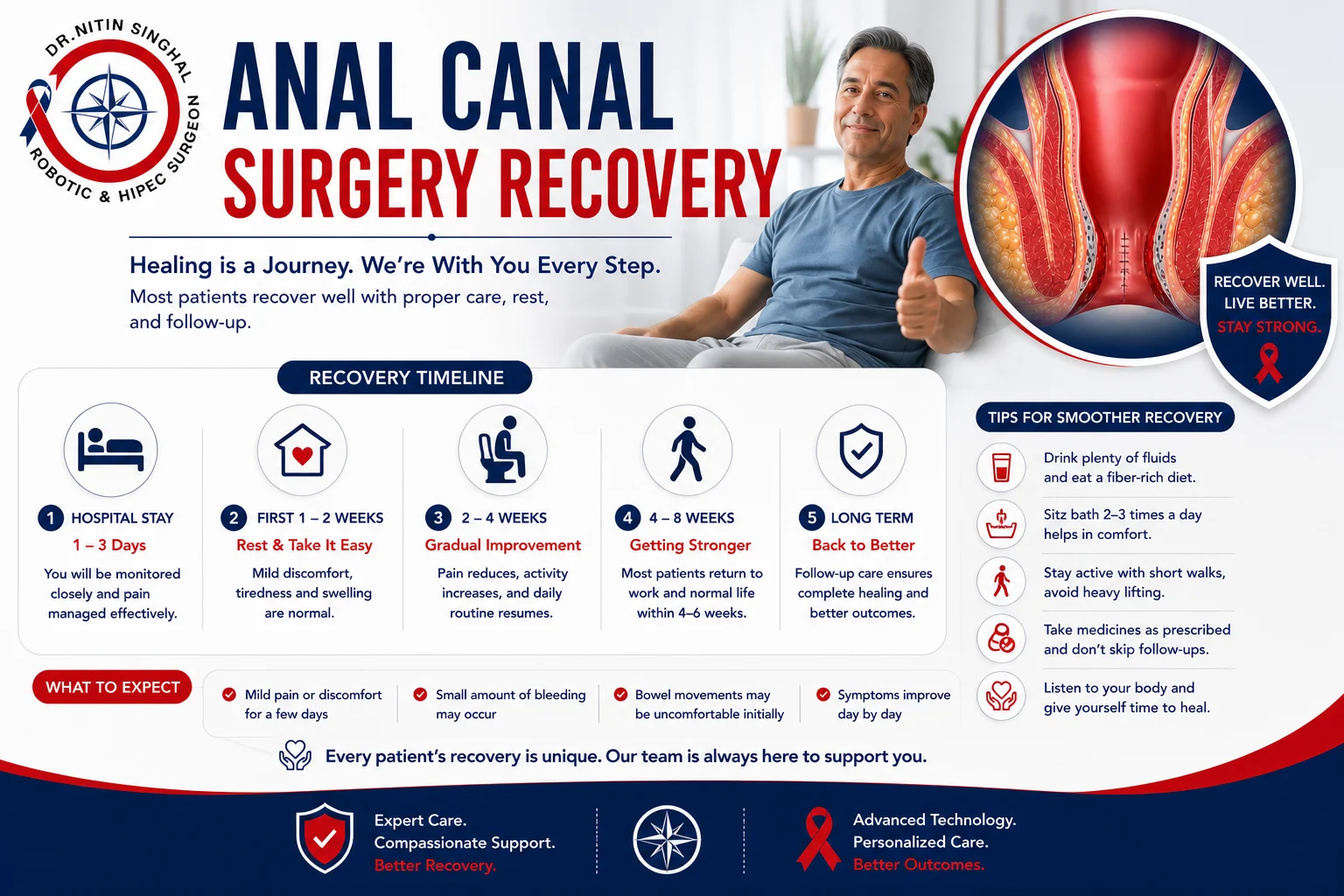
Recovery & Follow-Up
Managing Chemoradiation Side Effects
Supportive care for skin reactions, fatigue and bowel changes during chemoradiation.
Hospital Stay & Pain Management
Structured post-operative care with pain managed through the recovery period.
Colostomy Care & Support
Guidance and support adjusting to a permanent colostomy after salvage surgery.
Follow-Up Examinations
Regular clinical follow-up after treatment completion to monitor for recurrence.
Risks & Possible Complications
Both chemoradiation and salvage surgery carry risks, which should be discussed in detail with your treating team.
Skin & Tissue Reactions
Radiation can cause skin irritation or breakdown in the treated area.
Bowel & Bladder Changes
Chemoradiation and surgery can both affect bowel and bladder function.
Infection
A possible complication of both radiation-related tissue changes and any surgery.
Bleeding
As with any major surgery, there is a risk of bleeding during or after the procedure.
Wound Healing Issues
The perineal wound after abdominoperineal resection can be slow to heal in some patients.
Sexual & Urinary Function
Both chemoradiation and salvage surgery can affect nearby nerve function.
Myths vs Facts
What Our Patients Say
Live reviews collected from Google, reflecting real patient experiences with Dr. Nitin Singhal and his team.
Cancer Care, Explained on Video
Patient-friendly explainers on cancer diagnosis, treatment and recovery from Dr. Nitin Singhal.
Common Questions
What is anal canal cancer?
Is anal canal cancer treated with surgery?
What causes anal canal cancer?
What is a salvage abdominoperineal resection?
Is robotic surgery used for anal canal cancer?
Do I need a second opinion for anal canal cancer treatment?
Have Questions About Anal Canal Cancer Treatment?
Share your reports for an expert second opinion, or call to book a consultation directly.