
Neo Bladder Surgery After Bladder Cancer
Orthotopic neobladder reconstruction with robotic radical cystectomy — a way to remove bladder cancer while helping many patients void naturally again.
About Dr. Nitin Singhal
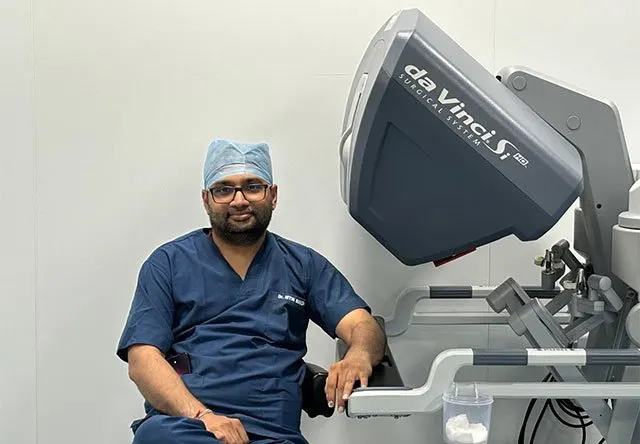
Dr. Nitin Singhal is a robotic and HIPEC cancer surgeon based in Ahmedabad, focused on minimally invasive treatment for complex cancers of the urinary, gynecological, and gastrointestinal systems, including bladder cancer requiring radical cystectomy and neobladder reconstruction. He trained in Surgical Oncology at Tata Memorial Centre, Mumbai, and brings 18+ years of experience to every case.
He uses the robotic surgical platform to combine oncological thoroughness with precision that supports faster recovery, and works closely with each patient to explain their diagnosis, treatment options, and what to expect at every stage — from diagnosis through surgery and recovery.
What Is Neo Bladder Surgery?
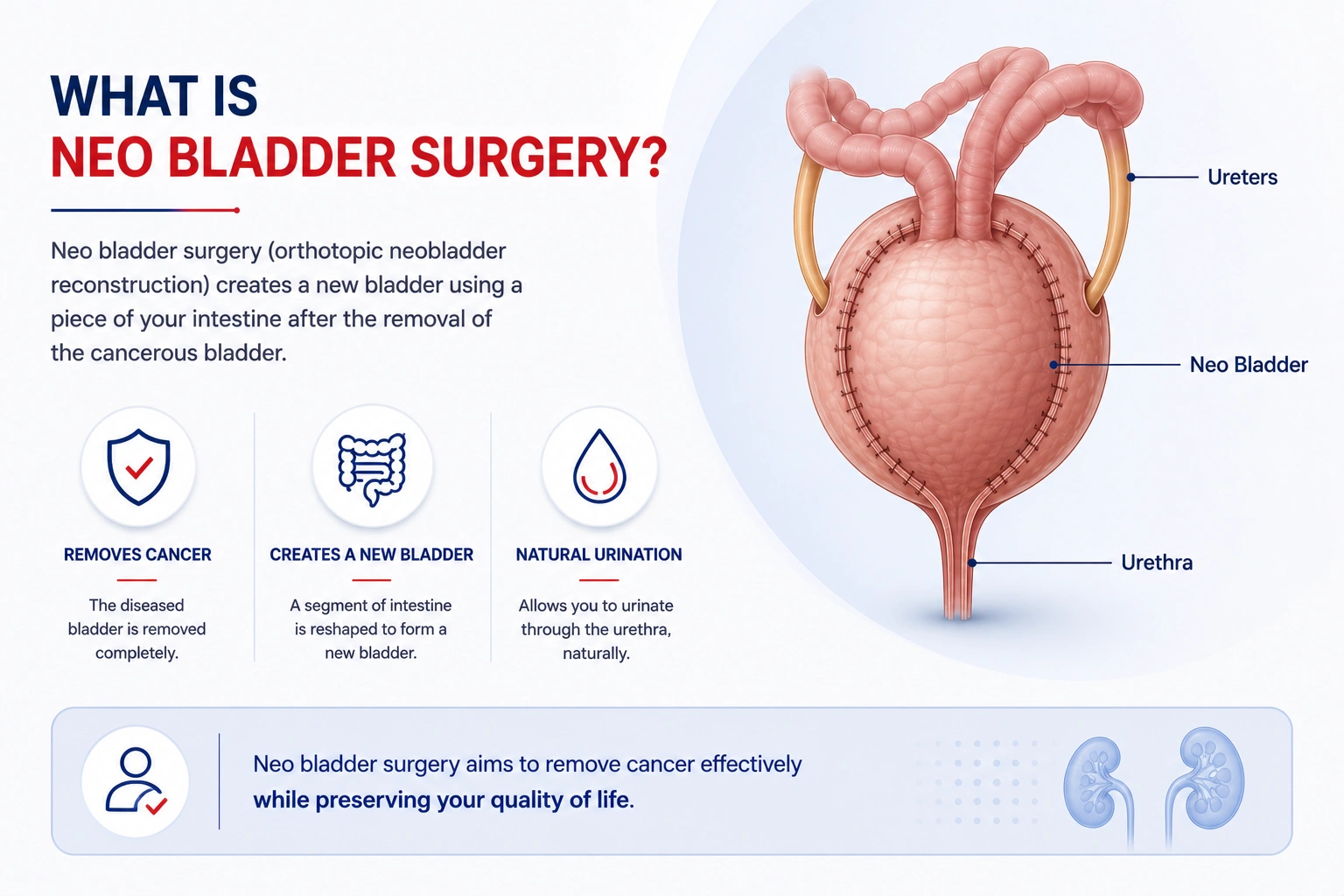
When bladder cancer requires removal of the bladder, a neobladder is one of several ways to reroute urine afterward. Built from a piece of your own intestine and connected to your urethra, it lets many patients continue to pass urine through the urethra in a near-natural way, rather than through an external bag. Below, Dr. Nitin Singhal explains what the surgery involves, who it suits, and what recovery looks like.
Neo bladder surgery, also called orthotopic neobladder reconstruction, rebuilds a urine-storage pouch from a segment of your small intestine after the diseased bladder is removed. Surgeons reshape this segment into a low-pressure reservoir and stitch it to your urethra and both ureters, restoring a pathway that most closely resembles the body's original plumbing.
Because the new reservoir sits in roughly the same place as the original bladder and connects to the urethra, many patients are able to urinate by relaxing their pelvic floor, without needing an external collection bag.
Bladder Cancer Symptoms
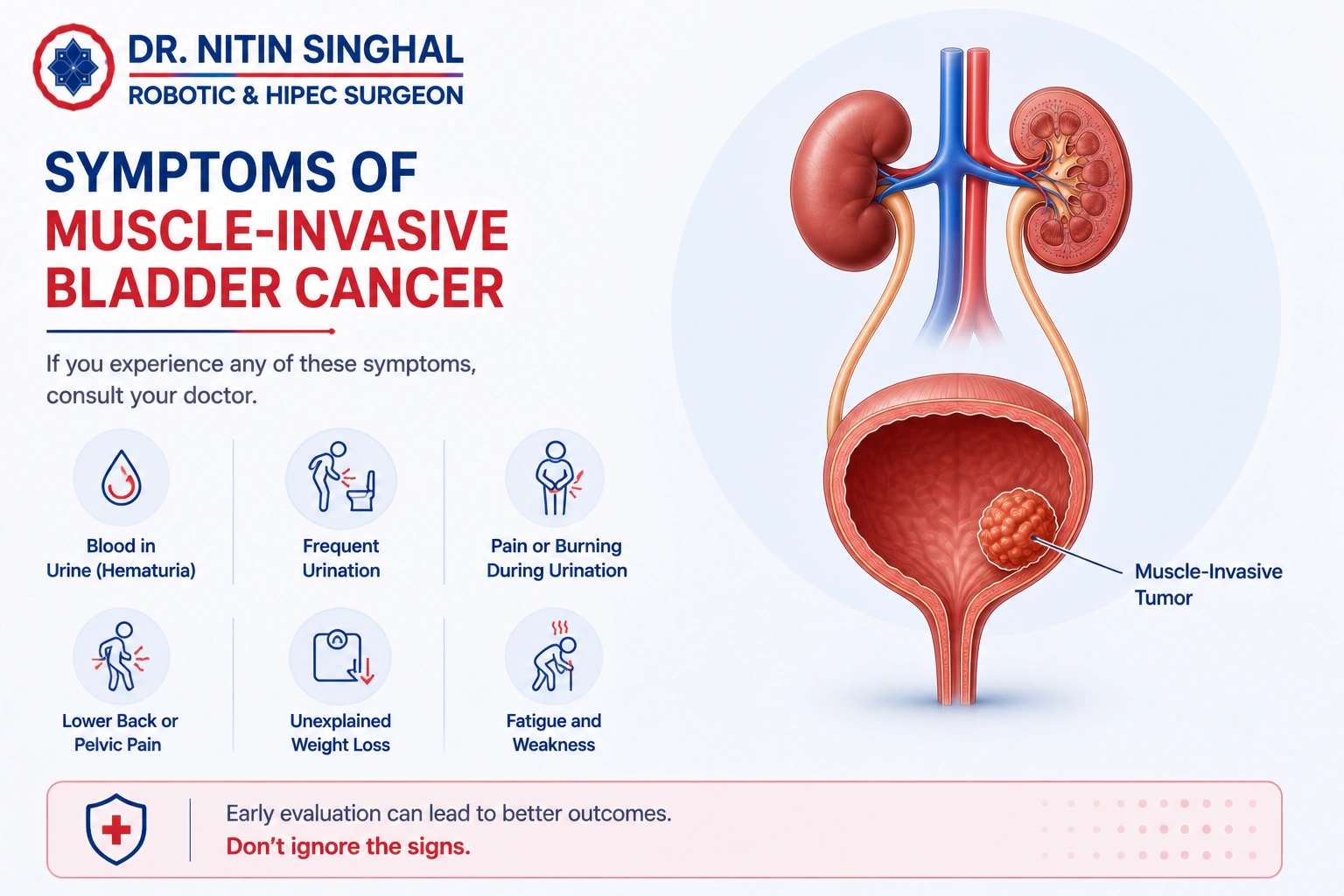
Bladder cancer often announces itself quietly at first, which is why symptoms are easy to dismiss. The most common early sign is blood in the urine — sometimes visible, sometimes only picked up on a urine test — and it can come and go, which can be misleading.
- Blood in the urine (visible or microscopic)
- Frequent or urgent need to urinate
- Pain or burning during urination
- Lower back or pelvic pain in more advanced disease
- Unexplained fatigue or weight loss
Neo Bladder Candidacy
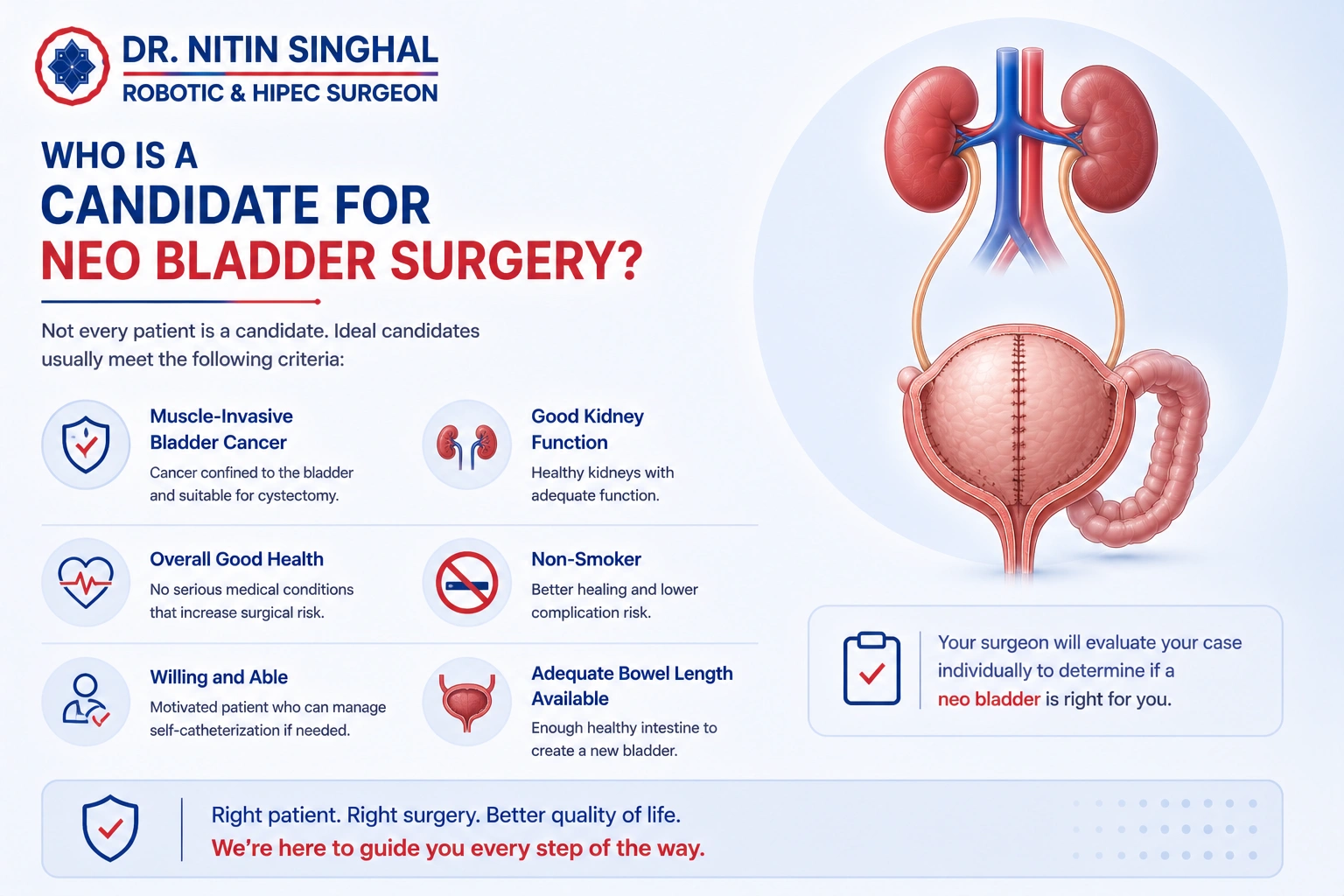
Not everyone who needs a cystectomy is a candidate for a neobladder. Your surgical team looks closely at the tumor's location and stage — particularly whether it involves the urethra — along with your kidney and liver function, prior pelvic radiation, and any bowel disease that could rule out using intestine for reconstruction.
Overall fitness, motivation to perform pelvic floor exercises, and willingness to self-catheterize occasionally if retention occurs are also part of the conversation, since the neobladder relies on your own effort and healing to work well.
Bladder Cancer Diagnosis
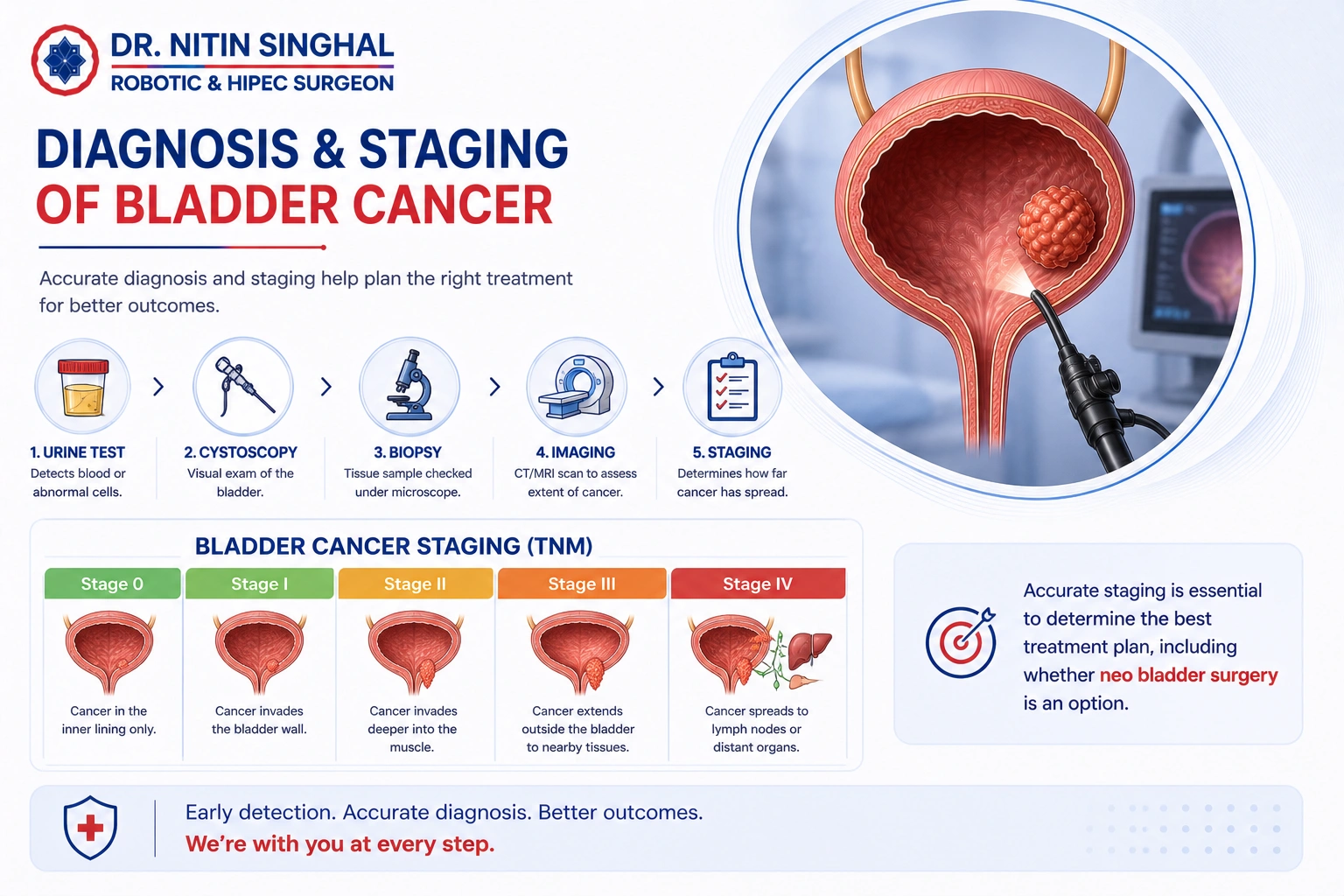
Diagnosis usually starts with a cystoscopy, where a thin camera examines the bladder lining directly, alongside urine cytology to look for abnormal cells. If a suspicious growth is found, a transurethral resection of bladder tumor (TURBT) removes and samples the tissue for a definitive pathology report.
Imaging — typically a CT urogram or MRI — then maps how deep the tumor extends and whether it has spread, which together with the pathology determines the stage and guides whether cystectomy and neobladder reconstruction are appropriate.
Robotic Radical Cystectomy
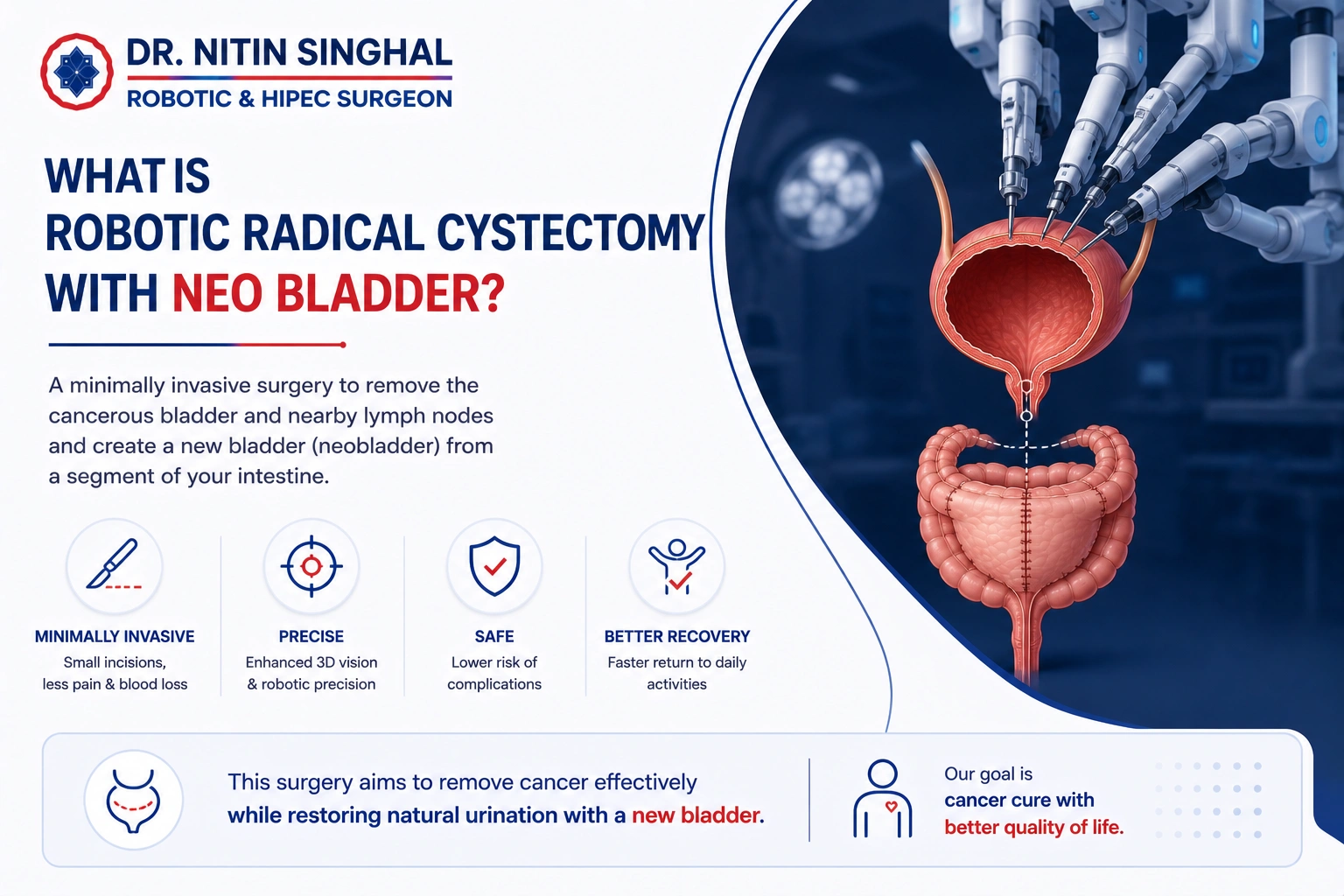
Radical cystectomy is the removal of the entire bladder along with nearby lymph nodes, and in many cases the prostate and seminal vesicles in men, or the uterus and part of the vaginal wall in women, depending on tumor spread. Performed robotically, the surgery is done through a handful of small keyhole incisions rather than one large one.
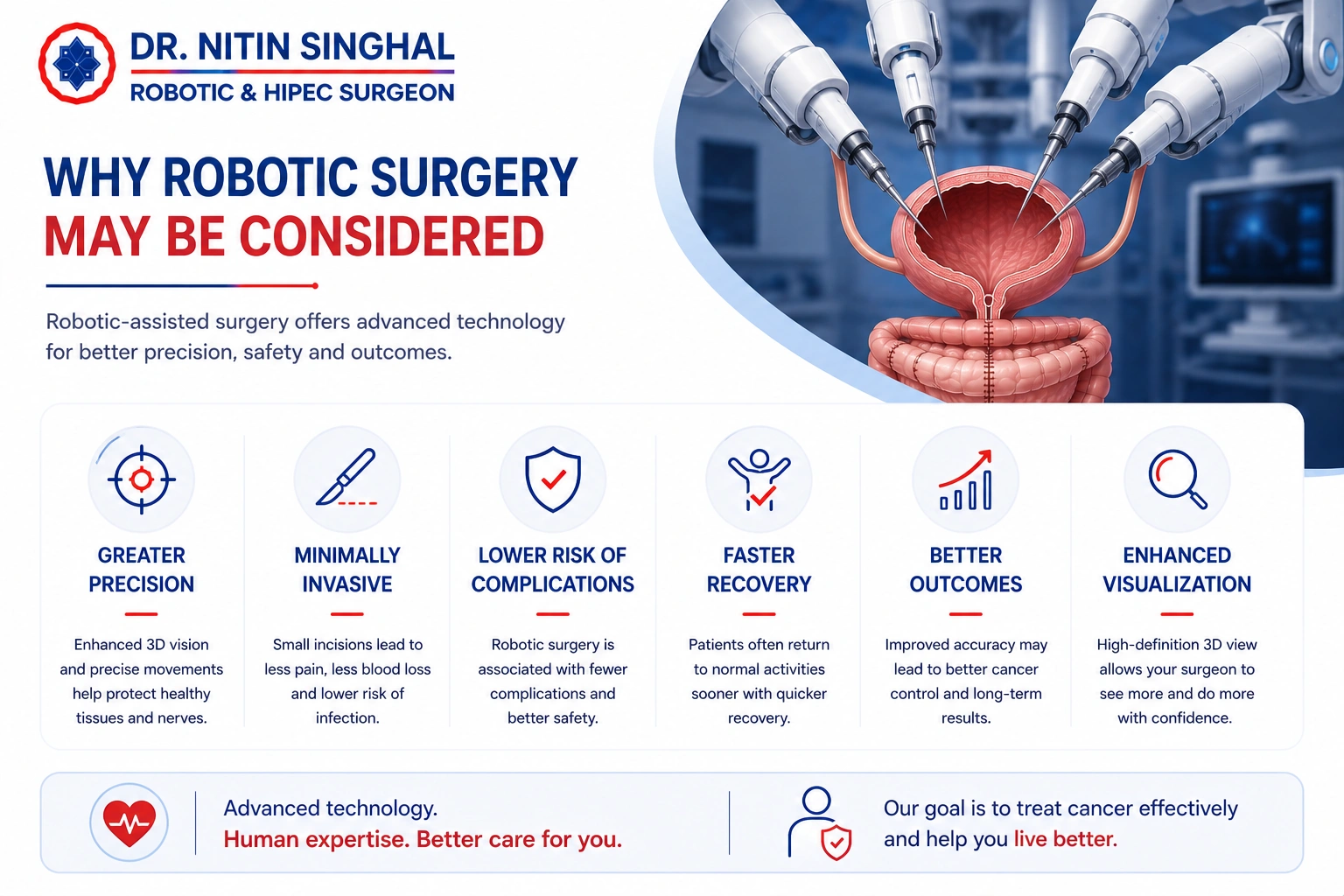
The robotic platform gives Dr. Singhal a magnified, three-dimensional view and wristed instruments that move with greater precision in the confined space of the pelvis, which helps with careful lymph node clearance and, where appropriate, sparing of nerves involved in continence and sexual function.
Robotic Cystectomy Benefits
- Smaller incisions and less visible scarring
- Reduced blood loss during surgery
- Shorter hospital stay for many patients
- Lower rates of wound-related complications
- Faster return to daily activities compared with open surgery
- Enhanced visualization to support nerve-sparing where feasible
Neo Bladder Procedure Types
Several configurations of orthotopic neobladder exist, and the choice depends on bowel length, anatomy, and surgeon experience. Most use a segment of the ileum (small intestine) opened up and folded into a spherical or W-shaped pouch to keep internal pressure low and storage capacity adequate.
Whichever configuration is used, the underlying goals stay the same — a low-pressure reservoir, secure connections to both ureters, and a watertight join to the urethra to support continence.
Neo Bladder Recovery
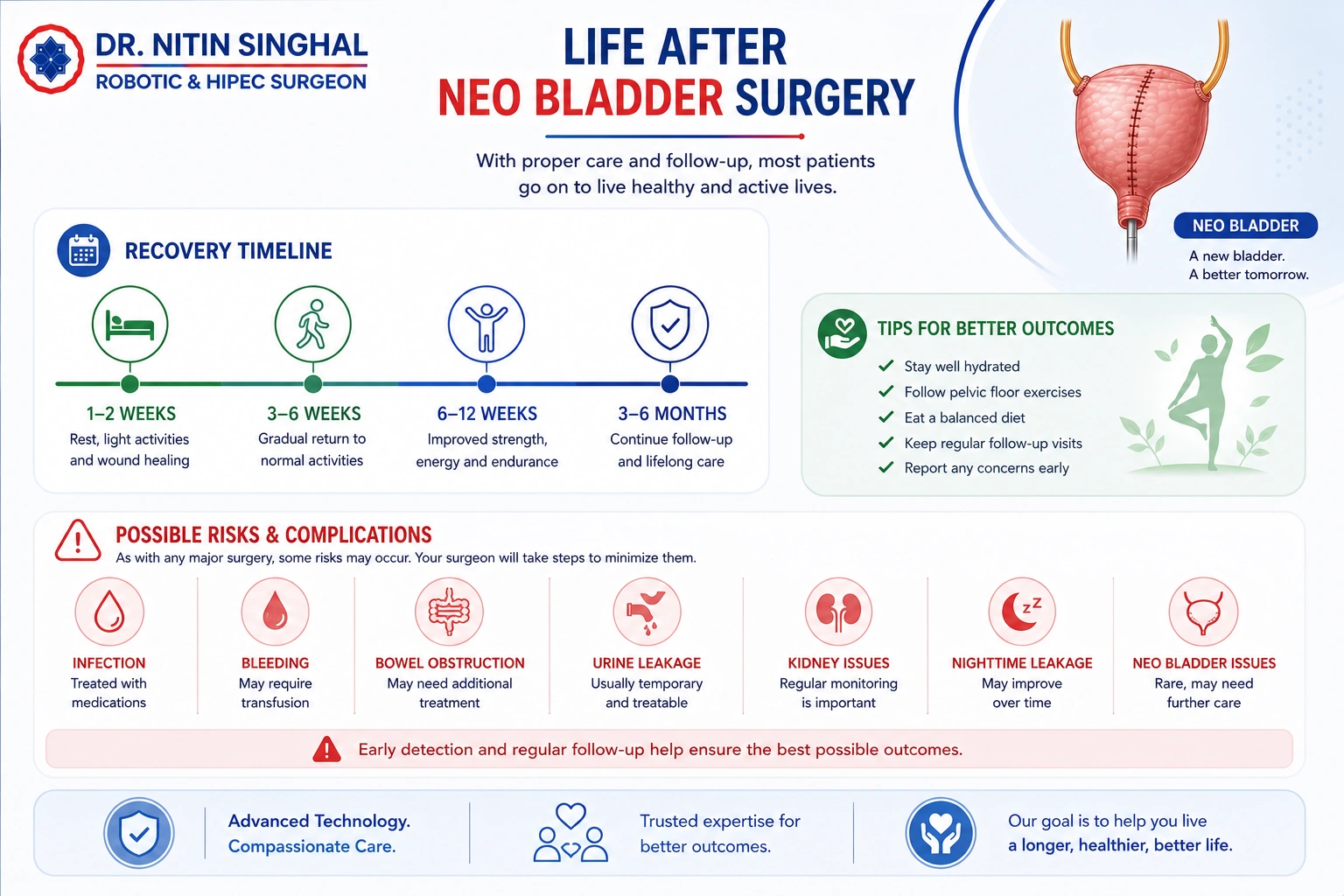
Most patients stay in the hospital for around one to two weeks after robotic radical cystectomy with neobladder reconstruction, with a catheter left in place for several weeks to let the new pouch heal before it takes on the full work of storing urine.
Daytime bladder control tends to improve steadily over three to six months with regular pelvic floor exercises, while night-time continence can take longer to settle, and some patients set an alarm to void overnight during this adjustment period. Regular follow-up checks kidney function and monitors for recurrence.
Urinary Diversion Options
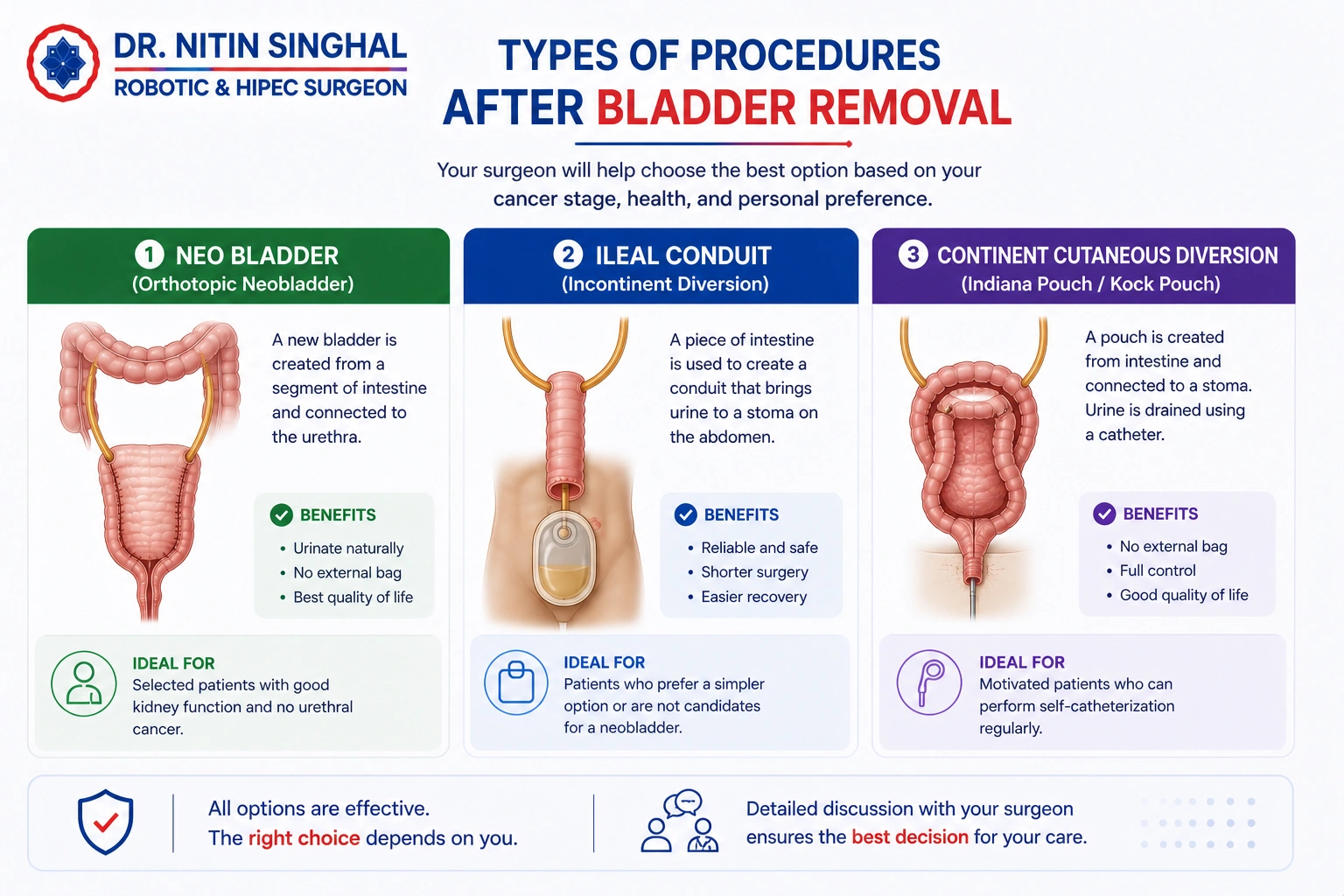
A neobladder is one of three main ways to reroute urine after cystectomy. Your surgeon will discuss which fits your anatomy, health, and preferences.
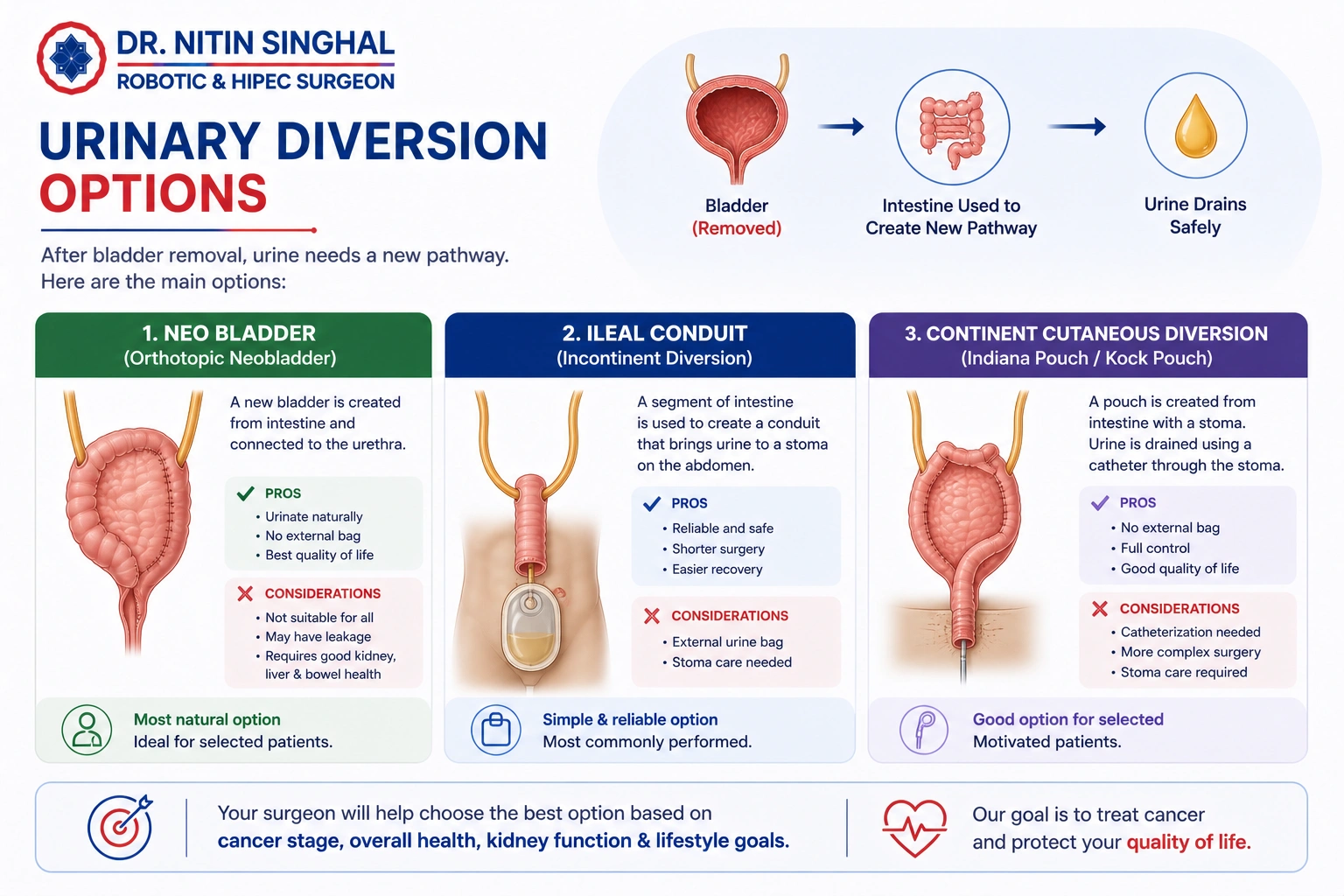
Simplest & Most Common
Urine drains continuously through a short segment of intestine to a stoma on the abdomen, collected in an external bag. It's the most established option and generally the shortest operation.
Internal Pouch, No Bag
An internal pouch stores urine and is emptied several times a day by self-catheterizing through a small abdominal stoma — no external bag, but a hands-on daily routine.
Closest To Natural Voiding
The reservoir connects to the urethra, allowing voiding without a stoma or bag for most patients — the most natural-feeling option, but it asks the most of pelvic floor retraining.
Neo Bladder Surgery, Step By Step
A general outline of how robotic radical cystectomy with neobladder reconstruction typically proceeds. Your surgical team will walk you through the specifics for your case.
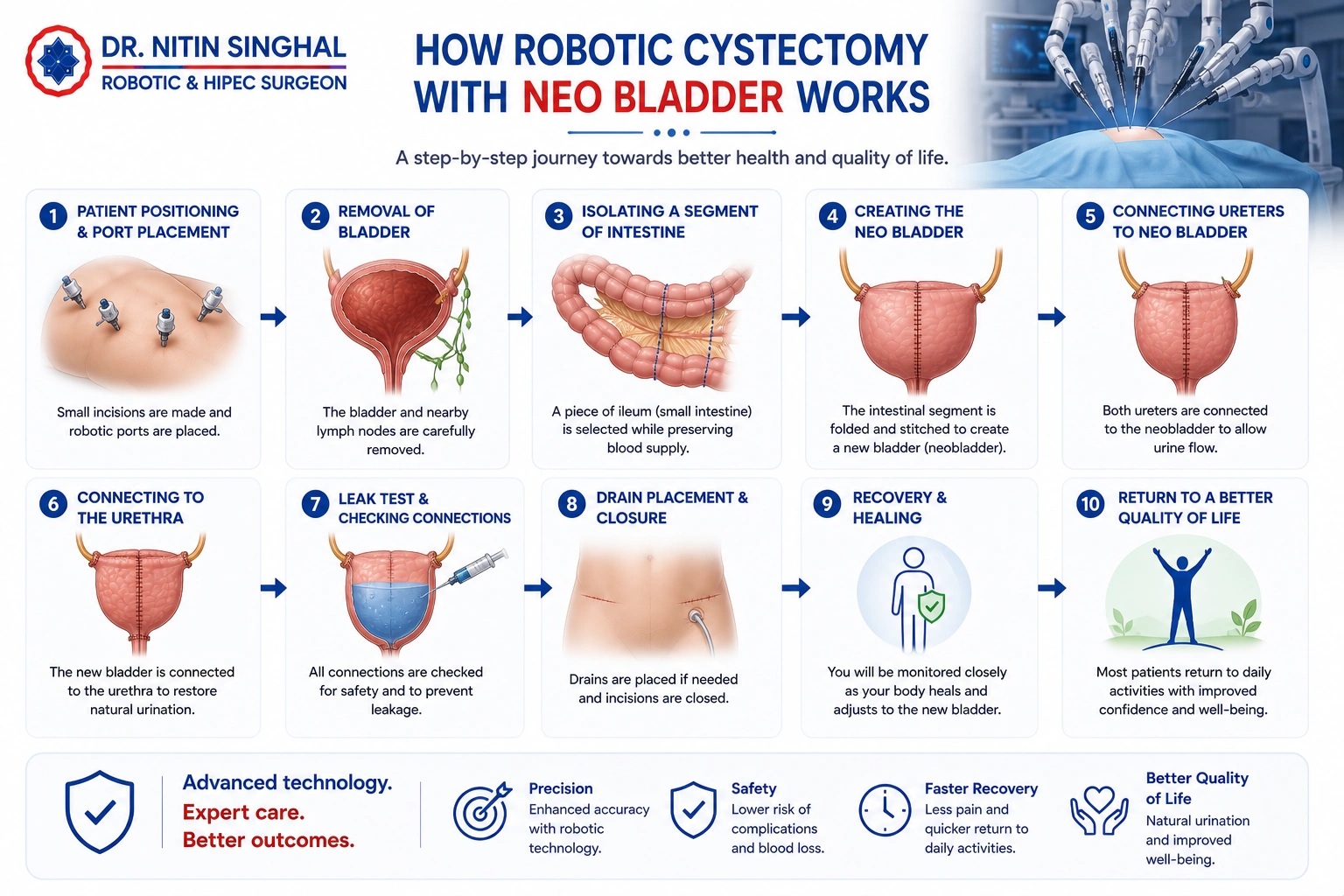
Anesthesia & Port Placement
Under general anesthesia, a handful of small keyhole incisions are made in the abdomen to place the robotic ports and camera.
Bladder & Lymph Node Removal
The surgeon detaches and removes the bladder along with the pelvic lymph nodes, and nearby organs if the cancer requires it.
Isolating The Bowel Segment
A segment of ileum is isolated, while the remaining bowel is reconnected so digestion continues normally.
Shaping The Reservoir
The isolated segment is opened and reshaped into a rounded, low-pressure pouch to serve as the new bladder.
Connecting Ureters & Urethra
Both ureters are joined to the new pouch, which is then stitched to the urethra to restore a natural voiding pathway.
Closure & Catheter Placement
A catheter is left in place to protect the healing pouch, incisions are closed, and recovery in hospital begins.
Patient Reviews & Videos
Verified Google reviews and patient-friendly video explainers, from Dr. Nitin Singhal's robotic & HIPEC cancer surgery practice in Ahmedabad.
Discuss Your Bladder Cancer Diagnosis
Share your reports and our team will review your case and respond within 24 hours. For urgent matters, please call or WhatsApp us directly.
- Confidential review of your reports and scans
- Response from the clinical team within 24 hours
- No obligation — a second opinion is always your choice
Request a Second Opinion
Share a few details — our team responds within 24 hours.
Or WhatsApp us directly at +91 75061 14222
Neo Bladder Surgery FAQs
Not exactly. A neobladder is built from your own bowel tissue and connected to your urethra, so most patients can void through the urethra again — but sensation and the mechanics of control are different from a natural bladder, and some adaptation is needed.
Patients with tumor involvement of the urethra, significantly reduced kidney or liver function, active inflammatory bowel disease, or an inability to manage occasional self-catheterization are usually better suited to an alternative diversion, such as an ileal conduit.
Daytime continence typically improves over three to six months with consistent pelvic floor exercises. Night-time control often takes longer to settle, and many patients use an alarm to void overnight during this adjustment period.
Robotic radical cystectomy is generally associated with less blood loss, smaller incisions, and often a shorter hospital stay compared with open surgery, while aiming for the same thoroughness in cancer removal. Your surgeon can advise which approach best suits your case.
No — that's the main appeal of an orthotopic neobladder. Because it connects to the urethra, most patients void without any external bag, unlike an ileal conduit which does require one.
This page is for general educational purposes and does not replace a consultation with a qualified physician. Suitability for neobladder reconstruction or any urinary diversion depends on individual factors evaluated by your surgical team.
Considering Neo Bladder Surgery?
Talk to Dr. Nitin Singhal about whether orthotopic neobladder reconstruction is right for your diagnosis.