
Robotic Vulva Cancer Surgery in Ahmedabad, Gujarat
Dr. Nitin Singhal, an expert vulva cancer surgeon, offers robotic vulvectomy and robotic-assisted groin lymph node dissection for vulvar tumor surgery, with vulvar cancer treatment in Ahmedabad, bringing 18+ years of experience to precise, minimally invasive gynecologic cancer surgery.
Dr. Nitin Singhal
Dr. Nitin Singhal is a Robotic and HIPEC surgeon based in Ahmedabad, specialising in gynecologic oncology, including vulvar cancer. As a dedicated vulva cancer surgeon, he combines robotic-assisted technique with a patient-first approach, aiming for precise tumour removal and thorough groin lymph node staging while reducing wound complications wherever suitable.
What Is Vulva Cancer?
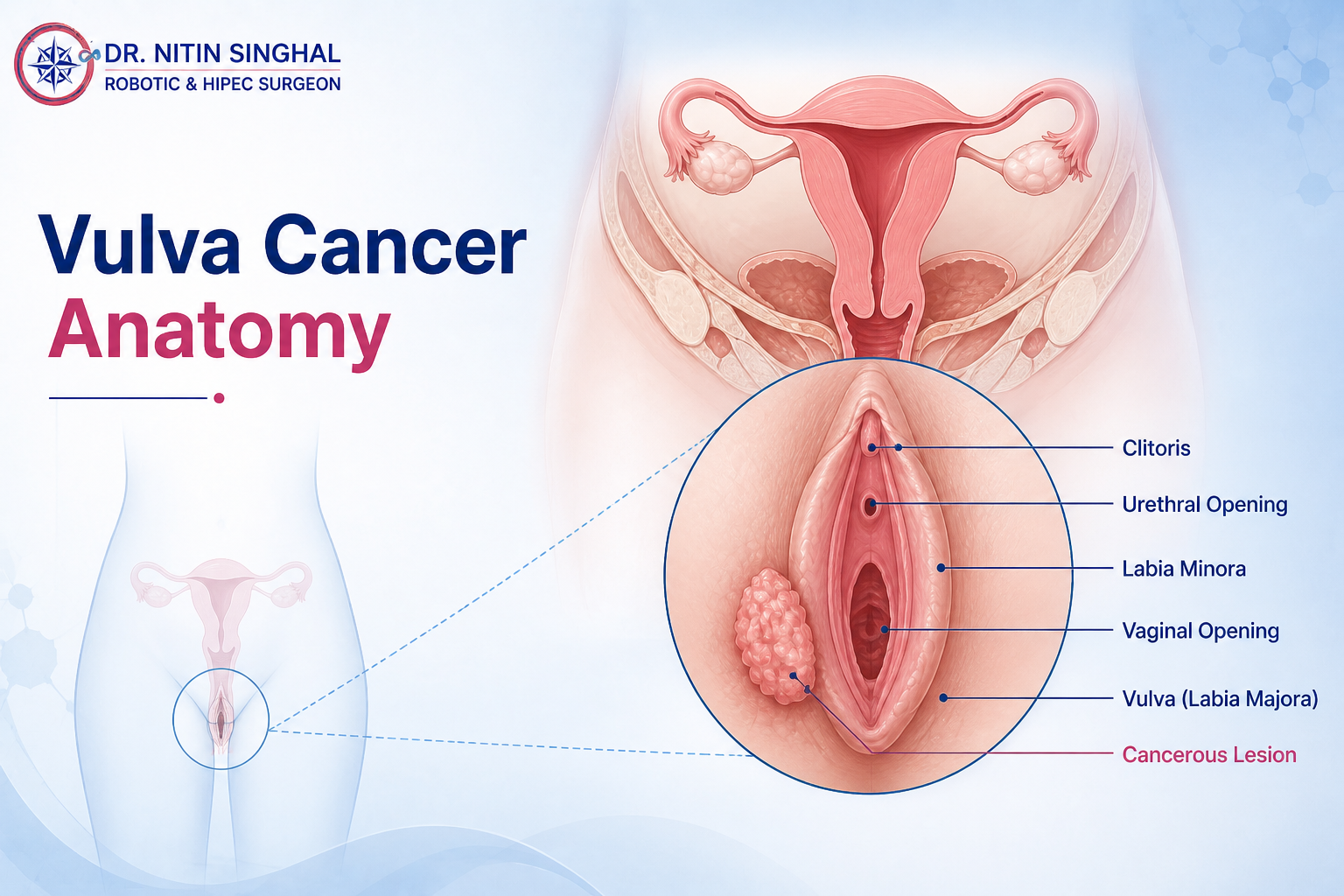
Vulva cancer develops when abnormal cells grow uncontrollably in the vulva — the external female genital area, including the labia, clitoris and surrounding skin. The most common type is squamous cell carcinoma, which usually develops slowly, often preceded by precancerous skin changes (vulvar intraepithelial neoplasia, or VIN) that can be identified and treated before they progress to cancer.
Vulvar cancer is often linked to persistent HPV infection or chronic vulvar skin conditions such as lichen sclerosus. When detected early, vulvar tumor surgery performed by an experienced vulva cancer surgeon offers a high chance of successful treatment, and as with most gynecologic cancers, the stage at diagnosis guides the treatment approach.
Symptoms to Watch For
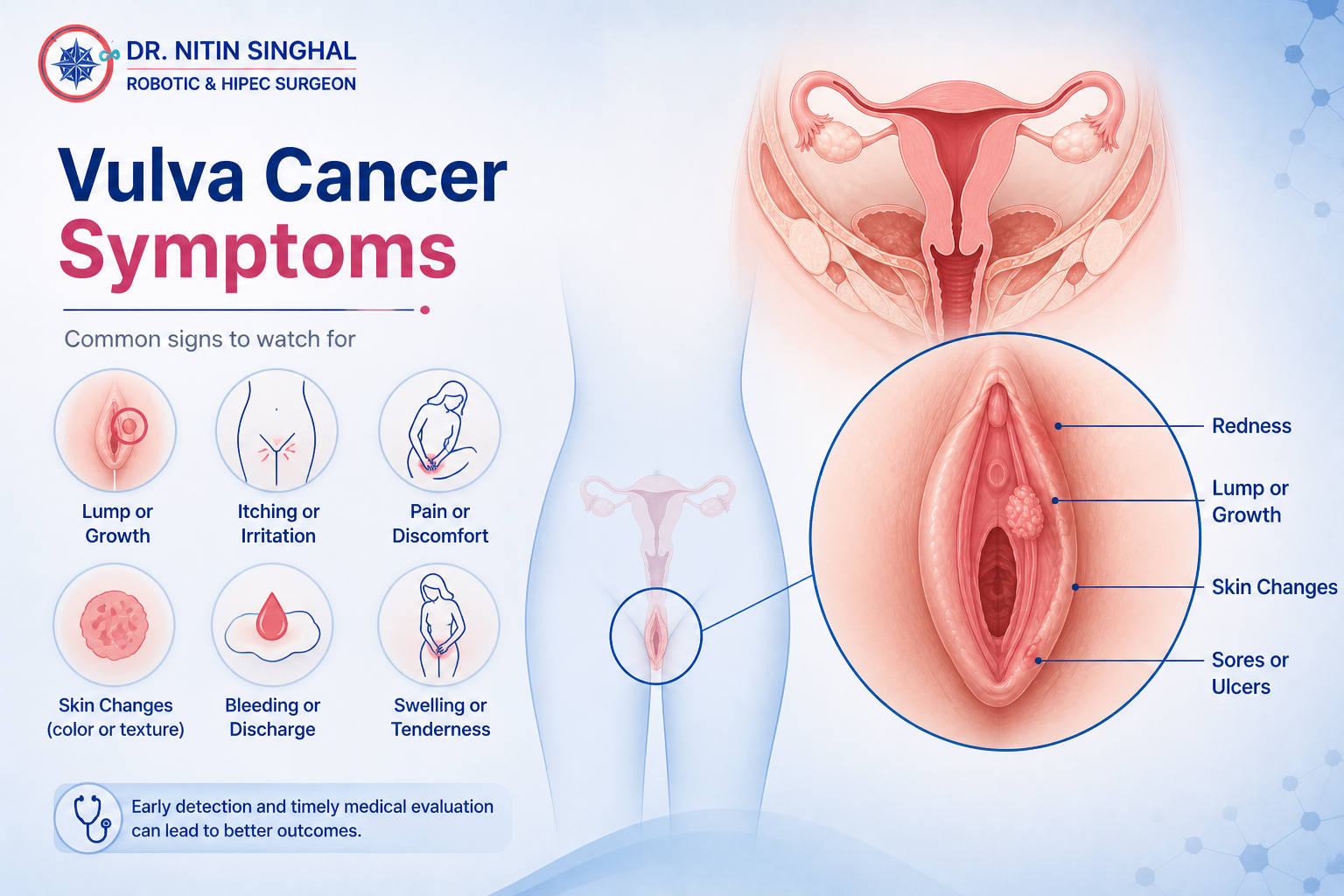
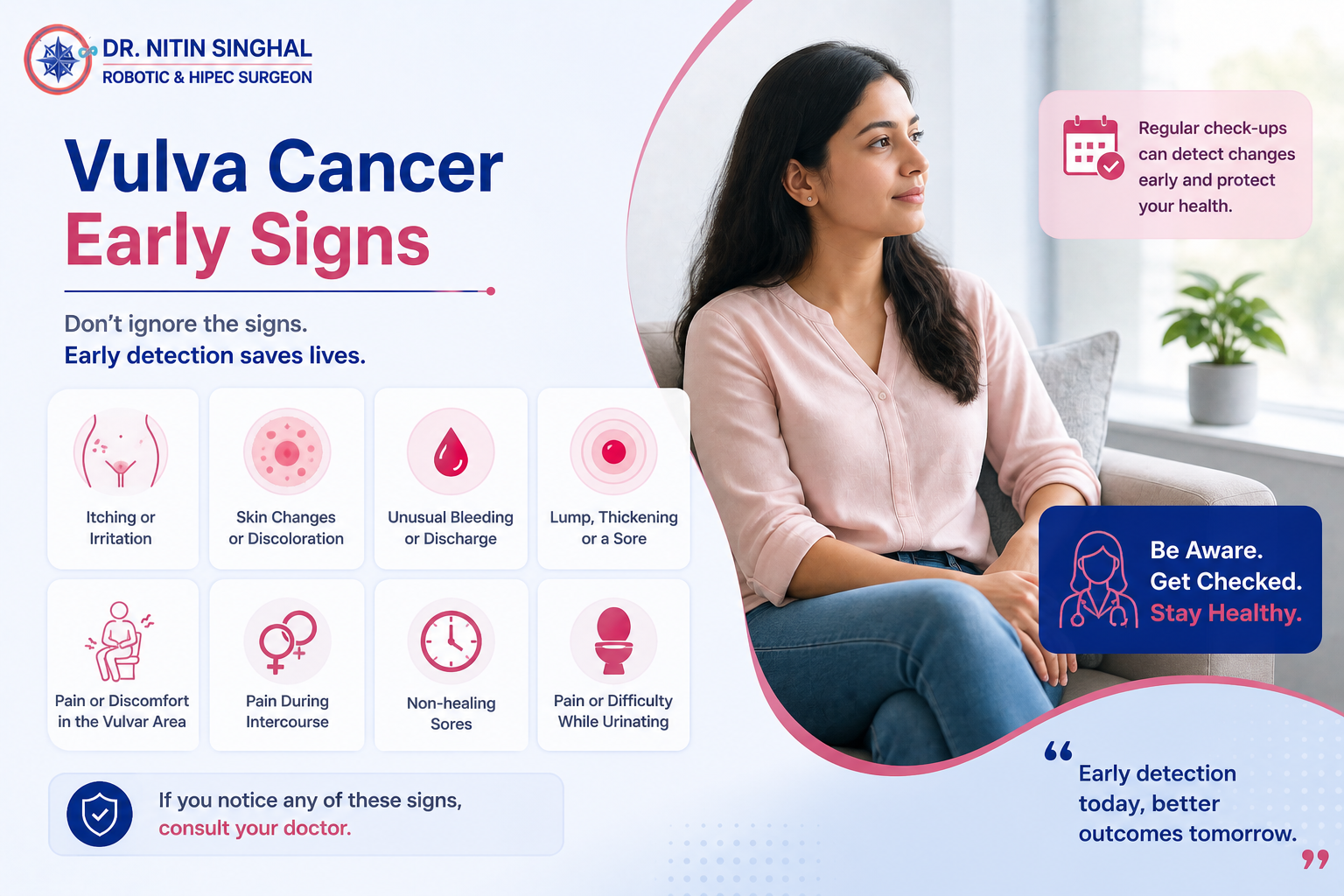
Vulvar cancer symptoms can be mistaken for less serious skin conditions. Any of the following, especially if persistent, should be evaluated by a doctor promptly.
Persistent Itching
Ongoing vulvar itching that does not resolve with usual skin care, one of the most common early symptoms.
A Lump or Ulcer
A new lump, wart-like growth, or open sore on the vulva that does not heal.
Changes in Skin Colour or Texture
Thickened, red, white or dark patches of skin on the vulva.
Pain or Burning
Persistent discomfort, burning or tenderness in the vulvar area.
Abnormal Bleeding
Bleeding from the vulva that is not related to a menstrual period.
Pain During Urination
Discomfort or burning when passing urine, without signs of a urinary infection.
What Increases the Risk?
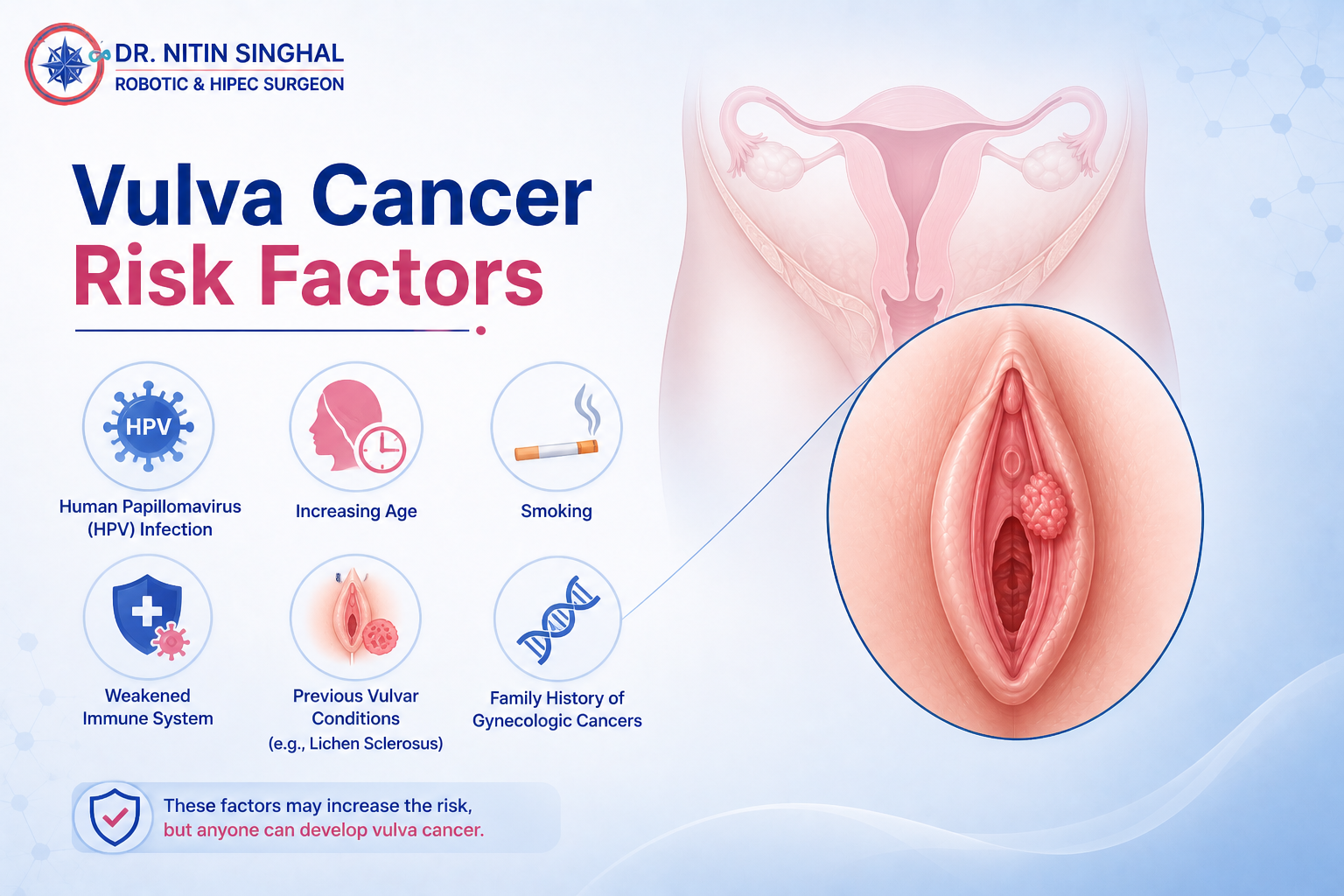
Having one or more risk factors does not mean a person will develop vulvar cancer — it simply means awareness of symptoms and timely evaluation become more important.
Persistent HPV Infection
Long-term infection with high-risk strains of human papillomavirus is linked to many vulvar cancers.
Lichen Sclerosus
This chronic vulvar skin condition is associated with an increased risk of vulvar cancer over time.
Smoking
Tobacco use is associated with a higher risk of vulvar cancer, particularly in those with HPV infection.
Age
Risk increases with age, and vulvar cancer is most common in women over 60.
History of Cervical Precancer or Cancer
A prior history of cervical intraepithelial neoplasia or cervical cancer raises risk.
Weakened Immune System
Conditions or medications that suppress immunity make it harder for the body to clear HPV infection.
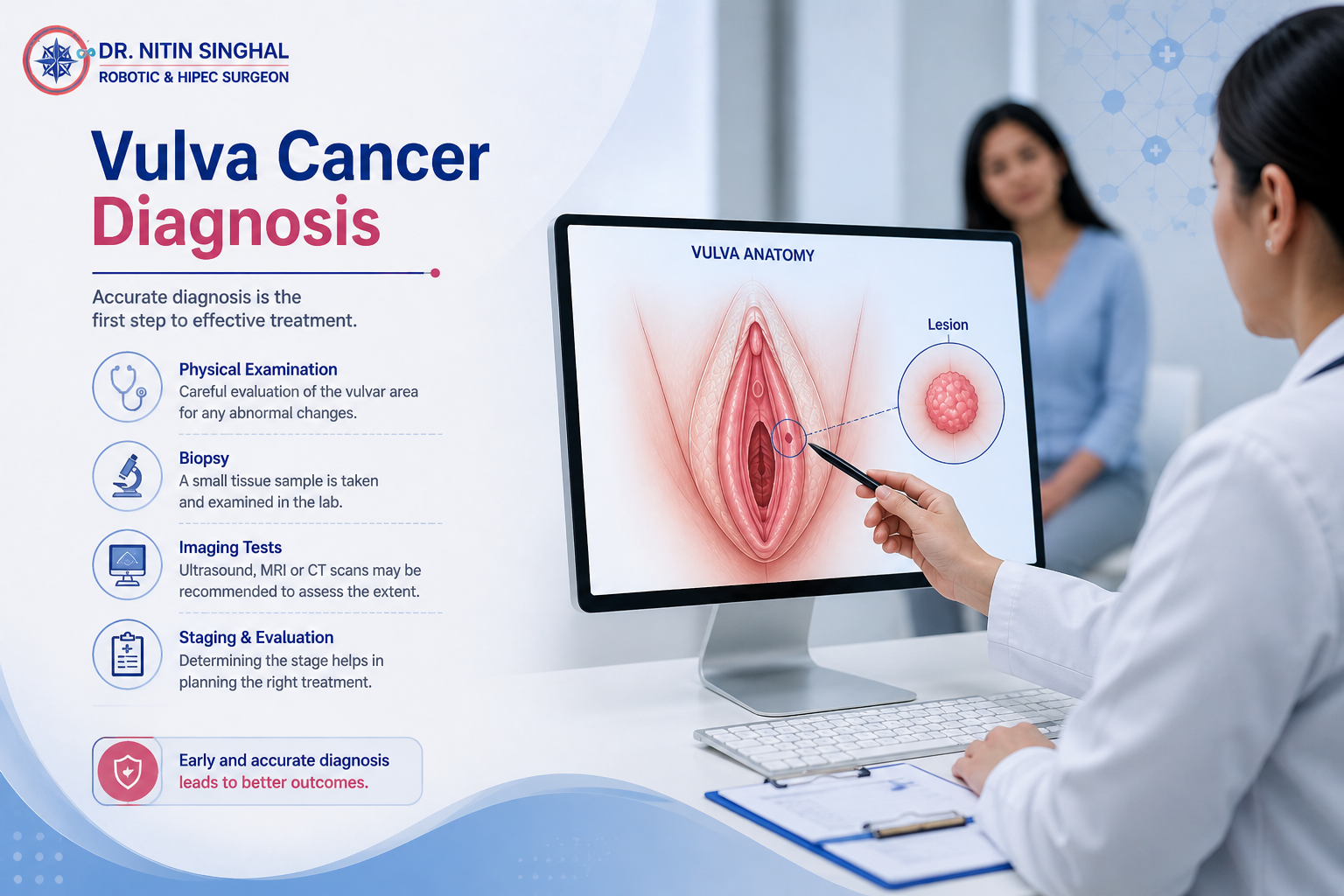
How Is Vulva Cancer Diagnosed?
Clinical evaluation — a review of symptoms, skin history and a physical examination of the vulva.
Vulvoscopy — a magnified examination of the vulvar skin to identify abnormal areas for biopsy.
Vulvar biopsy — a tissue sample taken to confirm the diagnosis and cancer type.
Imaging for staging — MRI, CT or PET scans to assess tumour size and check for spread to lymph nodes.
Groin lymph node evaluation — imaging or sentinel lymph node biopsy to assess whether cancer has spread to the groin.
Staging investigations — combining the above to determine the cancer's extent and guide treatment planning.
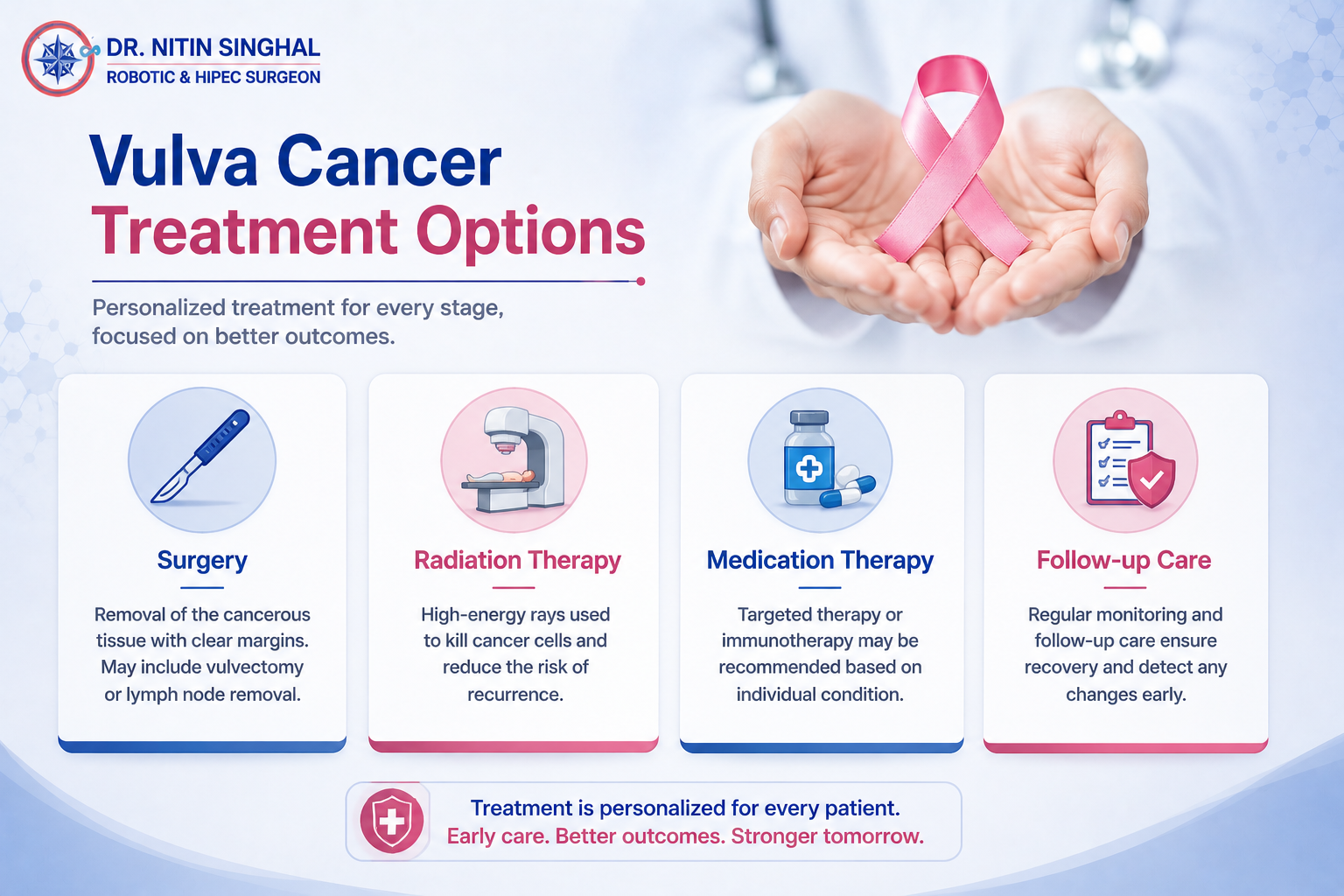
How Vulva Cancer Is Treated
Treatment depends on tumour size, stage and location, and is planned individually by a multidisciplinary team as part of comprehensive vulvar cancer treatment in Ahmedabad.
Wide Local Excision
Removal of the tumour with a surrounding margin of healthy tissue, for smaller, early-stage lesions.
Vulvectomy
Partial or radical removal of vulvar tissue, for larger or more extensive tumours.
Groin Lymph Node Dissection
Removal of inguinofemoral lymph nodes to check for and treat cancer spread, often performed with robotic assistance.
Radiation Therapy
Used alone or alongside chemotherapy for locally advanced disease or after surgery in select cases.
Chemoradiation
Combined chemotherapy and radiation, considered for larger or locally advanced tumours.
Multidisciplinary Follow-Up
Structured monitoring and skin surveillance after treatment to check for recurrence.
Why Choose Dr. Nitin Singhal?
Robotic & HIPEC Cancer Surgeon
Focused practice in robotic-assisted and complex cancer surgery, including gynecologic oncology.
Gynecologic Oncology Specialisation
Experience performing robotic-assisted groin lymph node dissection and vulvectomy for vulvar cancer, alongside cervical, uterine and ovarian cancers.
Training & Qualifications
MBBS, MS (General Surgery), MCh (Surgical Oncology) with training at Tata Memorial Centre, Mumbai.
18+ Years of Experience
Focused specifically in surgical oncology and robotic cancer surgery.
Hospital Affiliations
Operates at established hospitals in Ahmedabad with advanced operation theatres, robotic systems and ICU support.
Multidisciplinary Cancer Care
Coordinated planning with medical oncology, radiation oncology and pathology colleagues as needed.
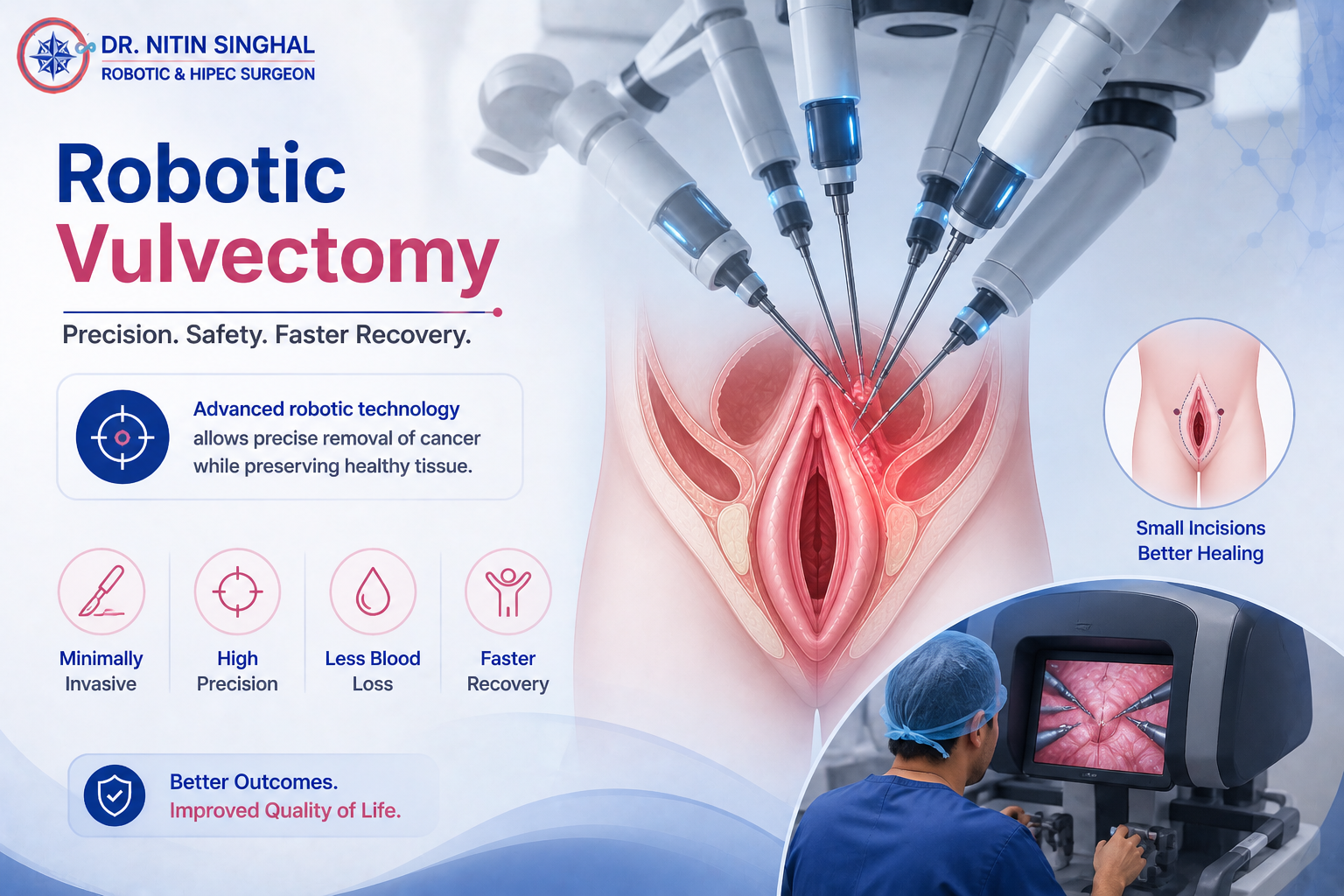
What Is Robotic Vulva Cancer Surgery (Robotic Vulvectomy)?
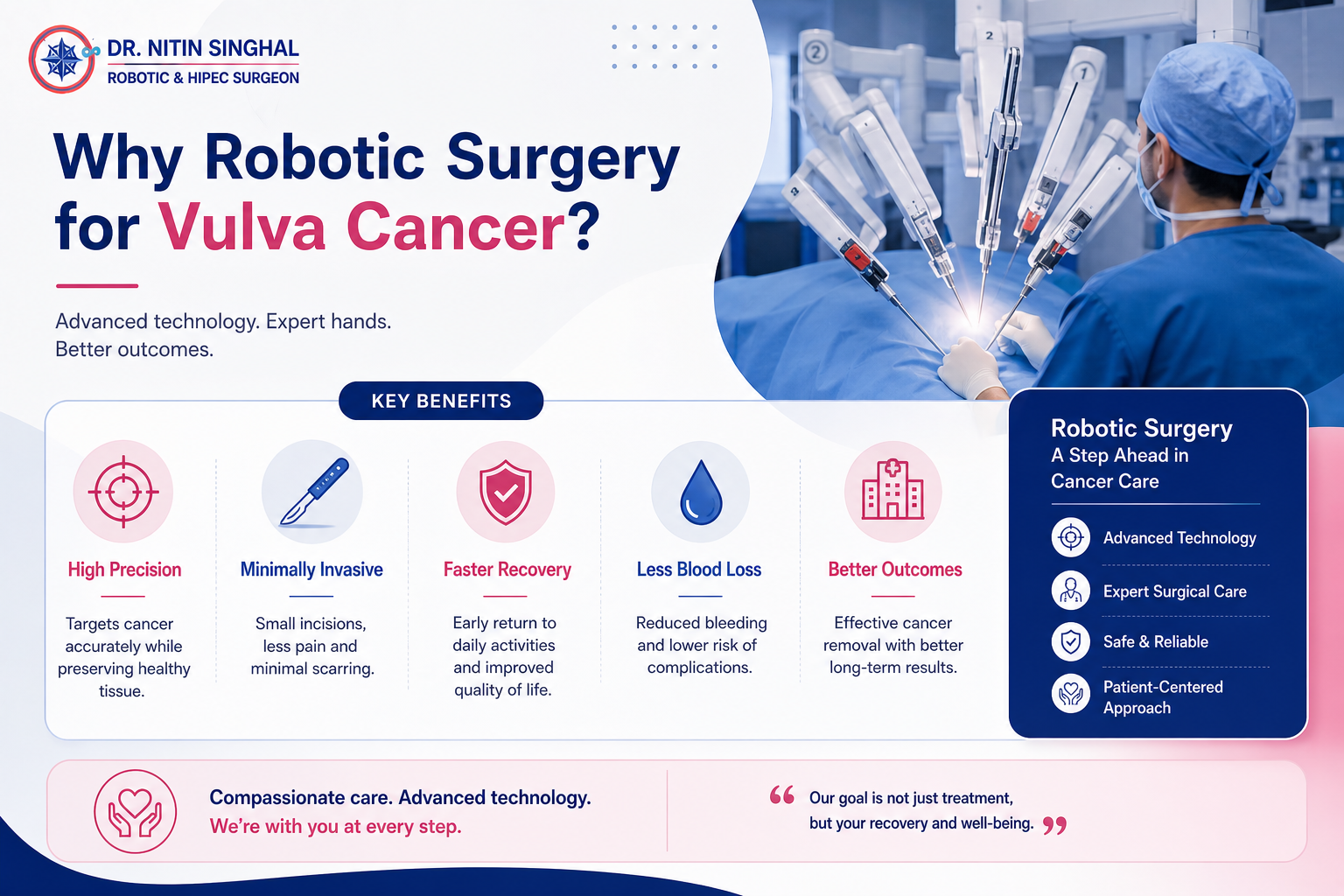
In vulva cancer surgery, robotic technique is used primarily for the groin (inguinofemoral) lymph node dissection, performed through a few small incisions with wristed instruments and a magnified 3D camera, controlled entirely by the surgeon from a console. The robot does not operate independently — every movement is directed by the surgeon in real time. The vulvar excision itself — wide local excision or vulvectomy — is performed with the same surgical precision alongside this approach.
Traditional open groin lymph node dissection carries a notably high rate of wound complications, including wound breakdown and infection. The robotic-assisted approach to groin dissection uses small incisions instead of one long open incision across the groin, which can meaningfully reduce these wound complications while still achieving thorough lymph node clearance for accurate cancer staging.

Why Robotic Surgery May Be Considered
These are potential, patient-specific advantages in suitable cases — not guarantees, as outcomes depend on the individual patient and procedure.
Fewer Groin Wound Complications
Small robotic incisions in the groin, instead of one long open incision, can help reduce wound breakdown.
Reduced Lymphedema Risk
A less invasive approach to groin dissection may lower the risk of leg swelling after surgery.
Less Post-Operative Pain
Smaller incisions may be associated with reduced discomfort during recovery.
Shorter Hospital Stay
In suitable patients, hospital stay may be shorter than after open groin surgery.
Earlier Return to Activity
Minimally invasive technique may allow a quicker return to daily activities.
Thorough Lymph Node Clearance
Magnified 3D vision supports complete groin lymph node dissection for accurate staging.
Types of Robotic Vulvar Procedures
The specific procedure recommended depends on the tumour's size, location and whether the cancer has spread to nearby lymph nodes.
Robotic vs Laparoscopic vs Open Groin Surgery
A general comparison of approach — actual outcomes for any specific patient depend on the procedure and case.
| Feature | Open Groin Surgery | Laparoscopic Surgery | Robotic Surgery |
|---|---|---|---|
| Groin Incisions | One long incision across the groin | Smaller | Several small incisions |
| Visualisation | Direct | Camera-assisted, 2D | Enhanced 3D visualisation |
| Wound Complications | Notably higher risk | Reduced vs open | Further reduced with small incisions |
| Instrument Movement | Conventional, surgeon's hand | Limited range of motion | Wristed, surgeon-controlled robotic instruments |
| Recovery | Procedure-dependent | Procedure-dependent | Procedure-dependent |
How the Surgery Works, Step by Step
Pre-operative evaluation — final review of imaging, staging and overall fitness for surgery.
Anaesthesia — the patient is placed under general anaesthesia by the anaesthesia team.
Small groin incisions — a few small incisions are made in the groin to introduce the robotic ports.
Robotic system positioned — the robotic arms are docked and the surgeon operates from the console.
Groin lymph nodes assessed and removed — the inguinofemoral lymph nodes are carefully dissected and removed for staging.
Vulvar lesion excised — the tumour is removed via wide local excision or vulvectomy, with an adequate margin of healthy tissue.
Wound assessment & reconstruction — the surgical site is assessed, with reconstructive techniques used where needed.
Specimen retrieval — the removed tissue is sent for detailed pathology examination.
Incisions closed — the small groin incisions are closed, and the patient is moved to recovery.

Before Surgery & Recovery Afterwards
Investigations & Review
Final blood tests, imaging review and a medication review before the procedure.
Wound Care Counselling
Guidance on skin and wound care to support healing after surgery.
Anaesthesia Assessment
A pre-anaesthesia check to confirm fitness for the procedure.
Hospital Stay & Pain Management
Hospital stay depends on the extent of surgery, with pain and wound care managed through recovery.
Wound Care & Gradual Return to Activity
Careful wound care in the early weeks, with a gradual return to daily activity guided by your surgical team.
Long-Term Follow-Up
Scheduled follow-up visits and skin surveillance, along with monitoring for lymphedema.
Risks & Possible Complications
As with any major surgery, vulvar cancer surgery carries risks. These should be discussed in detail with your surgical team before deciding on treatment.
Bleeding
As with any surgery, there is a risk of bleeding during or after the procedure.
Infection
Wound infection is a possible complication, though the robotic approach to groin dissection aims to reduce this risk.
Wound Healing Issues
Delayed wound healing can occur, particularly around the vulvar excision site.
Lymphedema
Swelling in the legs can occur if groin lymph nodes are removed as part of staging.
Blood Clots
A risk with any major surgery, managed with preventive measures where appropriate.
Changes in Sensation or Sexual Function
Some patients may notice changes in vulvar sensation or sexual function after surgery.
Myths vs Facts
Patient Reviews & Videos
Verified Google reviews and patient-friendly video explainers, from Dr. Nitin Singhal's robotic & HIPEC cancer surgery practice in Ahmedabad.
Common Questions
What is robotic vulva cancer surgery?
What is robotic vulvectomy?
Who is a vulva cancer surgeon and what do they treat?
Is robotic surgery suitable for every vulvar cancer patient?
What is the recovery time after robotic vulvar surgery?
Where can I find the best vulvar cancer surgery hospital in Ahmedabad?
Can lymphedema be avoided after vulvar cancer surgery?
Will I need radiation or chemotherapy after vulvar cancer surgery?
What are the risks of robotic vulvar cancer surgery?
How do I know if I am a candidate for robotic vulvar cancer surgery?
Considering Robotic Vulva Cancer Surgery?
Get an expert evaluation to understand your diagnosis, treatment options, and whether robotic vulvectomy may be appropriate for you.