
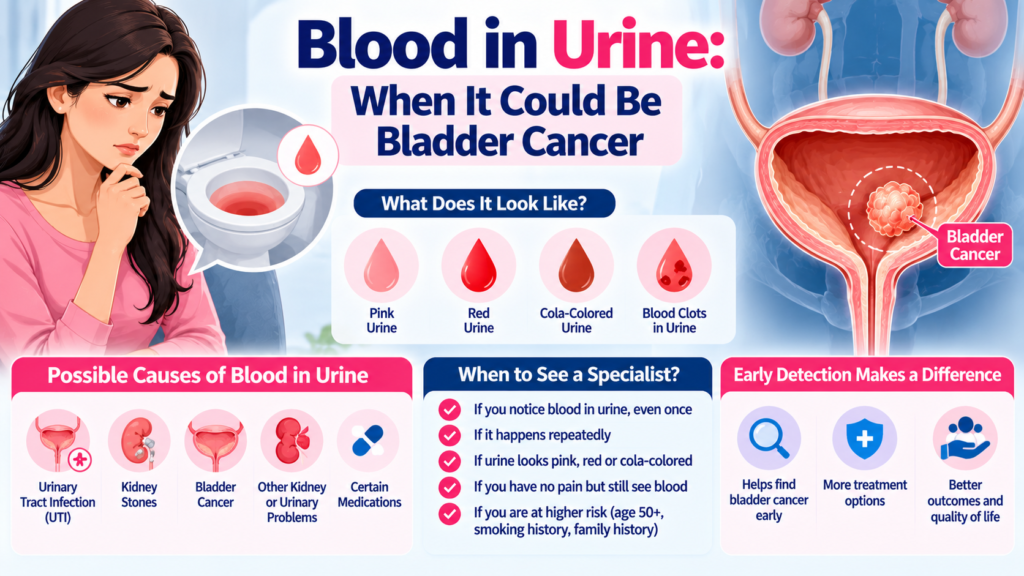
Common causes of blood in urine
- Urinary tract infection
- Kidney or bladder stones
- Enlarged prostate in men
- Kidney disease
- Some blood thinners (they can reveal an underlying problem, so still get checked)
- Heavy exercise
- Cancer of the bladder, kidney, ureter or prostate
Red or brown urine can also come from beetroot, some medicines and periods, so a urine test confirms whether blood is present.
Bladder cancer warning signs
- Painless blood in urine, visible or found on a urine test
- Burning or frequent urination without infection
- Urgency, or a weak stream
- Pain in the lower back or pelvis (in more advanced disease)
Who is at risk?
- Smokers. Smoking is the single biggest risk factor for bladder cancer.
- People over 55
- Men more often than women
- Workers exposed to dyes, rubber, leather, paint and some chemicals
- Long-term catheter use or repeated bladder infections
Tests your doctor may advise
- Urine tests for blood, infection and abnormal cells
- Ultrasound of the kidneys and bladder
- CT urography to look at the kidneys, ureters and bladder
- Cystoscopy, a thin camera passed into the bladder to look directly at the lining. This is the most important test.
Treatment depends on the type and stage
Non-muscle-invasive bladder cancer (early stage):
- TURBT (transurethral resection): the tumour is removed through the urinary passage with no cut on the abdomen
- Medicines placed directly into the bladder, such as BCG, to lower the chance of recurrence
- Regular cystoscopy check-ups, because these tumours can come back
Muscle-invasive bladder cancer:
- Radical cystectomy: removal of the bladder and nearby lymph nodes, often after chemotherapy
- This can be done with robotic surgery, which may mean less blood loss and a faster recovery
Life after bladder removal: the neobladder
After the bladder is removed, urine needs a new path. Options include:
- Ileal conduit: urine drains into a small bag on the abdomen
- Neobladder: a new bladder is made from a piece of intestine and connected to the urinary passage, so many patients can pass urine in the normal way without a bag
Learn more about neobladder reconstruction and the full range of urology cancer surgery.
Blood in urine can also come from a kidney tumour. If the scan shows one, read our guide to partial vs radical nephrectomy.
Frequently asked questions
I saw blood once and it stopped. Do I still need tests? Yes. Bladder cancer bleeding often comes and goes. One episode is enough reason for a check-up.
Is cystoscopy painful? It is usually done with local anaesthetic gel and causes only mild discomfort for a few minutes.
Can bladder cancer come back? Early bladder cancer can recur, which is why regular check-ups are important.
Get checked early
Dr. Nitin Singhal treats bladder, kidney and prostate cancers in Ahmedabad, including robotic cystectomy and neobladder surgery. If you have noticed blood in your urine, book a consultation or call +91 75061 14222.