
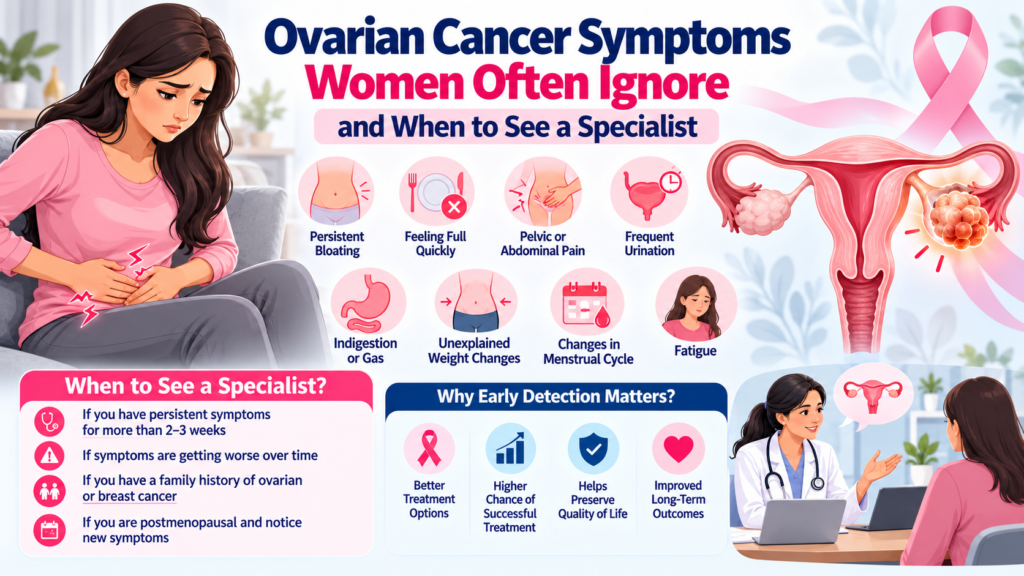
Symptoms to watch for
The key is that the symptoms are new, persistent (most days) and last more than 2–3 weeks:
- Bloating or a feeling that the stomach is swollen
- Increase in waist size, clothes feeling tight
- Feeling full quickly or loss of appetite
- Pain in the lower abdomen or pelvis
- Needing to pass urine more often or urgently
- Change in bowel habits
- Unexplained tiredness or weight loss
- Vaginal bleeding after menopause
Any one of these is usually due to something harmless. But if they persist, an ultrasound is a simple first step.
Who is at higher risk?
- Women over 50, especially after menopause
- A family history of ovarian, breast or bowel cancer
- BRCA1 or BRCA2 gene changes, or Lynch syndrome
- Never having been pregnant
- Endometriosis
Women with a strong family history should ask about genetic counselling and testing.
How is ovarian cancer diagnosed?
- Pelvic examination
- Ultrasound of the abdomen and pelvis, often transvaginal
- CA-125 blood test, a tumour marker that is often raised in ovarian cancer. It can also rise in harmless conditions such as fibroids, endometriosis and periods, so it is interpreted with the scan.
- CT or PET-CT scan to see whether the disease has spread
- Biopsy or the final report after surgery to confirm the type
Treatment: why the surgeon matters
Surgery is central to treating ovarian cancer. The aim of cytoreductive (debulking) surgery is to remove all visible cancer from the abdomen. Studies consistently show that the amount of disease left behind is one of the strongest factors in survival, so this operation is best done by a surgical oncologist experienced in gynaecological cancers.
Treatment often combines:
- Surgery: removal of the uterus, ovaries, tubes, omentum and any visible disease
- Chemotherapy, before or after surgery
- HIPEC (heated chemotherapy inside the abdomen during surgery) for selected patients. Read more in The Science of Survival: How HIPEC Targets Advanced Abdominal Cancers.
- Targeted maintenance therapy for some women, such as those with BRCA changes
In early-stage disease, robotic gynaecologic cancer surgery may be possible, with smaller cuts and faster recovery. Dr. Singhal also treats uterus cancer and cervical cancer.
Can ovarian cancer be prevented?
There is no reliable screening test for women at average risk. For women with a BRCA gene change, removing the ovaries and tubes after completing their family greatly lowers the risk. Women with a family history of breast cancer may also find our guide on lumpectomy vs mastectomy useful.
Frequently asked questions
Does a raised CA-125 mean I have cancer? No. Many non-cancer conditions raise CA-125. It must be read together with scans and examination.
Is every ovarian cyst cancer? No. Most ovarian cysts, especially in younger women, are harmless. Your doctor will decide based on its appearance on ultrasound.
Can ovarian cancer be cured? Early-stage ovarian cancer has good results. Even in advanced disease, complete surgery with chemotherapy gives many women long-term control.
Don’t ignore persistent symptoms
If bloating, pelvic pain or early fullness has lasted more than a few weeks, get checked. Dr. Nitin Singhal is a surgical oncologist in Ahmedabad experienced in complex ovarian cancer surgery and HIPEC. Book a consultation or call +91 75061 14222.