
Transoral Robotic Surgery (TORS)
A scarless, mouth-only approach to removing tumors of the throat and voice box — using robotic technology to reach areas that would otherwise need a large open incision.
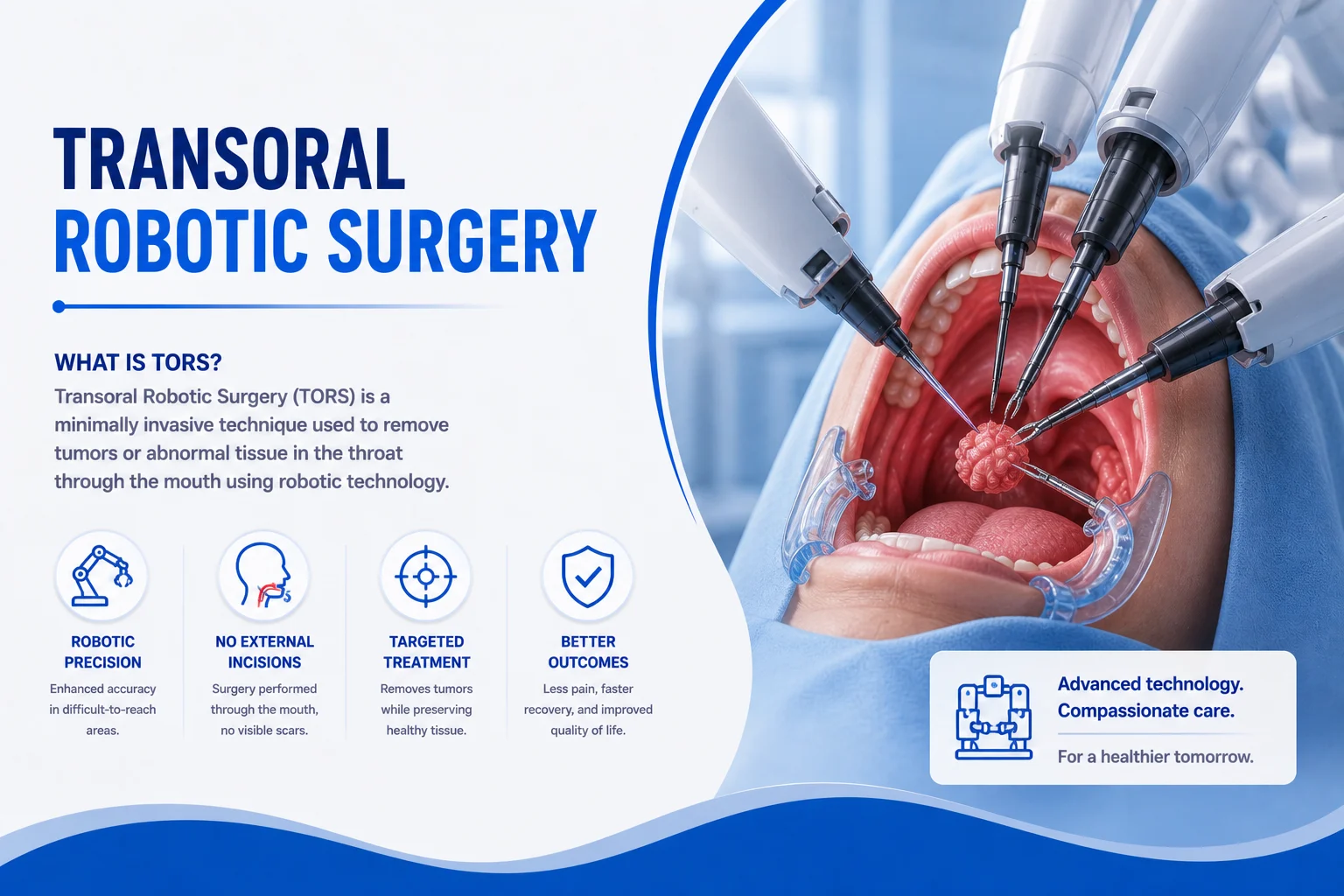
Some tumors of the throat and voice box sit in places that are hard to reach without a large incision or splitting the jaw bone. Transoral Robotic Surgery (TORS) uses a robotic surgical system to reach these tumors entirely through the mouth — with no external cuts. Below, Dr. Nitin Singhal explains what TORS involves, who it may help, and what to expect from diagnosis through recovery.
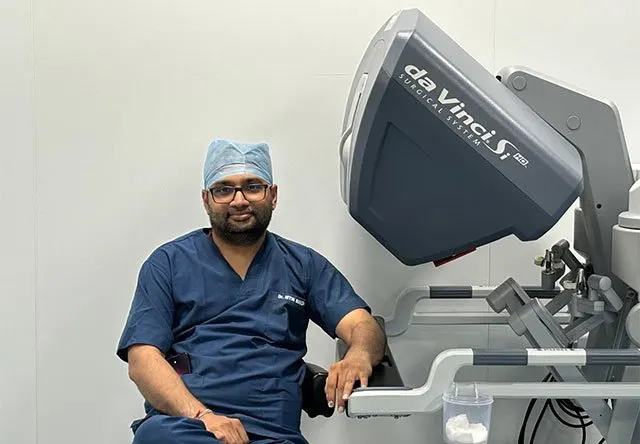
About Dr. Nitin Singhal
Dr. Nitin Singhal is a robotic and HIPEC cancer surgeon based in Ahmedabad, with 18+ years of experience and a focus on minimally invasive, organ-preserving surgery, including robotic approaches to head and neck, urologic and gynecological cancers. He trained in surgical oncology at Tata Memorial Centre Mumbai.
He uses the robotic surgical platform to combine oncological precision with careful preservation of speech and swallowing function, and takes time with each patient to explain their diagnosis, the surgical options available, and what recovery will look like.
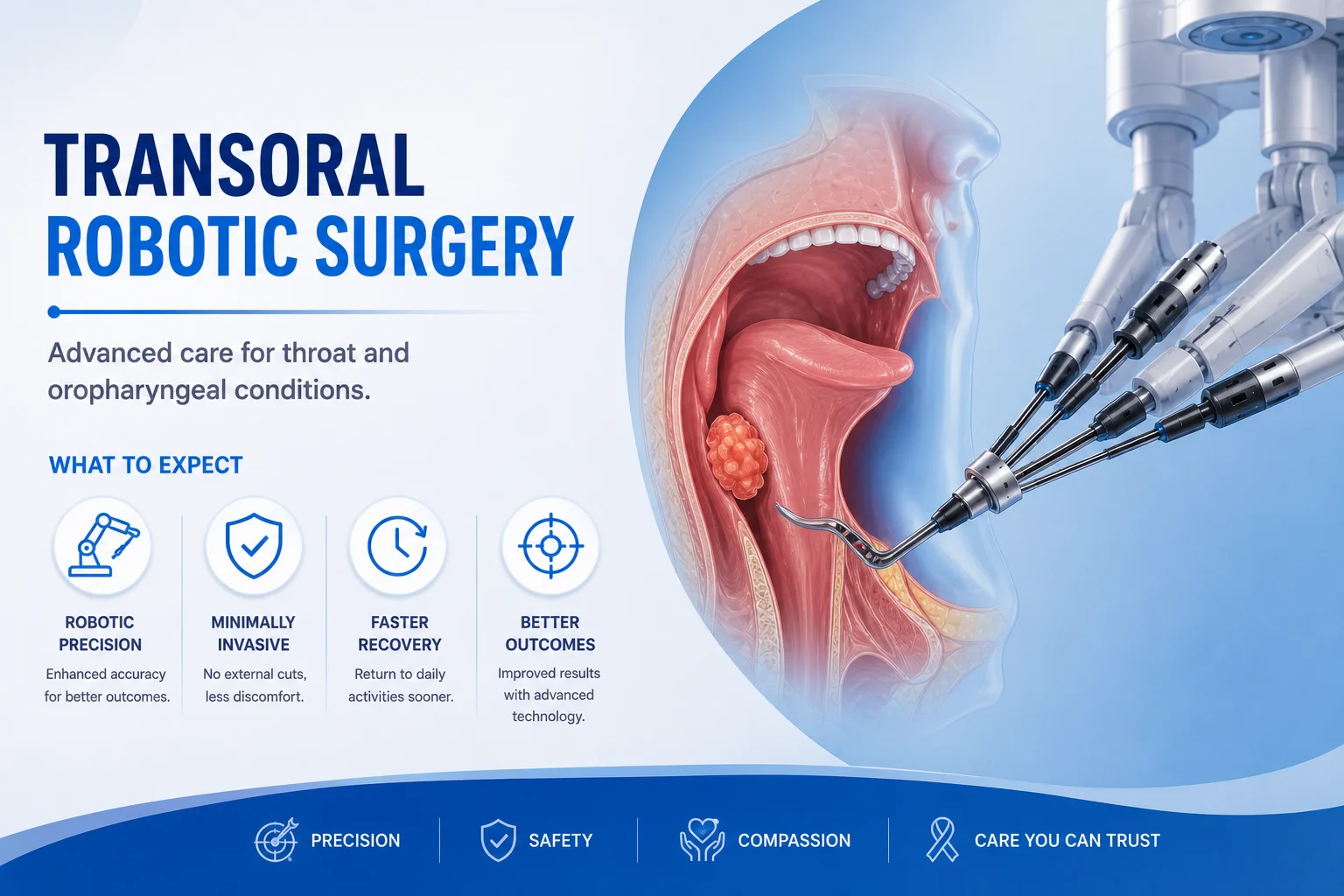
What Is Transoral Robotic Surgery?
Transoral Robotic Surgery (TORS) is a minimally invasive technique that allows a surgeon to remove tumors of the mouth, throat and voice box through the natural opening of the mouth, using a robotic surgical system.
Because the robotic instruments and camera reach the tumor transorally, TORS avoids the need for external neck incisions or splitting the jaw bone (mandibulotomy) that open approaches to these areas traditionally required.
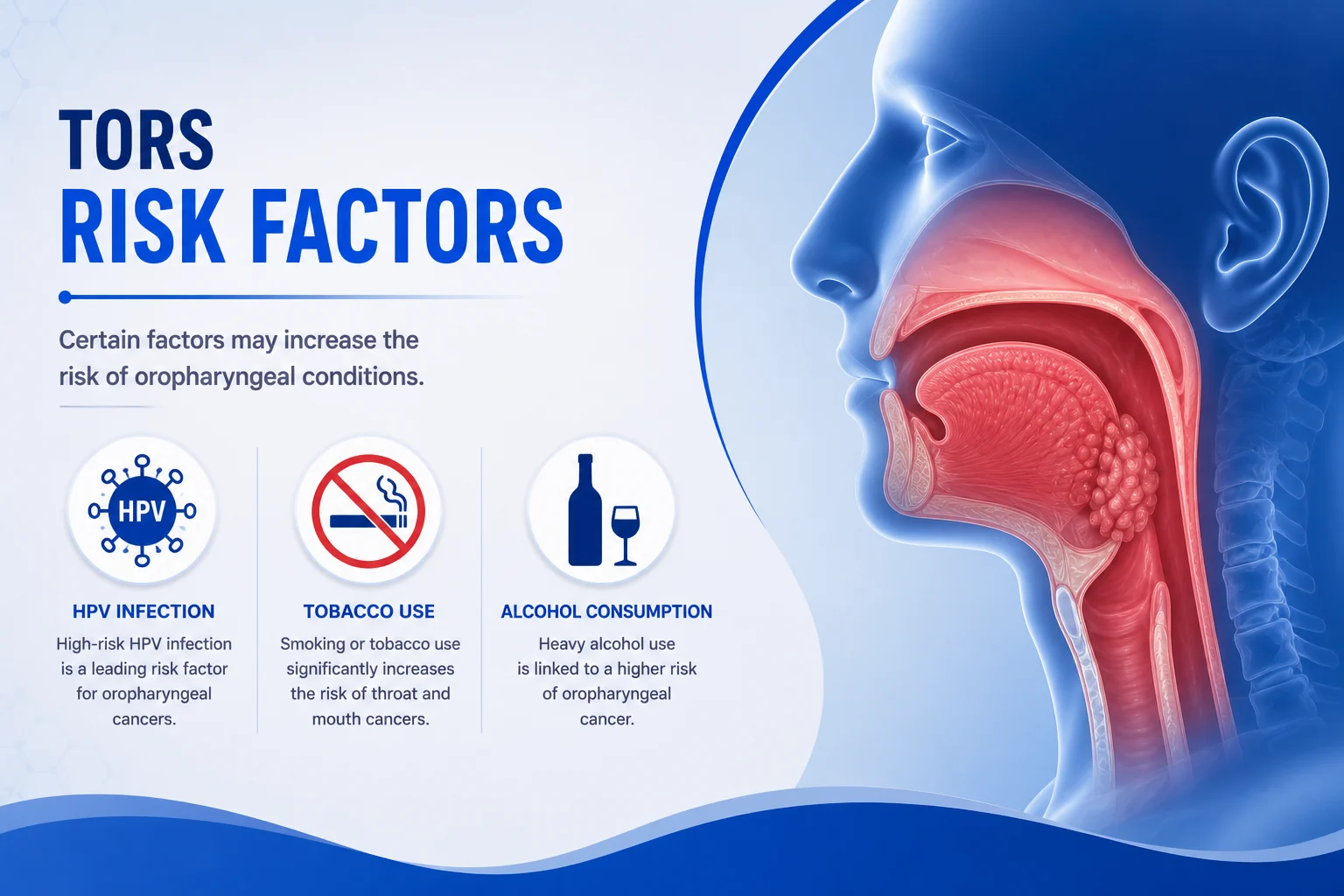
Who May Need TORS?
TORS is generally considered for tumors that are accessible through the mouth and confined to areas such as the tonsil, base of tongue, or voice box.
- Early-stage oropharyngeal cancers (tonsil, base of tongue)
- Select laryngeal and hypopharyngeal tumors
- Cancer of unknown primary, to help locate the source
- Recurrent tumors after radiation, in selected cases
- Tumors where speech and swallowing preservation is a priority
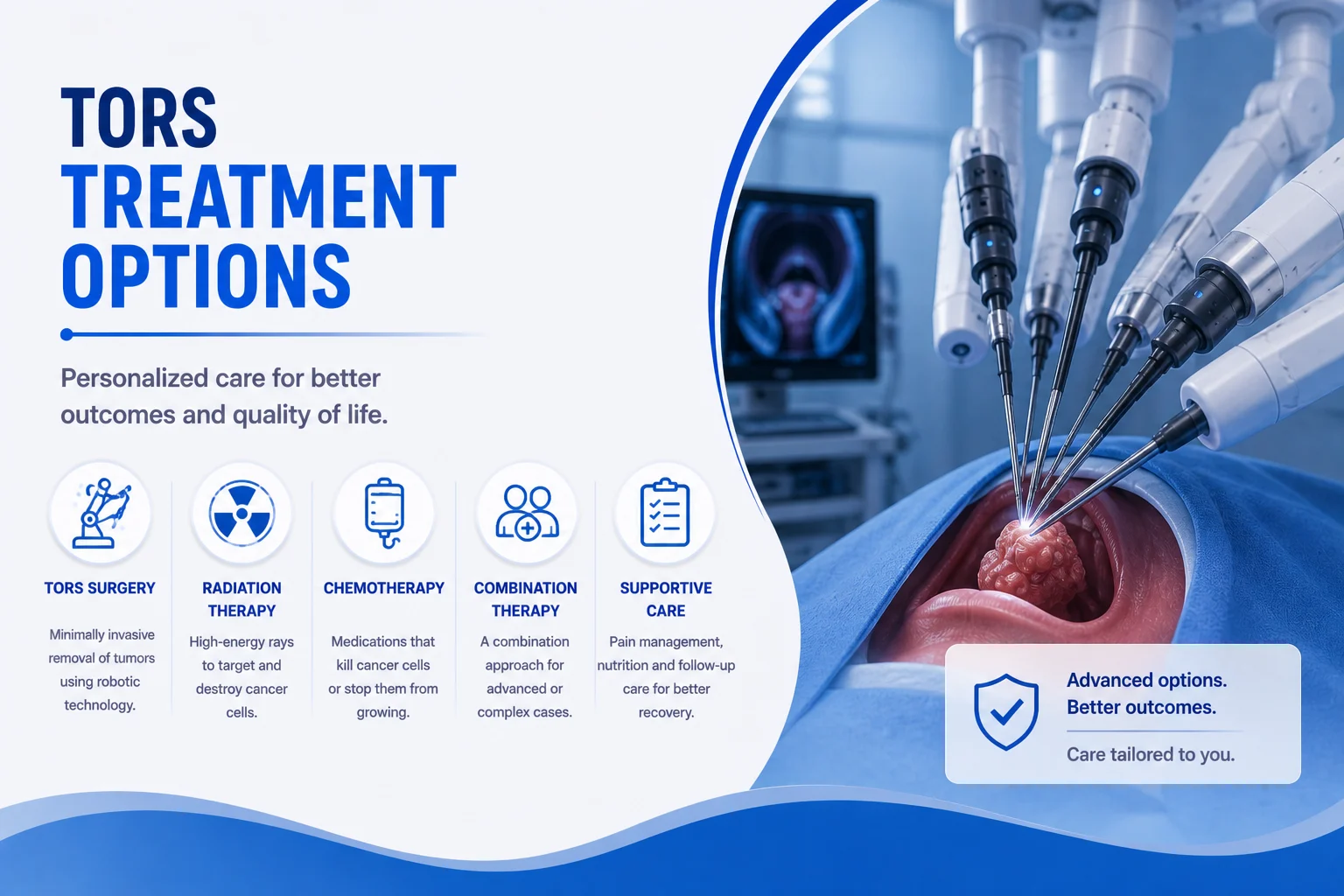
TORS Within Your Overall Treatment Plan
TORS is often one part of a broader treatment plan for head and neck cancer, decided together with radiation and medical oncology colleagues based on tumor stage and pathology.
In suitable early-stage cases, TORS may help reduce or avoid the intensity of chemoradiation that would otherwise be needed, though this is decided case by case after surgery and pathology review.
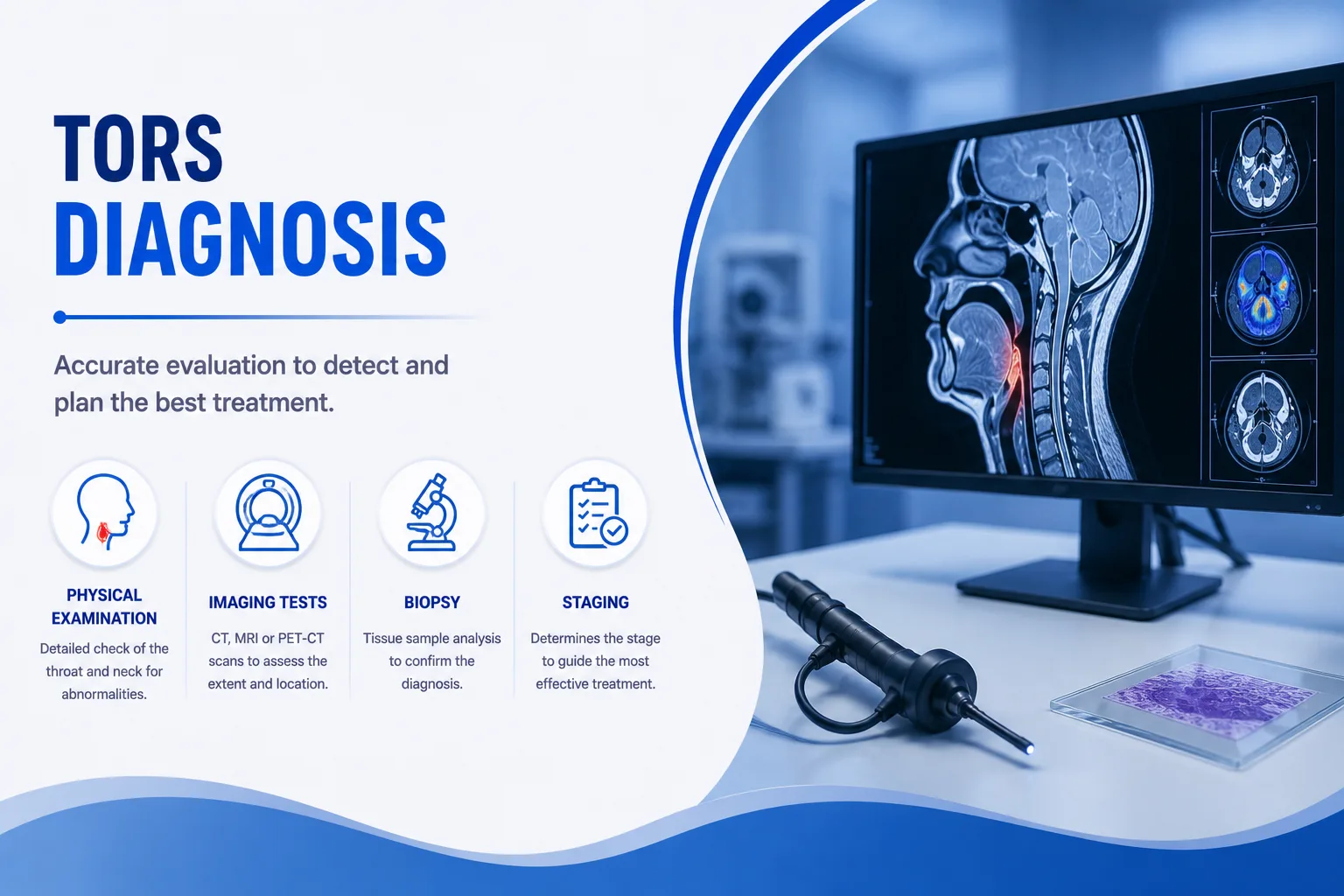
How the Decision to Operate Is Made
- Clinical examination and endoscopy of the throat and voice box
- Imaging — CT, MRI or PET scan to assess tumor extent
- Biopsy and pathology to confirm tumor type
- Assessment of whether the tumor is accessible transorally
- Multidisciplinary tumor board review before finalizing the plan
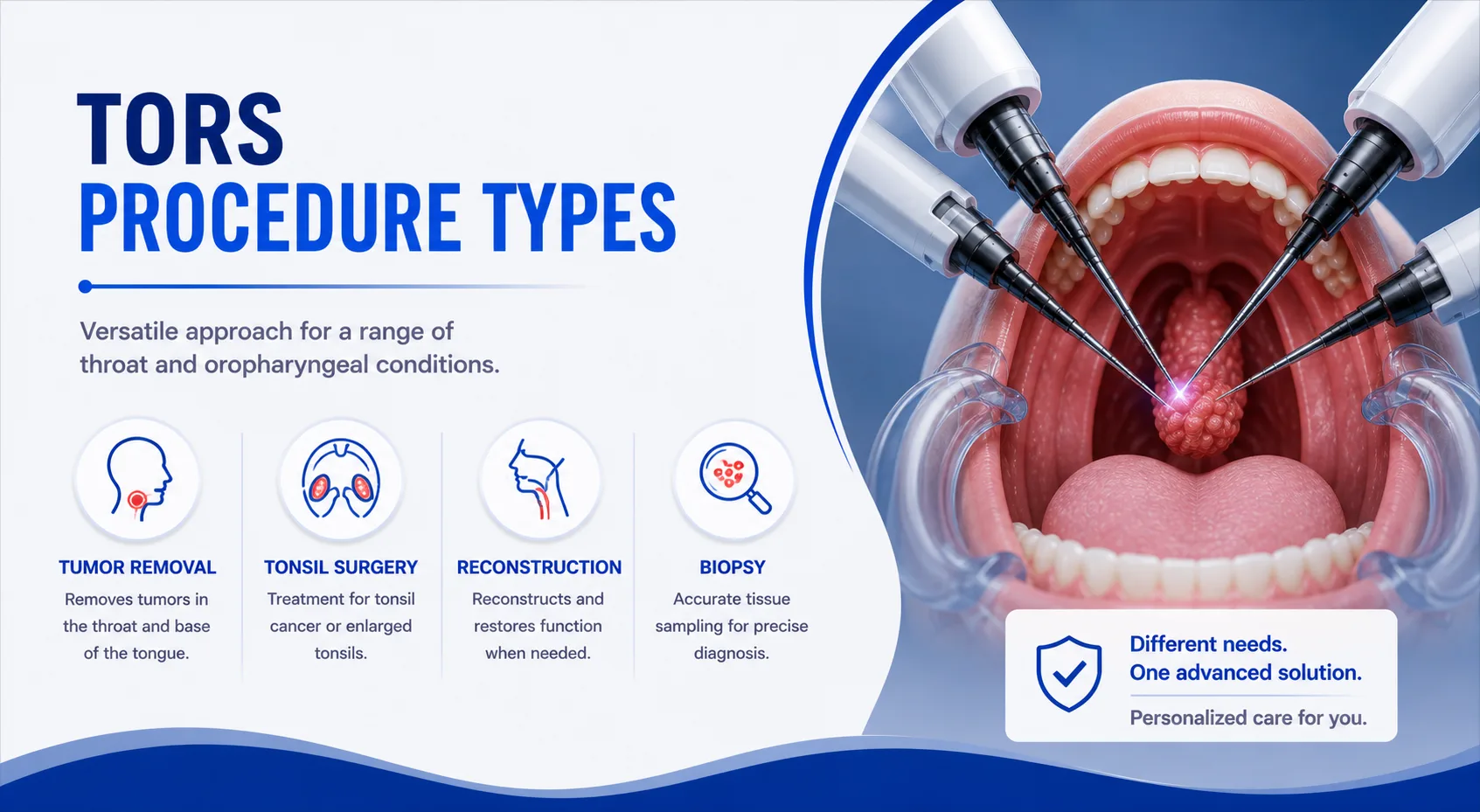
Types of TORS Procedures
Depending on the tumor's location, TORS may be used on its own or combined with a neck dissection in the same or a staged sitting.
TORS for Oropharyngeal Cancer
Removal of tonsil or base-of-tongue tumors entirely through the mouth.
TORS Supraglottic Laryngectomy
Robotic removal of select tumors of the voice box above the vocal cords.
TORS for Unknown Primary
Used to help locate the primary tumor site in cancer of unknown primary.
TORS with Neck Dissection
Combined with removal of neck lymph nodes when indicated, in the same or a staged surgery.
Salvage TORS
Considered in select recurrent tumors after prior radiation, based on individual assessment.
Diagnostic TORS
Used to obtain tissue or better define tumor extent when other methods are inconclusive.
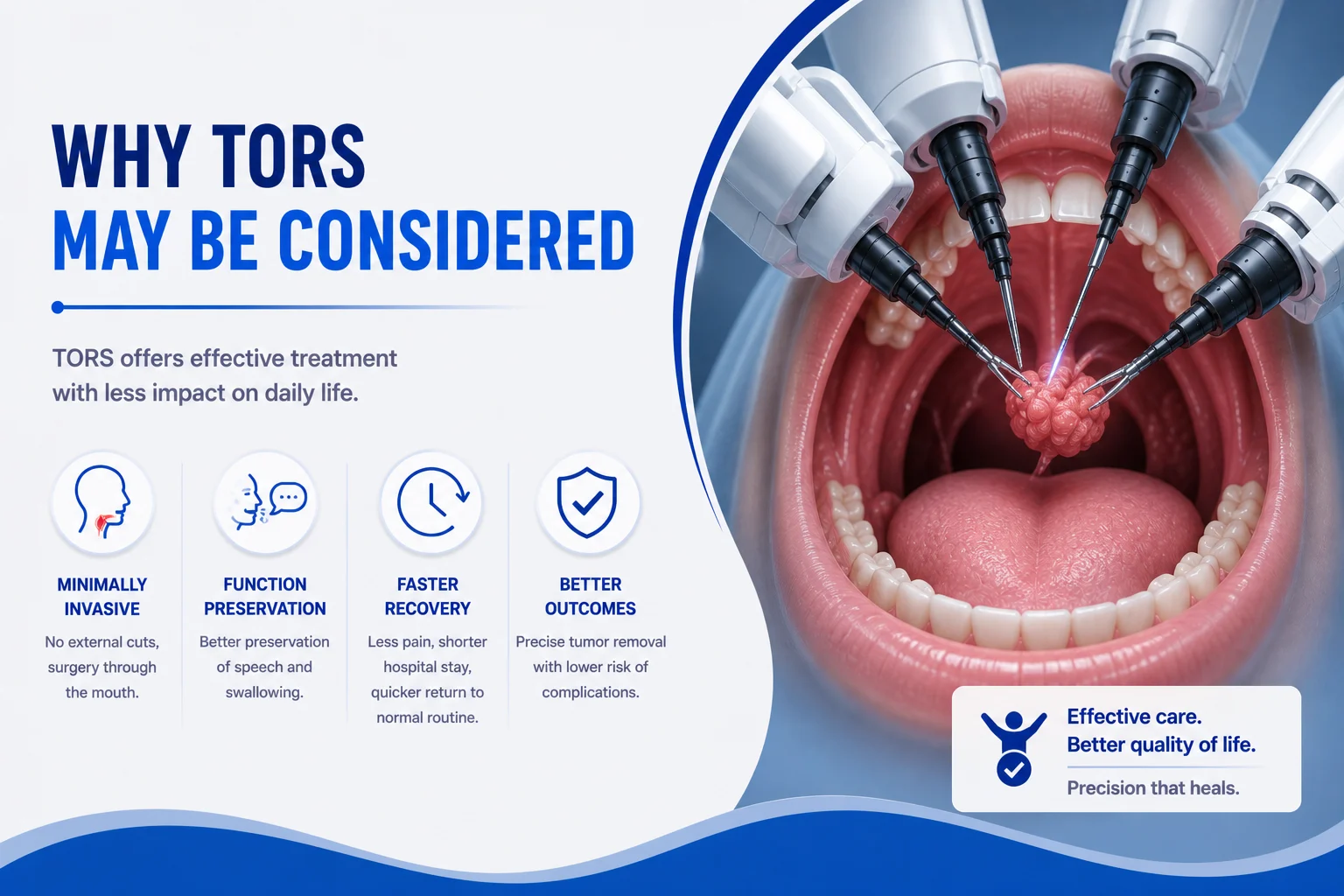
Benefits of Robotic TORS
A transoral robotic approach is designed to combine surgical precision with the least possible disruption to speech, swallowing and appearance.
No External Incisions
Performed entirely through the mouth, with no visible neck scarring.
Avoids Jaw Splitting
Reaches tumors that would otherwise require mandibulotomy in open surgery.
Reduced Need for Tracheostomy
In select cases, a temporary breathing tube may be avoided or minimized.
Shorter Hospital Stay
Suitable patients may spend less time in hospital than after open surgery.
Better Function Preservation
Aims to preserve speech and swallowing function where possible.
Precise, Magnified Visualization
3D magnified view supports precise tumor margins in a confined space.
Why Choose Dr. Singhal for TORS
Transoral robotic surgery asks for precision in a confined space and careful judgment about candidacy. Dr. Singhal brings a robotic-first, function-preserving approach to head and neck cancer care.
- Robotic expertise across urologic, gynecological and head & neck oncology
- A function-preserving philosophy focused on speech and swallowing
- Clear, honest conversations about candidacy and alternatives
- Coordinated multidisciplinary care from diagnosis through follow-up
- Two accessible clinic locations across Ahmedabad
Transoral Robotic Surgery, Step By Step
A general outline of how TORS typically proceeds. Your surgical team will walk you through the specifics for your case.
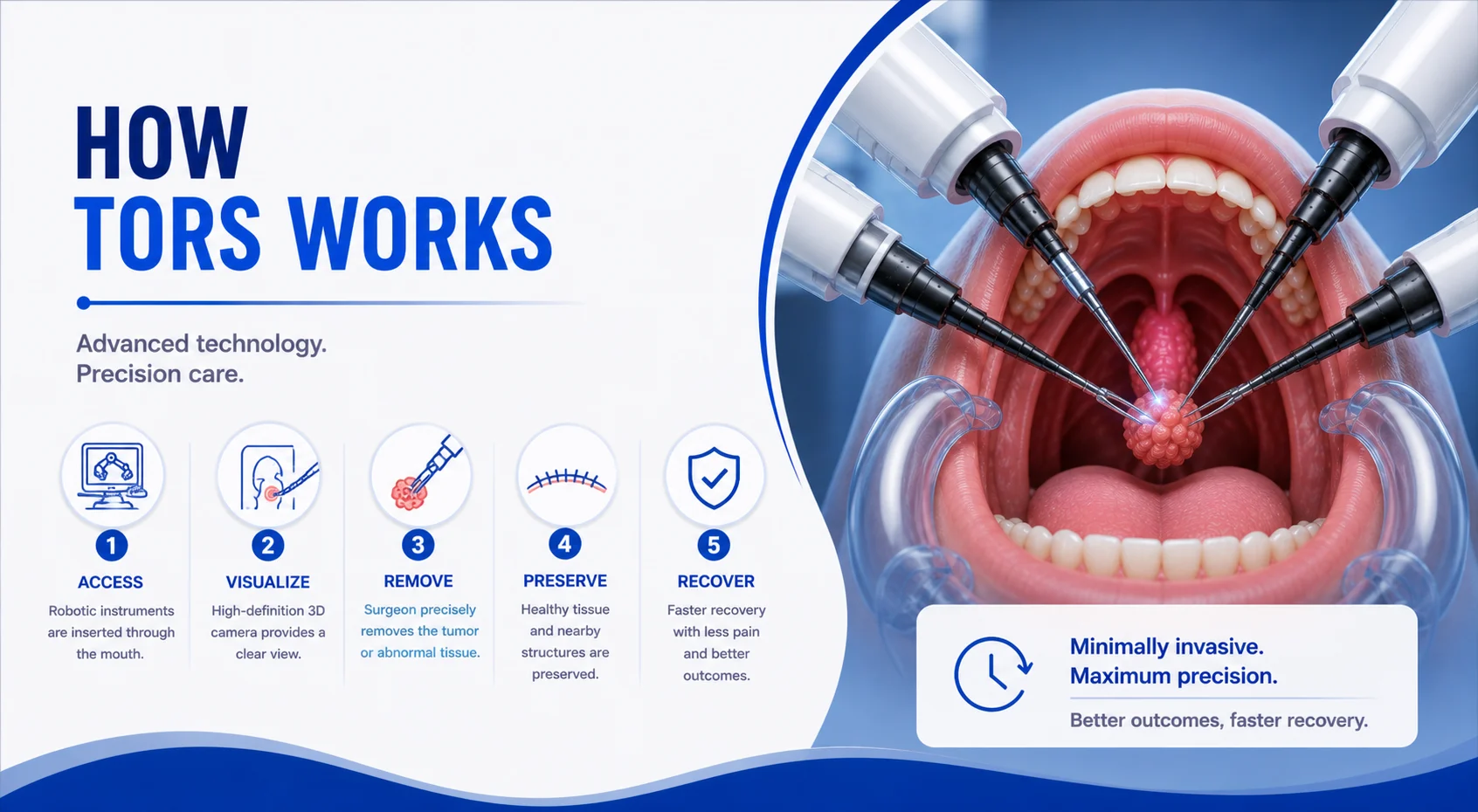
Anesthesia & Mouth Retractor Placement
Under general anesthesia, a specialized mouth retractor is positioned to give clear access to the tumor.
Robotic System Docked
The robotic camera and wristed instruments are introduced through the mouth and positioned by the surgeon.
Tumor Visualization
The magnified 3D view allows the surgeon to clearly identify the tumor and plan resection margins.
Tumor Excision
The tumor is excised with a margin of healthy tissue, which is sent for pathology to confirm clear margins.
Hemostasis & Neck Dissection
Bleeding is carefully controlled; a neck dissection is performed in the same or a staged sitting if indicated.
Recovery Setup
The retractor is removed, the airway and swallowing are assessed, and hospital recovery begins.
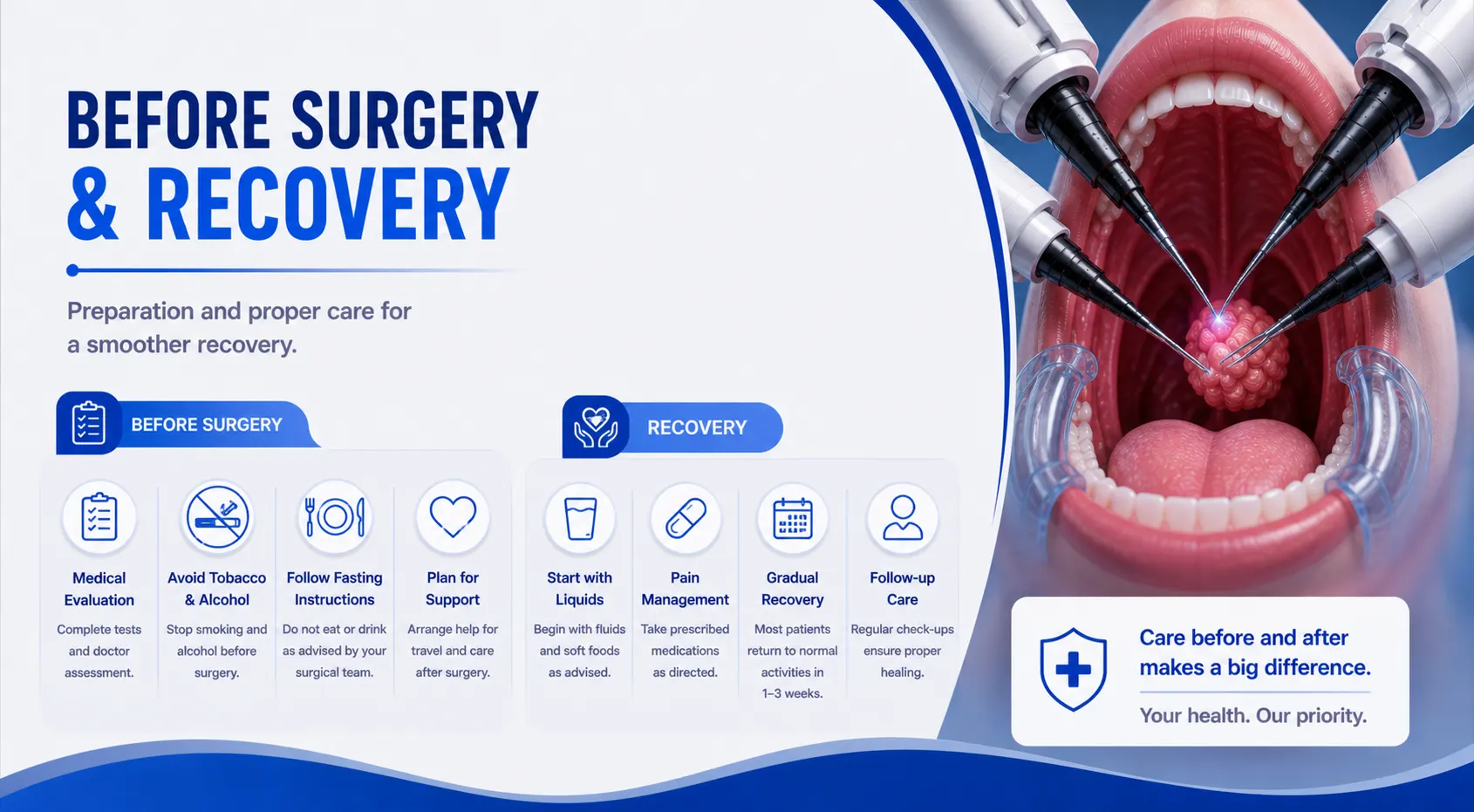
Recovery After TORS
Because TORS avoids external incisions and jaw splitting, many patients recover swallowing and speech function sooner than after open surgery, though this varies by individual case.
Hospital Stay & Monitoring
Close monitoring of the airway and swallowing in the initial days after surgery.
Swallowing & Speech Therapy
Some patients benefit from therapy support to regain swallowing and speech function.
Temporary Feeding Support
A feeding tube may be used short-term in some patients while swallowing recovers.
Pathology-Guided Next Steps
Final pathology guides decisions on any additional radiation or chemotherapy.
Gradual Return to Diet
A phased return to normal diet, guided by your care team's assessment.
Long-Term Follow-Up
Regular surveillance visits to monitor for recurrence and support recovery.
Risks & Possible Complications
As with any surgery, TORS carries risks. These should be discussed in detail with your surgical team before deciding on treatment.
Bleeding
Including a risk of delayed bleeding in the days following surgery.
Swallowing Difficulty
Temporary or, less commonly, longer-term difficulty swallowing.
Airway Compromise
A small risk that may require a temporary breathing tube (tracheostomy).
Infection
As with any surgery, there is a risk of infection at the surgical site.
Injury to Nearby Structures
A small risk of injury to nearby nerves, vessels or tissue given the confined space.
Conversion to Open Surgery
In rare cases, the procedure may need to be converted to an open approach for safety.
Myths vs Facts
Patient Reviews & Videos
Verified Google reviews and patient-friendly video explainers, from Dr. Nitin Singhal's practice in Ahmedabad.
Discuss Your Head & Neck Cancer Diagnosis
Share your reports and our team will review your case and respond within 24 hours. For urgent matters, please call or WhatsApp us directly.
- Confidential review of your reports and scans
- Response from the clinical team within 24 hours
- No obligation — a second opinion is always your choice
Request a Second Opinion
Share a few details — our team responds within 24 hours.
Or WhatsApp us directly at +91 75061 14222
Transoral Robotic Surgery FAQs
TORS is a minimally invasive technique that allows a surgeon to remove tumors of the mouth, throat and voice box through the natural opening of the mouth, using a robotic surgical system, without the need for external incisions or splitting the jaw bone.
TORS is most commonly used for early-stage oropharyngeal cancers such as tonsil and base-of-tongue cancers, and select laryngeal and hypopharyngeal tumors, as well as to help identify unknown primary head and neck cancers.
Not every patient is a candidate. Suitability depends on the tumor's size, location and accessibility through the mouth, and is assessed individually by a multidisciplinary team.
This depends on the final pathology findings after surgery, including margins and lymph node involvement. Some patients may need additional radiation or chemotherapy, decided by the multidisciplinary tumor board.
Because TORS avoids external incisions and jaw splitting, many patients recover swallowing and speech function sooner than with open surgery, though exact timelines vary by individual health and tumor extent.
This page is for general educational purposes and does not replace a consultation with a qualified physician. Suitability for TORS or any head and neck cancer treatment depends on individual factors evaluated by your surgical team.
Diagnosed with a Throat or Voice Box Tumor?
Talk to Dr. Nitin Singhal about whether transoral robotic surgery is an appropriate option for your diagnosis.