
Robotic Ovarian Cancer Surgery in Ahmedabad, Gujarat
Dr. Nitin Singhal, an expert ovarian cancer surgeon, offers robotic oophorectomy and surgical staging for ovarian cancer, with ovarian cancer treatment in Ahmedabad, bringing 18+ Years of Experience to precise, minimally invasive gynecologic cancer surgery.

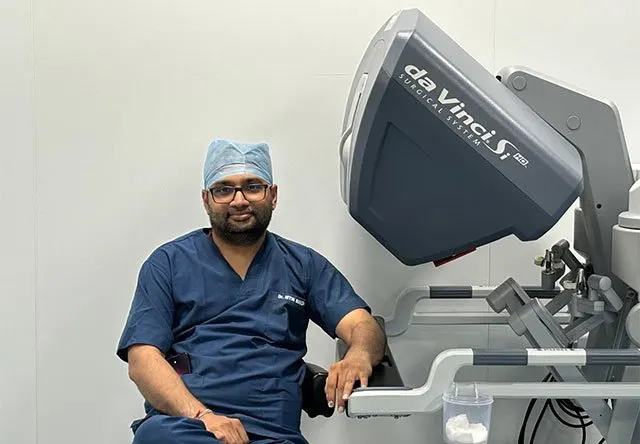
Dr. Nitin Singhal
Dr. Nitin Singhal is a Robotic and HIPEC surgeon based in Ahmedabad, specialising in gynecologic oncology, including ovarian cancer. He combines robotic-assisted technique with a patient-first approach, aiming for precise tumour removal and thorough surgical staging, with access to HIPEC for select advanced cases, while supporting faster recovery wherever suitable.
What Is Ovarian Cancer?
Ovarian cancer develops when abnormal cells grow uncontrollably in one or both ovaries. The most common type, epithelial ovarian cancer, arises from the cells covering the surface of the ovary and accounts for the majority of cases. Less common types include germ cell tumours, which more often affect younger women, and stromal tumours, which arise from the hormone-producing tissue of the ovary.
Ovarian cancer is sometimes called a "silent" disease because its early symptoms — bloating, pelvic discomfort, feeling full quickly — can be vague and easily mistaken for common digestive complaints. This is why persistent changes, especially if new and ongoing, deserve prompt medical evaluation.

Symptoms to Watch For
Ovarian cancer symptoms are often subtle and easy to overlook. Persistent versions of the following, especially if new and lasting more than a few weeks, should be evaluated by a doctor.
Persistent Bloating
Ongoing abdominal bloating that does not resolve, one of the most common early symptoms.
Pelvic or Abdominal Pain
Persistent discomfort or pain in the pelvis or lower abdomen.
Feeling Full Quickly
Difficulty eating or feeling full after only a small amount of food.
Urinary Urgency or Frequency
A sudden or ongoing need to urinate more often or more urgently than usual.
Abdominal Swelling
Visible swelling of the abdomen, sometimes due to fluid build-up in more advanced disease.
Fatigue & Changes in Bowel Habits
Ongoing tiredness, or new changes in bowel habits such as constipation, alongside other symptoms.

What Increases the Risk?
Having one or more risk factors does not mean a person will develop ovarian cancer — it simply means awareness of symptoms and timely evaluation become more important.
BRCA1 & BRCA2 Mutations
Inherited mutations in these genes substantially raise lifetime risk of ovarian cancer.
Family History
A family history of ovarian, breast or colorectal cancer, including Lynch syndrome, increases individual risk.
Age
Risk increases with age, and ovarian cancer is most common after menopause.
Endometriosis
A history of endometriosis is associated with a modestly increased risk of certain ovarian cancer subtypes.
Reproductive History
Never having been pregnant, or having a first pregnancy later in life, is linked with higher risk.
Hormone Replacement Therapy
Long-term use of certain hormone replacement therapies is associated with a modest increase in risk.

How Is Ovarian Cancer Diagnosed?
Clinical evaluation — a review of symptoms, family history and a pelvic examination.
Transvaginal ultrasound — imaging to assess the size, shape and characteristics of any ovarian mass.
CA-125 blood test — a tumour marker blood test used alongside imaging, though it is not specific to cancer alone.
Imaging for staging — CT, MRI or PET scans to assess the extent of disease and check for spread within the abdomen.
Surgical diagnosis — since imaging alone often cannot confirm malignancy, surgical removal of the mass with pathology examination is frequently needed for a definitive diagnosis.
Genetic testing — BRCA1/BRCA2 and related genetic testing, considered for many patients to guide treatment and family risk assessment.

How Ovarian Cancer Is Treated
Treatment depends on cancer type, stage and overall health, and is planned individually by a multidisciplinary team.
Surgery (Oophorectomy & Staging)
Removal of the affected ovary or ovaries, often with the uterus, omentum and lymph nodes for staging.
Cytoreductive (Debulking) Surgery
Extensive surgery to remove as much visible tumour as possible in more advanced disease.
Chemotherapy
Usually platinum-based, given before and/or after surgery for most ovarian cancer patients.
HIPEC
Heated chemotherapy delivered directly into the abdominal cavity during surgery, considered in select advanced or recurrent cases.
Targeted Therapy
Including PARP inhibitors and anti-angiogenic agents, used based on tumour biology and genetic testing.
Multidisciplinary Follow-Up
Structured monitoring, including CA-125 and imaging surveillance, to check for recurrence.
Why Choose Dr. Nitin Singhal?
Robotic & HIPEC Cancer Surgeon
Focused practice in robotic-assisted and complex cancer surgery, including gynecologic oncology.
Gynecologic Oncology Specialisation
Experience performing robotic hysterectomy and lymph node staging for uterine, cervical and ovarian cancers.
Training & Qualifications
MBBS, MS (General Surgery), MCh (Surgical Oncology) with training at Tata Memorial Centre, Mumbai.
18+ Years of Experience
Focused specifically in surgical and robotic oncology.
Hospital Affiliations
Operates at established hospitals in Ahmedabad with advanced operation theatres, robotic systems and ICU support.
Multidisciplinary Cancer Care
Coordinated planning with medical oncology, radiation oncology and pathology colleagues as needed.
What Is Robotic Uterus Cancer Surgery (Robotic Hysterectomy)?
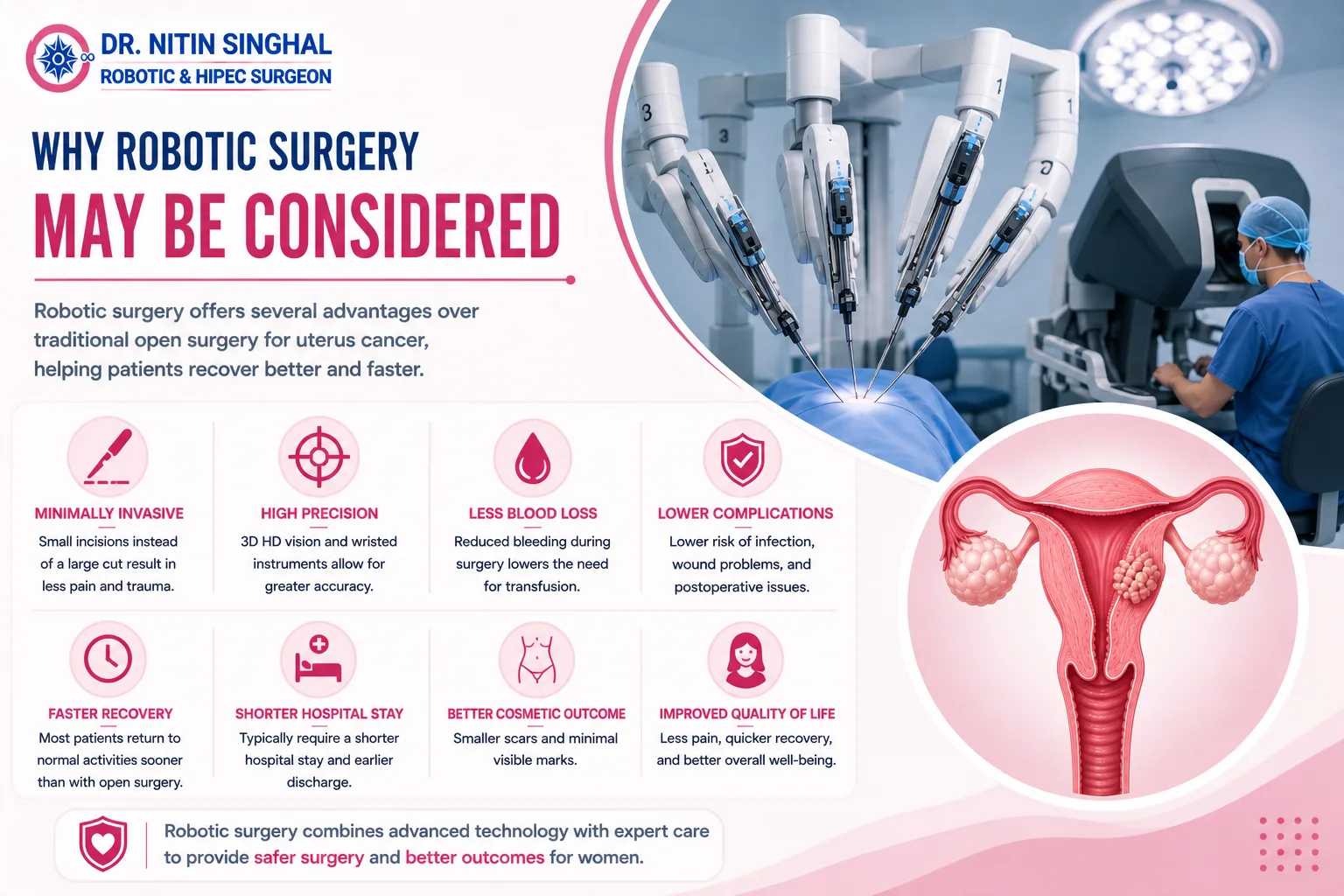
Robotic hysterectomy uses a surgical system with wristed instruments and a magnified 3D camera, controlled entirely by the surgeon from a console beside the patient. The robot does not operate independently — every movement is directed by the surgeon in real time.
The procedure is performed through a few small abdominal incisions rather than one large opening. The camera provides enhanced, magnified visualisation, which can support precise dissection in the narrow pelvis, close to the bladder, ureters and major pelvic vessels — while also enabling thorough pelvic lymph node assessment where needed for accurate cancer staging. This differs from conventional open surgery, which uses a single larger incision and carries a heightened chance of blood loss and a longer recovery.
Why Robotic Surgery May Be Considered
These are potential, patient-specific advantages in suitable cases — not guarantees, as outcomes depend on the individual patient and procedure.
Smaller Incisions
Several small incisions rather than one large opening across the abdomen.
Reduced Blood Loss
In appropriate cases, robotic technique can help limit intraoperative bleeding.
Less Post-Operative Pain
Smaller incisions may be associated with reduced discomfort during recovery.
Shorter Hospital Stay
In suitable patients, hospital stay may be shorter than after open surgery.
Earlier Return to Activity
Minimally invasive technique may allow a quicker return to daily activities.
Precise Pelvic Lymph Node Dissection
Magnified 3D vision can assist precision in clearing lymph nodes in the narrow pelvic space.
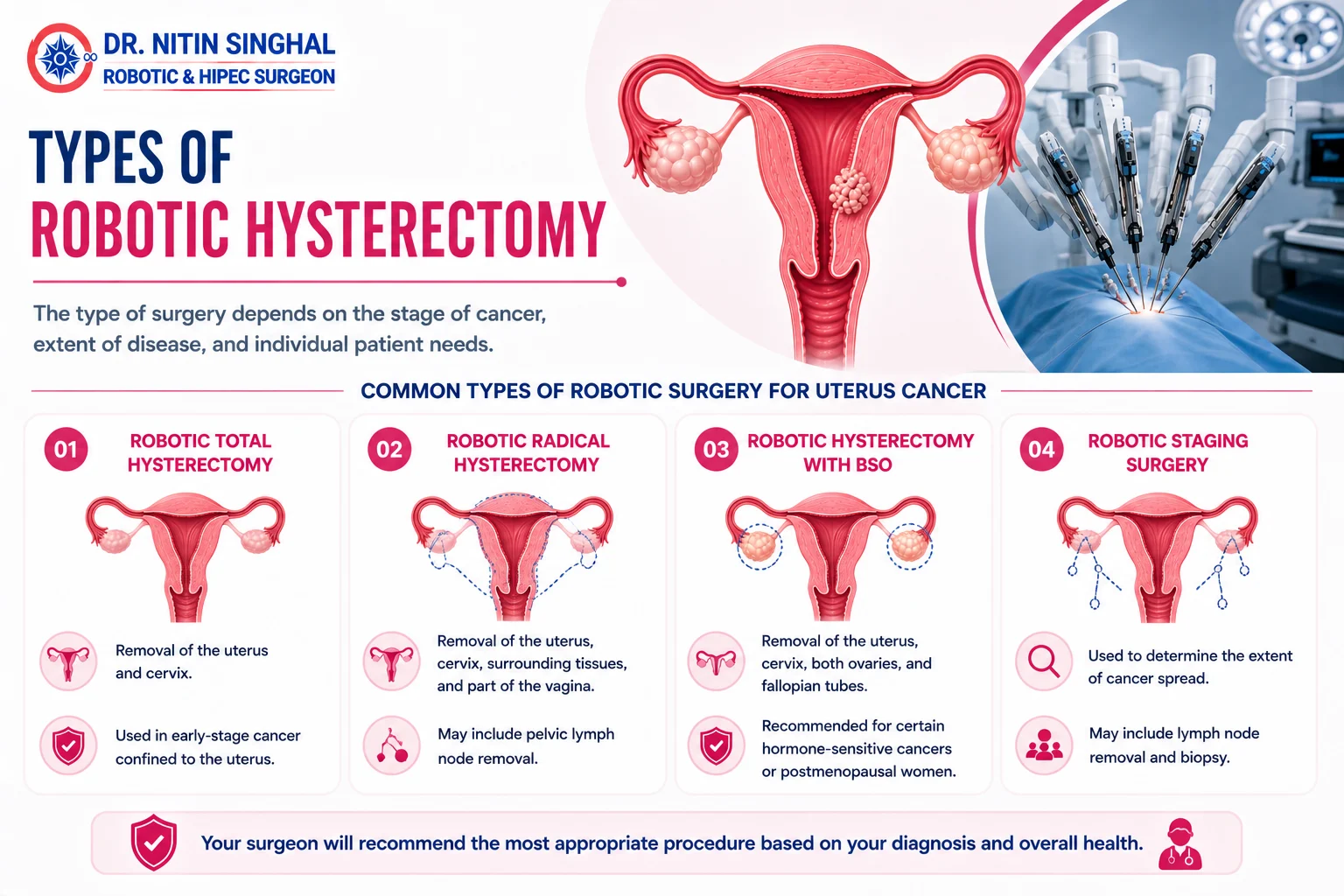
Types of Robotic Uterus Procedures
The specific procedure recommended depends on the cancer's stage, type and whether fertility preservation is a consideration.
Robotic vs Laparoscopic vs Open Uterus Surgery
A general comparison of approach — actual outcomes for any specific patient depend on the procedure and case.
| Feature | Open Surgery | Laparoscopic Surgery | Robotic Surgery |
|---|---|---|---|
| Incisions | Larger, single opening | Smaller | Smaller |
| Visualisation | Direct | Camera-assisted, 2D | Enhanced 3D visualisation |
| Instrument Movement | Conventional, surgeon's hand | Limited range of motion | Wristed, surgeon-controlled robotic instruments |
| Pelvic Dissection | More limited visibility in deep pelvis | Improved over open | Enhanced precision near bladder, ureters & vessels |
| Recovery | Procedure-dependent | Procedure-dependent | Procedure-dependent |
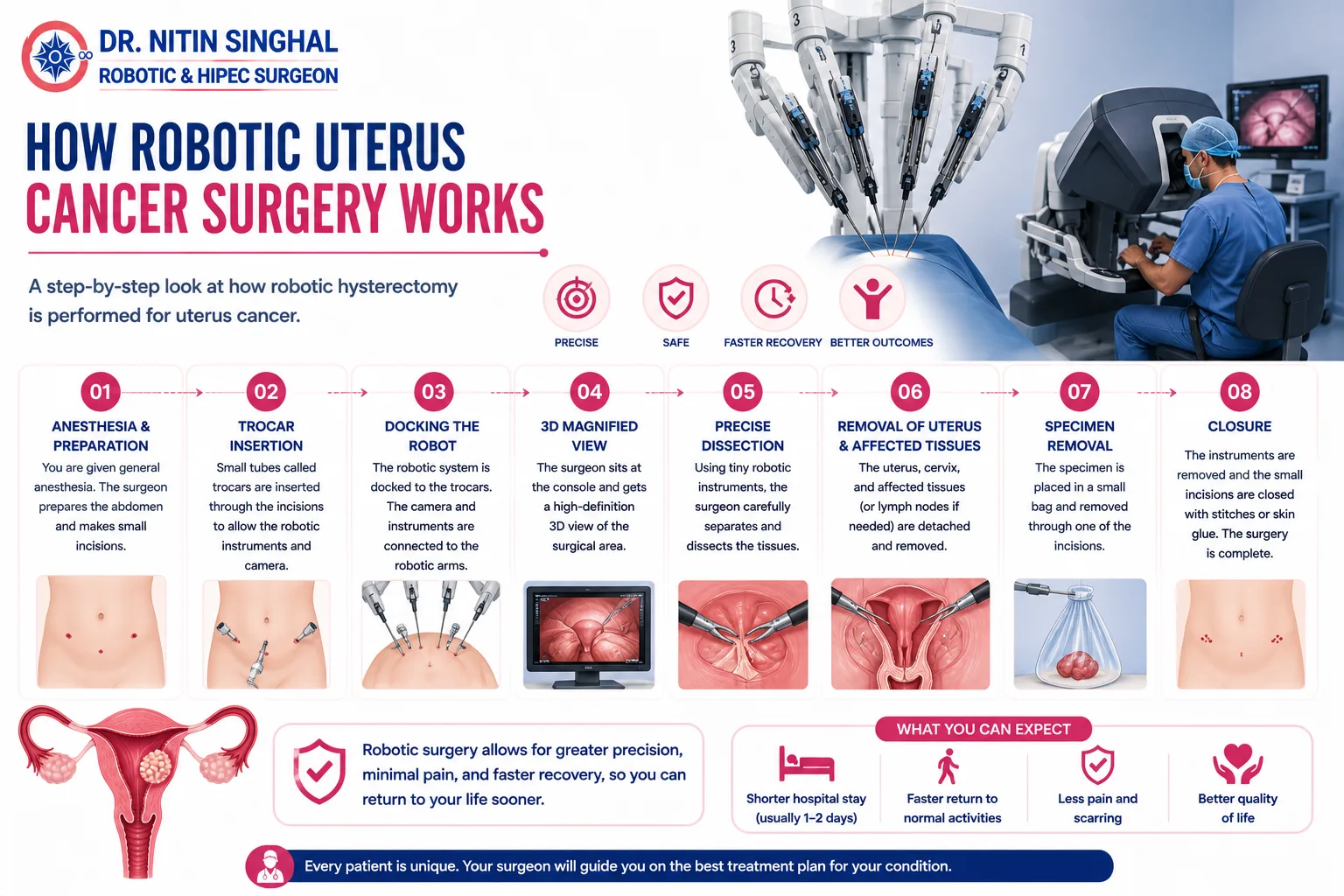
How the Surgery Works, Step by Step
Pre-operative evaluation — final review of imaging, staging and overall fitness for surgery.
Anaesthesia — the patient is placed under general anaesthesia by the anaesthesia team.
Small abdominal incisions — a few small incisions are made to introduce the robotic ports.
Robotic system positioned — the robotic arms are docked and the surgeon operates from the console.
Uterus and surrounding tissue assessed — the uterus, tubes and ovaries are carefully examined and mobilised.
Hysterectomy performed — the uterus, and where indicated the tubes and ovaries, are dissected free and removed.
Lymph node assessment — pelvic and, where needed, para-aortic lymph nodes are removed for accurate staging.
Specimen retrieval — the removed tissue is retrieved, typically through the vagina or one of the small incisions.
Incisions closed — the small incisions are closed, and the patient is moved to recovery.
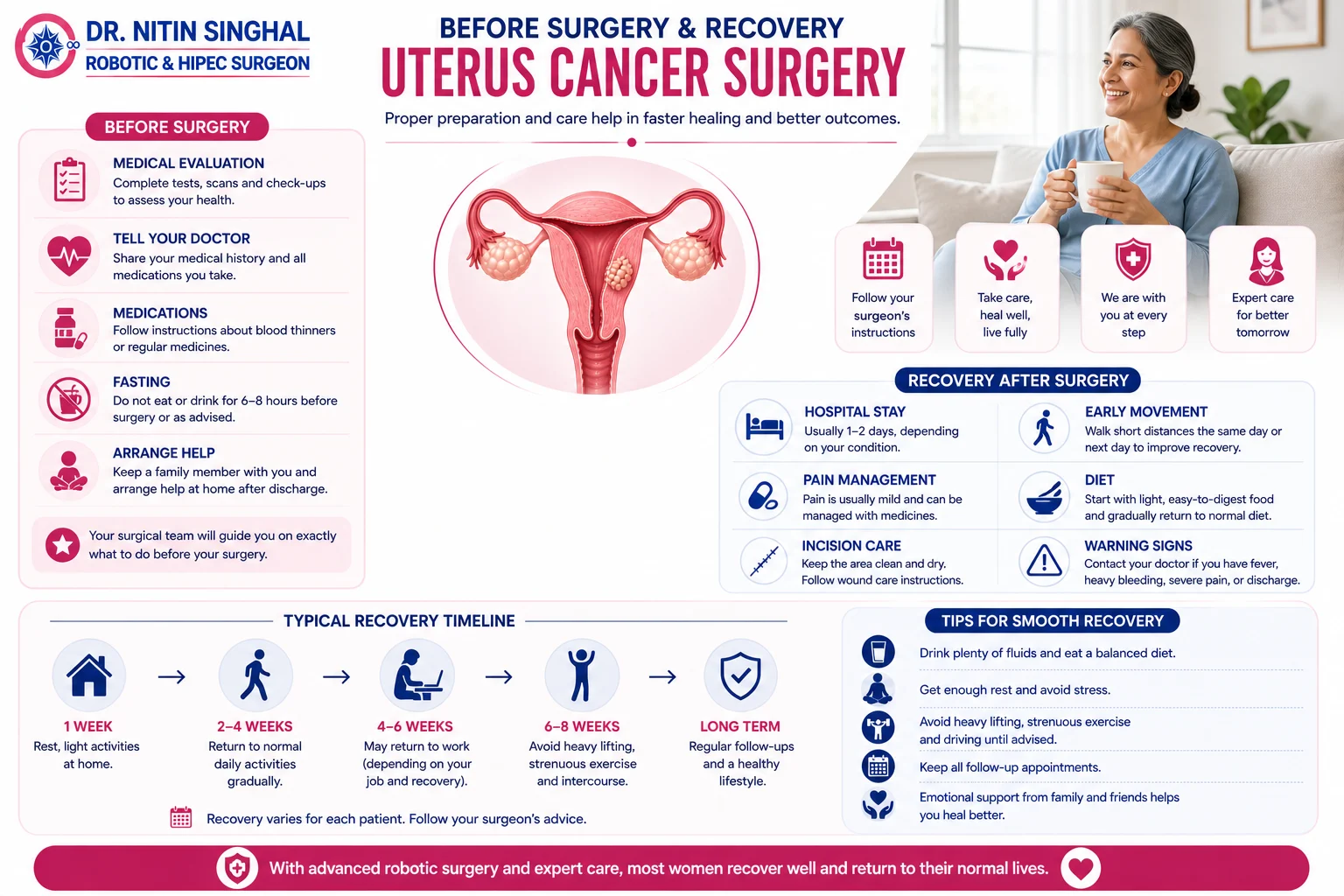
Before Surgery & Recovery Afterwards
Investigations & Review
Final blood tests, imaging review and a medication review before the procedure.
Counselling on Menopause & Fertility
A discussion of what to expect if the ovaries are removed, and fertility-related considerations where relevant.
Anaesthesia Assessment
A pre-anaesthesia check to confirm fitness for the procedure.
Hospital Stay & Pain Management
Typically a short hospital stay of 1–3 days for robotic hysterectomy, with pain managed through recovery.
Gradual Return to Activity
Most patients return to light activity within 2–4 weeks, with full recovery guided by your surgical team.
Long-Term Follow-Up
Scheduled follow-up visits and surveillance to monitor for recurrence.
Risks & Possible Complications
As with any major surgery, uterus cancer surgery carries risks. These should be discussed in detail with your surgical team before deciding on treatment.
Bleeding
As with any surgery, there is a risk of bleeding during or after the procedure.
Infection
Wound or internal infection is a possible complication of any major abdominal surgery.
Injury to Nearby Organs
Given the proximity of the bladder, ureters and bowel, injury to these structures is a recognised risk.
Blood Clots
A risk with any major surgery, managed with preventive measures where appropriate.
Lymphedema
Swelling in the legs can occur if pelvic lymph nodes are removed as part of staging.
Early Menopause
If the ovaries are removed in a premenopausal patient, this brings on immediate surgical menopause.
Myths vs Facts
Patient Reviews & Videos
Verified Google reviews and patient-friendly video explainers, from Dr. Nitin Singhal's robotic & HIPEC cancer surgery practice in Ahmedabad.
Common Questions
What is robotic uterus cancer surgery?
Is hysterectomy the only treatment for uterus cancer?
Will I go into menopause after uterus cancer surgery?
What is the recovery time after robotic hysterectomy?
How long will I stay in the hospital?
Is robotic surgery suitable for every uterus cancer patient?
Will I need chemotherapy or radiation after surgery?
Are fertility-sparing options available?
What are the risks of robotic hysterectomy?
How do I know whether I am a candidate?
Considering Robotic Uterus Cancer Surgery?
Get an expert evaluation to understand your diagnosis, treatment options, and whether robotic hysterectomy may be appropriate for you.