
Robotic Gynecologic Cancer Surgery in Ahmedabad
Dr. Nitin Singhal, with 18+ Years of Experience, provides robotic surgical care for gynecologic cancers — cervical, ovarian, endometrial and vulvar disease — combining precision technique, fertility-sparing options where appropriate, and HIPEC for peritoneal spread, with faster recovery.





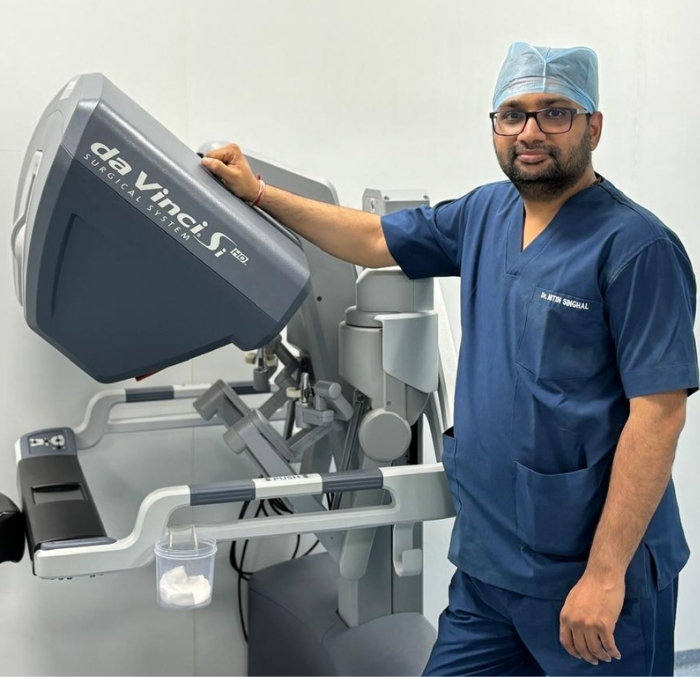
Dr. Nitin Singhal
Dr. Nitin Singhal is a specialist Robotic and HIPEC (Hyperthermic Intraperitoneal Chemotherapy) surgeon based in Ahmedabad, with focused expertise in gynecologic oncology. He brings 18+ Years of Experience in robotic and advanced surgical oncology, combining precise, minimally invasive technique with a patient-first approach to cancer care.
Patients travel to Ahmedabad from across Gujarat and beyond for his expertise in cervical, ovarian, endometrial and vulvar cancer surgery, as well as cytoreductive surgery with HIPEC for peritoneal spread from ovarian cancer — with an emphasis on function preservation, fertility-sparing options where clinically suitable, and long-term quality of life.
Precision That Shows Up In Recovery
Explore Our Gynecologic Oncology & HIPEC Programme
Robotic gynecologic cancer surgery sits within two dedicated programmes at our centre — visit either page for full detail on conditions treated, technique, and what to expect.
Second Opinion for Gynecologic Cancer
A structured review of your scans, biopsy and histopathology reports to confirm diagnosis and stage, and to outline the treatment approaches available to you.
Get a Second Opinion →HIPEC (Hyperthermic Intraperitoneal Chemotherapy)
Cytoreductive surgery combined with heated intraperitoneal chemotherapy for selected patients with peritoneal surface spread from ovarian and other cancers.
Visit HIPEC Page →
Cervical Cancer
Cervical cancer is frequently detected through routine screening, including Pap smear and HPV testing, often before symptoms appear. When symptoms do occur, they may include abnormal vaginal bleeding, bleeding after intercourse, or unusual discharge, and warrant prompt gynecologic evaluation.
Robotic radical hysterectomy with pelvic lymphadenectomy allows precise removal of the tumour and surrounding tissue through small incisions, with meticulous nerve-sparing dissection where oncologically appropriate, supporting a faster return to daily function.
Common Signs
- Abnormal vaginal bleeding, including between periods
- Bleeding after intercourse or after menopause
- Unusual or persistent vaginal discharge
- Pelvic pain, particularly during intercourse
Ovarian Cancer
Ovarian cancer symptoms are often vague and easily overlooked — persistent bloating, pelvic or abdominal pain, early satiety, or changes in bladder habit lasting more than a few weeks should be evaluated with imaging and tumour marker testing such as CA-125.
Robotic surgical staging, and cytoreductive surgery where indicated, allow thorough evaluation and precise tumour removal. For selected patients with peritoneal spread, cytoreductive surgery combined with HIPEC may be considered as part of a comprehensive treatment plan.
Common Signs
- Persistent bloating or abdominal distension
- Pelvic or abdominal pain lasting several weeks
- Feeling full quickly, or difficulty eating
- Urinary urgency or frequency without infection
Endometrial (Uterine) Cancer
Endometrial cancer is the most common gynecologic cancer and, unlike many other cancers, most often presents early — usually with post-menopausal bleeding or unusual bleeding between periods. Endometrial biopsy and pelvic imaging confirm the diagnosis and guide staging.
Robotic hysterectomy with bilateral salpingo-oophorectomy and lymph node assessment offers precise tumour removal and accurate staging through small incisions, with reduced blood loss and shorter hospital stay compared with open surgery.
Common Signs
- Bleeding after menopause
- Heavy or irregular bleeding between periods
- Pelvic pain or pressure
- Watery or blood-tinged vaginal discharge
Vulvar Cancer
Vulvar cancer is less common than other gynecologic cancers and can be mistaken for benign skin conditions in its early stages. Persistent itching, a visible lump or ulcer, or a change in the appearance of vulvar skin should be evaluated with a clinical examination and biopsy.
Radical local excision or vulvectomy, combined with groin lymph node assessment, forms the mainstay of surgical treatment, with technique tailored to tumour size and location to preserve function wherever oncologically safe.
Common Signs
- Persistent itching or discomfort of the vulva
- A visible lump, wart-like growth, or ulcer
- Changes in skin colour or thickness
- Bleeding or pain unrelated to menstruation
Peritoneal Cancer & HIPEC
When ovarian cancer spreads across the peritoneal (abdominal lining) surface, selected patients may benefit from cytoreductive surgery (CRS) — removal of all visible disease — combined with HIPEC, as part of a carefully planned, multidisciplinary approach.
HIPEC delivers heated chemotherapy directly into the abdominal cavity immediately after surgery, targeting microscopic residual disease at the source. Suitability is assessed individually, taking into account disease extent, prior treatment, and overall fitness for surgery.
Common Indications
- Ovarian cancer with peritoneal spread
- Selected recurrent gynecologic cancers
- Cases assessed individually for suitability and disease extent
- Planned as part of a multidisciplinary treatment pathway
What To Expect, Step By Step
Every gynecologic-oncology case moves through the same careful sequence — designed for accurate diagnosis and the least disruption to your life.
Consultation
Review of scans, biopsy reports and symptoms to understand your specific case.
Diagnosis & Staging
Imaging, biopsy or tumour markers, as needed, to confirm stage and plan treatment.
Robotic Surgery / CRS + HIPEC
Minimally invasive, function-preserving procedure, or cytoreductive surgery with HIPEC where clinically indicated.
Recovery & Follow-up
Structured post-operative care and long-term monitoring for lasting outcomes.
Robotic Gynecologic Cancer Surgery — Common Questions
What is robotic gynecologic cancer surgery and how does it differ from open surgery?
Which gynecologic cancers can be treated with robotic surgery?
What is HIPEC and when is it used in gynecologic cancer?
How long is the hospital stay and recovery after robotic gynecologic cancer surgery?
Do I need a second opinion before deciding on gynecologic cancer surgery?
What Our Patients Say
Live reviews collected from Google, reflecting real patient experiences with Dr. Nitin Singhal and his team.
Underwent robotic surgery for endometrial cancer. The procedure and recovery were explained clearly at every stage, and I was back to my normal routine much sooner than I expected.
Treated for ovarian cancer with cytoreductive surgery and HIPEC. Grateful to Dr. Singhal and his entire team for their clear guidance, patience, and excellent care throughout.
Very satisfied with my robotic hysterectomy for cervical cancer. The whole team was supportive, the hospital stay was short, and recovery has gone smoothly.
Discuss Your Reports With Dr. Nitin Singhal
Share your scans, biopsy or histopathology reports for an expert second opinion, or call to book a consultation directly.