
Can Non-Smokers Get Lung Cancer?
Quick Answer: Yes, non-smokers can develop lung cancer. In India, a significant proportion of lung cancer patients have never smoked. Factors such as air pollution, indoor cooking smoke, second-hand smoke, workplace exposure and genetic mutations can increase the risk. Persistent coughing, unexplained weight loss or breathing difficulties should never be ignored. Early diagnosis can significantly improve treatment outcomes.
Can You Get Lung Cancer Without Smoking?
Many people associate lung cancer with smoking. However, smoking is not the only cause. People who have never smoked can also develop lung cancer, including women and older adults.
In India, lung cancer is increasingly recognised among non-smokers. One challenge is that its early symptoms may resemble common respiratory conditions, including tuberculosis (TB), pneumonia and recurring chest infections. This can sometimes delay diagnosis.
Understanding the risk factors and recognising warning signs can help patients seek medical attention at the right time. When detected at an early stage, lung cancer may be treated successfully, sometimes with surgery.
What Causes Lung Cancer in Non-Smokers?
Several environmental, occupational and genetic factors can contribute to lung cancer in people who have never smoked.
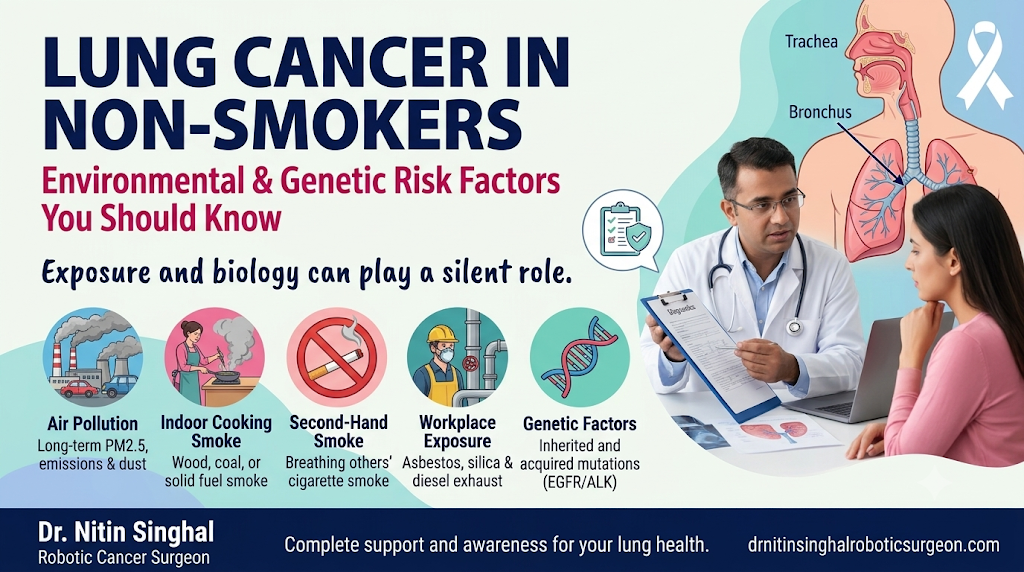
- Air Pollution: Long-term exposure to PM2.5 particles from vehicle emissions, construction activities and industrial pollution can damage lung tissue and increase cancer risk.
- Indoor Cooking Smoke: Regular exposure to smoke from wood, coal, kerosene and other solid fuels, particularly in poorly ventilated kitchens, can increase the risk.
- Second-Hand Smoke: Breathing cigarette smoke from family members, colleagues or public environments exposes non-smokers to harmful chemicals.
- Workplace Exposure: Asbestos, silica dust, diesel exhaust and certain industrial chemicals are recognised occupational risk factors.
- Genetic Factors: Certain inherited susceptibilities and acquired genetic mutations, including EGFR and ALK alterations, can contribute to lung cancer development.
Early Warning Signs of Lung Cancer
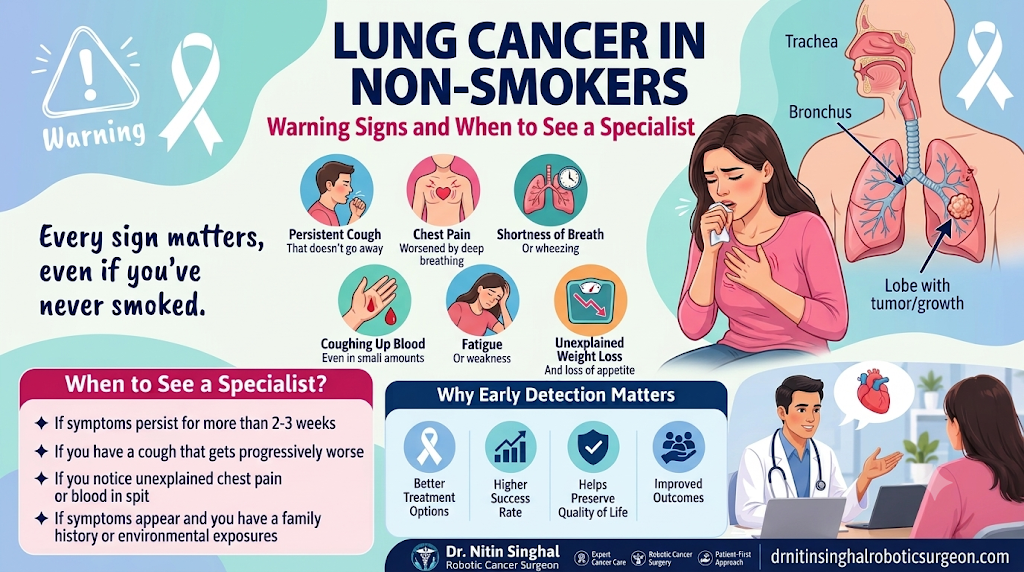
Lung cancer does not always cause noticeable symptoms during its early stages. However, certain warning signs should not be overlooked:
- Persistent cough lasting more than three weeks.
- Coughing up blood or blood-stained sputum.
- Unexplained weight loss or reduced appetite.
- Breathlessness during routine activities.
- Persistent chest, shoulder or back pain.
- Repeated chest infections or pneumonia.
- Unusual fatigue or prolonged hoarseness.
These symptoms do not automatically mean cancer, but medical evaluation is important, particularly when they persist or worsen.
Difference between Tuberculosis (TB) and Lung Cancer
In India, persistent coughing, chest discomfort and unexplained weight loss are commonly associated with tuberculosis. However, lung cancer can cause similar symptoms.
If a cough continues despite treatment, symptoms return repeatedly or investigations do not explain the problem, doctors may recommend further evaluation.
A chest CT scan, sputum investigations and, when necessary, a biopsy can help distinguish lung cancer from TB and other respiratory conditions. An accurate diagnosis is essential before starting treatment.
How Is Lung Cancer Diagnosed?
Doctors use different investigations to confirm lung cancer and determine its stage.
- CT Scan: Provides detailed images of the lungs and helps identify suspicious nodules or tumours.
- PET-CT Scan: Helps assess whether cancer has spread to lymph nodes or other organs.
- Biopsy: A tissue sample is examined under a microscope to confirm the presence and type of cancer.
- Molecular Testing: Tests for genetic alterations such as EGFR, ALK and ROS1 help identify patients who may benefit from targeted therapies.
- Lung Function Tests: Evaluate breathing capacity and help determine whether a patient can safely undergo lung surgery.
What Are the Treatment Options for Lung Cancer?
Lung cancer treatment depends on the cancer type, stage, tumour characteristics, molecular test results and the patient’s overall health.
- Early-Stage Lung Cancer: Surgery to remove the affected portion of the lung may offer the best chance of long-term disease control or cure in suitable patients.
- Locally Advanced Lung Cancer: Treatment may involve a combination of chemotherapy, radiation therapy, immunotherapy and, in selected cases, surgery.
- Advanced Lung Cancer: Targeted therapy, immunotherapy and chemotherapy may help control cancer, manage symptoms and improve quality of life.
A multidisciplinary cancer team helps determine the most appropriate treatment approach for each patient.
What Is Robotic Lung Cancer Surgery?
Robotic lung surgery is an advanced minimally invasive technique used to treat selected patients with lung cancer.
The surgeon controls specialised robotic instruments through small incisions while viewing a magnified 3D image of the surgical area. This allows precise movements and access to the affected lung tissue.
Potential benefits include:
- Smaller surgical incisions.
- Less postoperative pain.
- Reduced blood loss.
- Shorter hospital stays.
- Faster recovery compared with traditional open surgery in suitable patients.
Robotic surgery is not appropriate for everyone. Its suitability depends on tumour size, location, cancer stage, lung function and overall health.
Can Lung Cancer Risk Be Reduced?
Although some risk factors, such as genetic changes, cannot be controlled, certain precautions can help reduce exposure to harmful substances.
- Avoid smoking and exposure to second-hand smoke.
- Use cleaner cooking fuels and ensure proper kitchen ventilation.
- Reduce exposure to dust, chemicals and industrial pollutants.
- Follow workplace safety guidelines and use appropriate protective equipment.
- Seek medical advice for persistent coughs or unexplained respiratory symptoms.
Lung Cancer Treatment in Ahmedabad
Dr. Nitin Singhal is a robotic and surgical oncologist in Ahmedabad, specialising in the surgical management of lung and other cancers. He offers advanced robotic surgical options for eligible patients.
Patients diagnosed with lung cancer may benefit from an individualised treatment plan based on cancer stage, tumour characteristics, molecular test results and overall health.
If you experience a persistent cough, unexplained breathing difficulties, coughing up blood or have an abnormal lung scan, timely medical evaluation is important.
Book a Consultation with Dr. Nitin Singhal to discuss your diagnosis and explore appropriate lung cancer treatment options in Ahmedabad.
Frequently Asked Questions
1. Can non-smokers develop lung cancer?
Yes. Non-smokers can develop lung cancer due to factors such as air pollution, cooking smoke, second-hand smoke, workplace exposure and genetic changes.
2. What is the most common type of lung cancer in non-smokers?
Adenocarcinoma is the most common type of lung cancer among non-smokers. It develops in the cells that produce mucus in the lungs.
3. Can a chest X-ray miss lung cancer?
Yes. Small tumours or certain abnormalities may not be visible on a chest X-ray. A CT scan provides more detailed images when further investigation is needed.
4. Can lung cancer be cured?
Yes, some early-stage lung cancers can be successfully treated with surgery. Treatment for advanced cancer may include targeted therapy, immunotherapy or chemotherapy to control the disease.
5. Is robotic lung surgery suitable for everyone?
No. Suitability depends on the cancer stage, tumour location, lung function and the patient’s overall medical condition.
Conclusion
Lung cancer is not exclusively a smoker’s disease. Non-smokers can also develop this condition due to environmental exposure, occupational hazards and genetic factors. Recognising early warning signs, getting an accurate diagnosis and consulting an experienced cancer specialist can make an important difference. Early medical attention provides more opportunities to explore effective treatment options.