
Partial Nephrectomy for Kidney Cancer
Nephron-sparing, robotic-assisted surgery that removes the kidney tumor while preserving as much healthy kidney tissue and function as possible.

When a kidney tumor is found early and confined to a small area, it doesn't always mean losing the whole kidney. Partial nephrectomy removes just the tumor and a margin of surrounding tissue, leaving the rest of the kidney intact and functioning. Below, Dr. Nitin Singhal explains what the surgery involves, the different techniques available, and why a robotic approach can make nephron-sparing surgery possible even for more complex tumors.
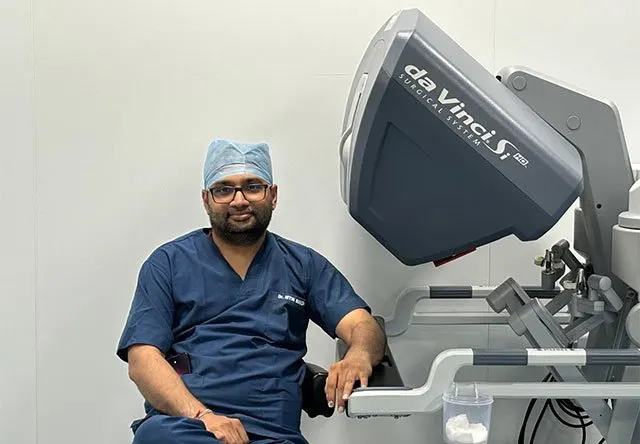
About Dr. Nitin Singhal
Dr. Nitin Singhal is a robotic and HIPEC cancer surgeon based in Ahmedabad, with 18+ years of experience in surgical oncology. He trained at Tata Memorial Centre, one of India's leading cancer care institutions, before focusing on minimally invasive, organ-preserving surgery for kidney, urologic, and gynecological cancers — including robotic-assisted partial nephrectomy for renal tumors.
He uses the robotic surgical platform to combine oncological precision with careful preservation of healthy kidney tissue, and takes time with each patient to explain their diagnosis, the surgical options available, and what recovery will look like.
What Is Partial Nephrectomy?
Partial nephrectomy, also known as nephron-sparing surgery, removes only the cancerous portion of the kidney along with a rim of healthy tissue around it, rather than removing the entire kidney as in a radical nephrectomy.
By preserving as much functioning kidney tissue as possible, this approach helps protect long-term kidney function — a priority for patients with a solitary kidney, reduced kidney function, tumors in both kidneys, or hereditary conditions that raise the risk of future tumors.
Who Needs Partial Nephrectomy?
Partial nephrectomy is generally considered for smaller, localized kidney tumors, particularly those located toward the surface or periphery of the kidney rather than deep near the major blood vessels or collecting system.
- Small, early-stage renal tumors
- A solitary kidney, where preserving function is critical
- Reduced baseline kidney function or chronic kidney disease
- Tumors in both kidneys
- Hereditary kidney cancer syndromes with a risk of future tumors
Types of Partial Nephrectomy
Several techniques exist for removing a kidney tumor while sparing the healthy kidney. Your surgeon will recommend the approach best suited to your tumor and overall health.
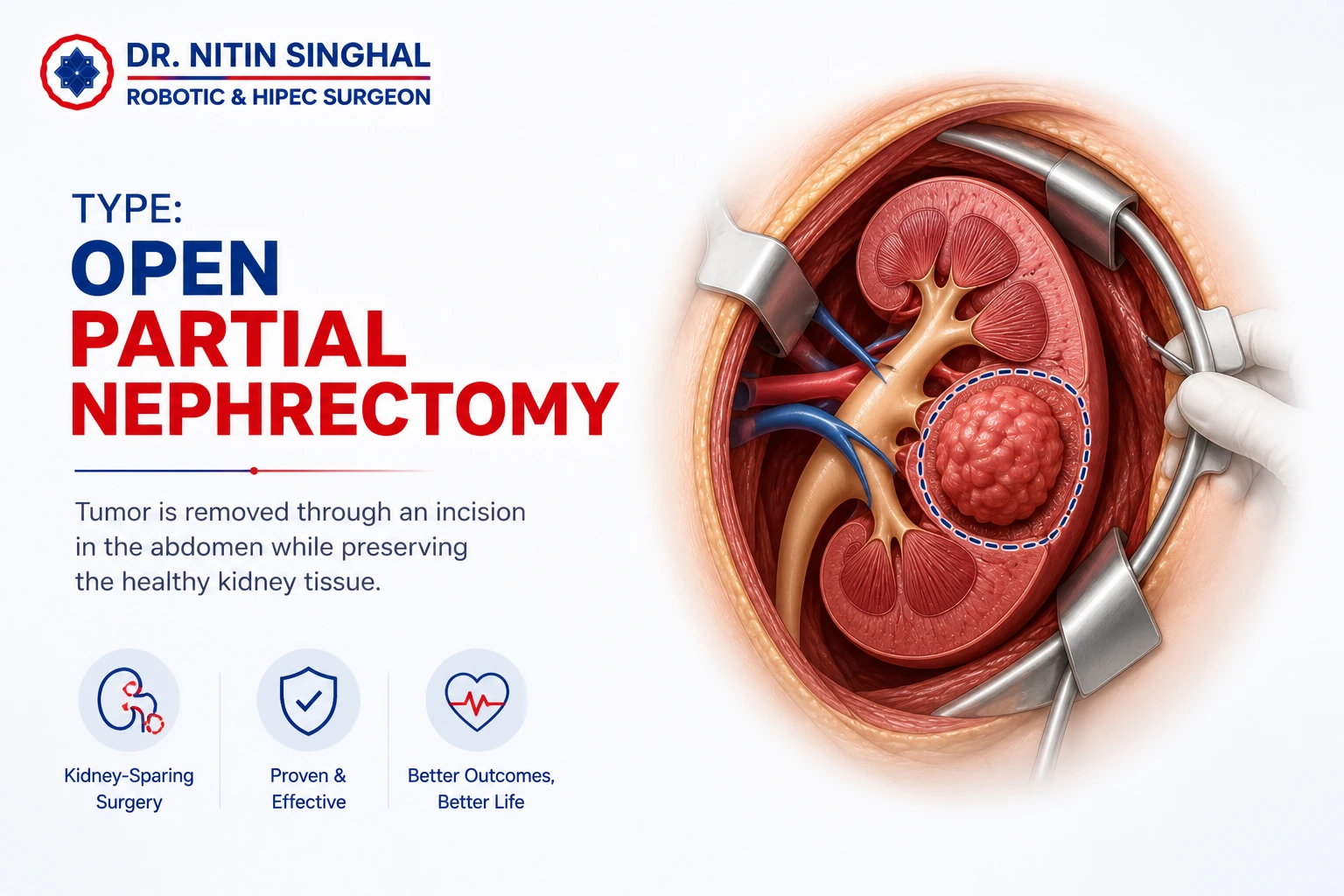
Open Partial Nephrectomy
The traditional approach, performed through a single larger incision in the flank or abdomen. It gives the surgeon direct manual access and remains valuable for select complex tumors.
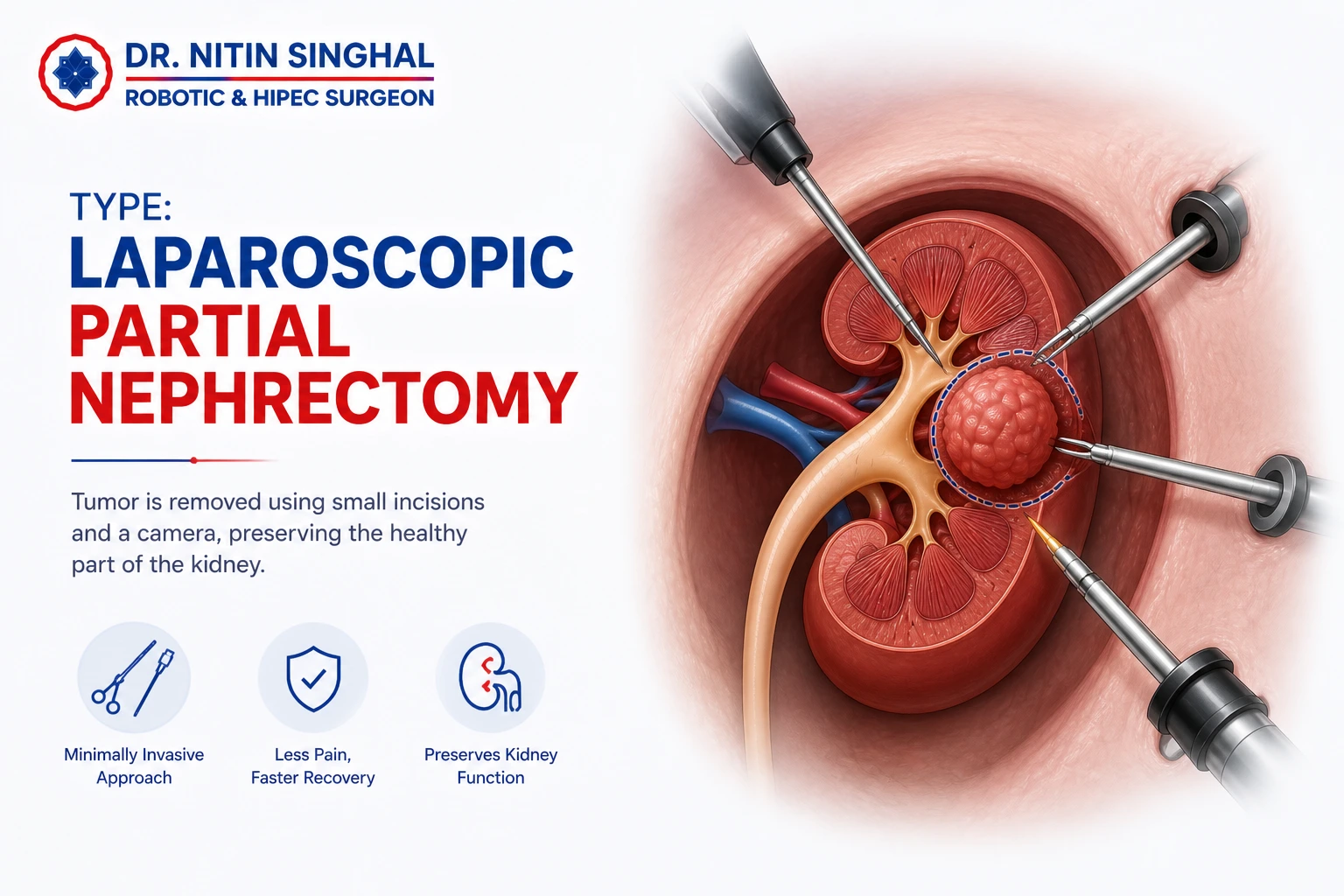
Laparoscopic Partial Nephrectomy
A minimally invasive option using a camera and long-handled instruments through several small incisions, offering less trauma than open surgery for suitable tumors.
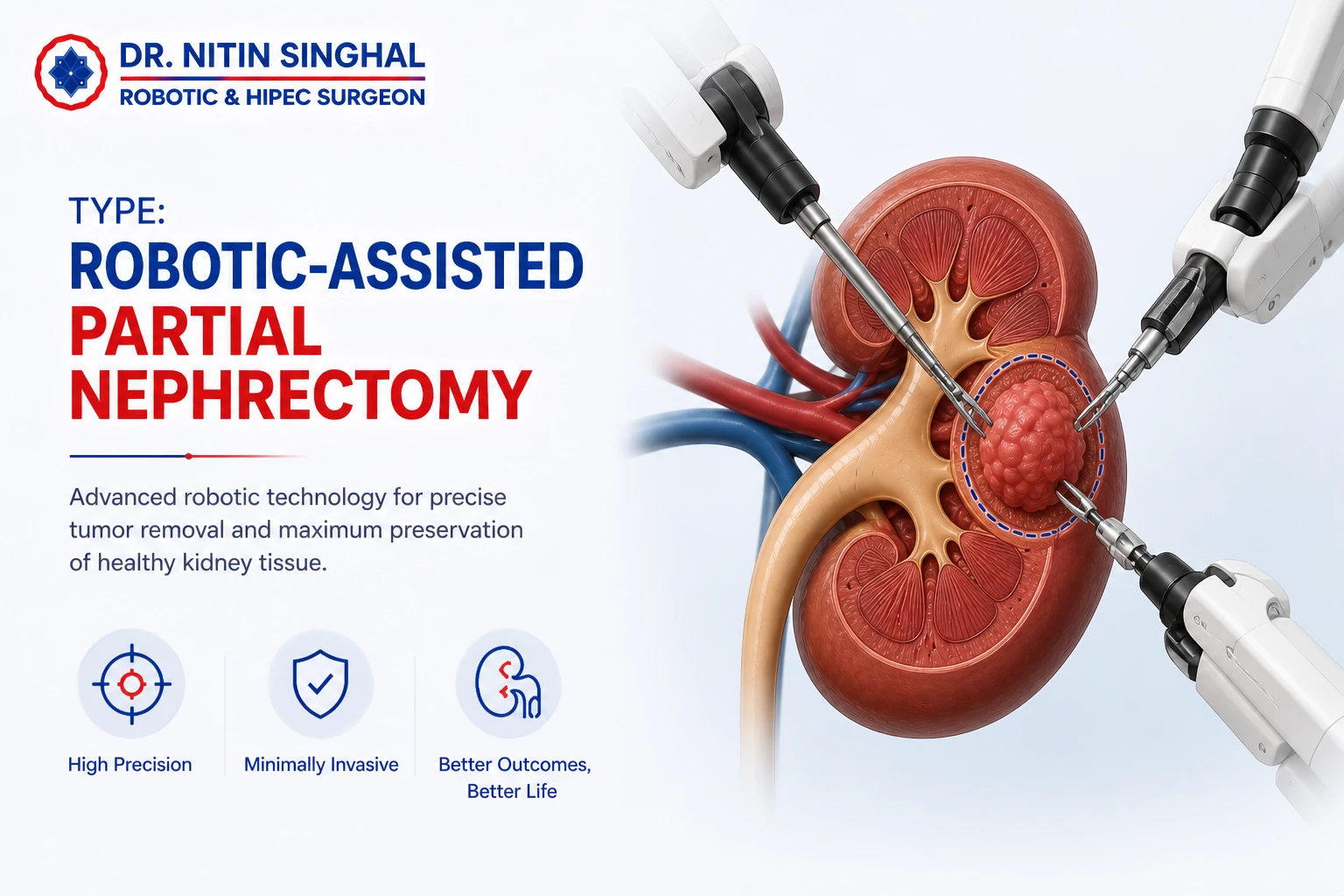
Robotic-Assisted Partial Nephrectomy
Combines a minimally invasive approach with a magnified 3D view and wristed instruments, allowing precise tumor removal and reconstruction even for more centrally located tumors.
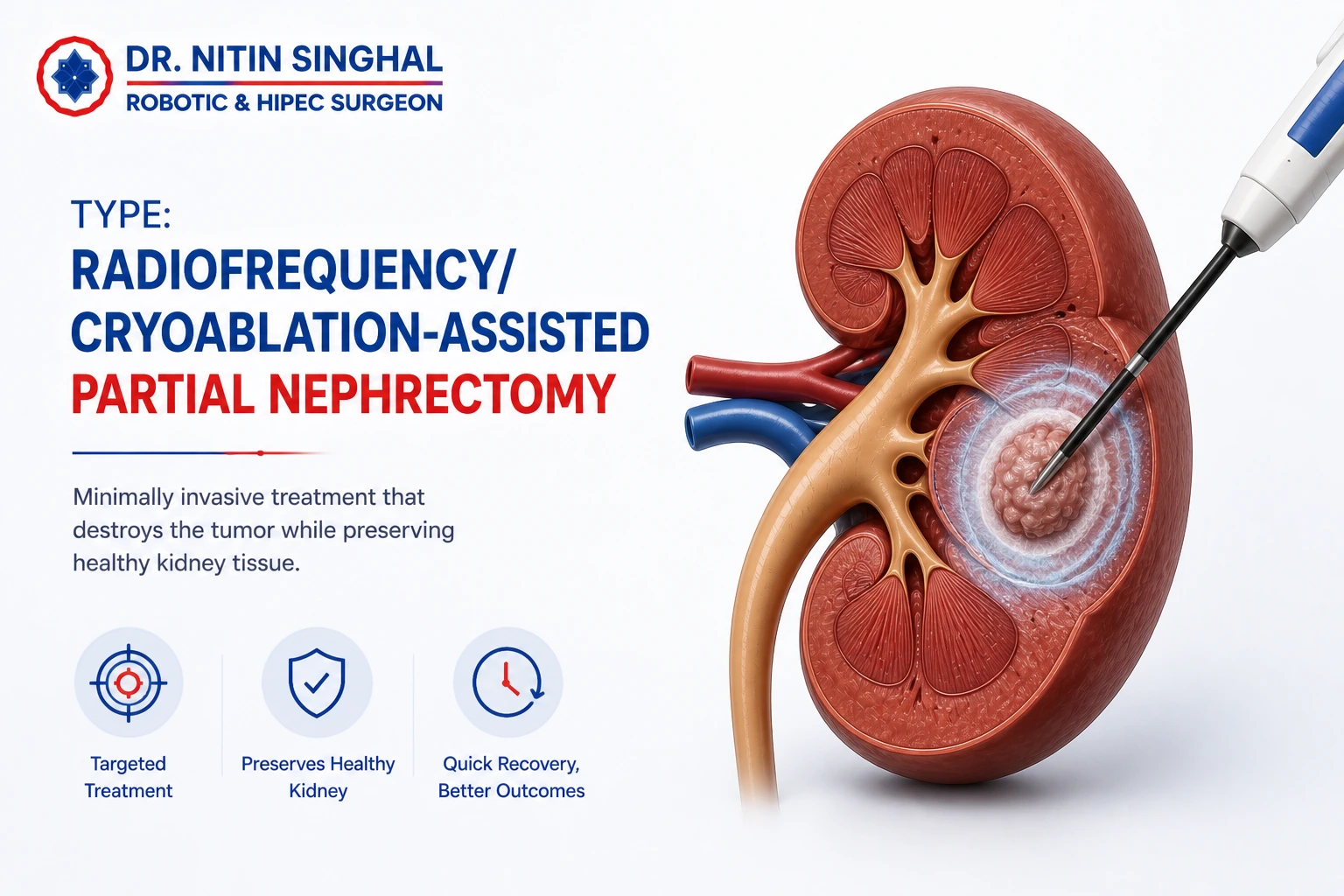
Radiofrequency / Cryoablation-Assisted
A less invasive, needle-based option that uses heat or freezing to destroy small tumors, generally reserved for patients who aren't candidates for surgery or have very small, peripheral lesions.
Benefits of Robotic Partial Nephrectomy
A robotic approach is designed to combine surgical precision with a gentler recovery experience.

Faster Recovery Time

Less Blood Loss

Low Risk of Infection

Shorter Hospital Stay

Speedier Return to Daily Life

Why Choose Dr. Singhal for Partial Nephrectomy
Kidney-preserving surgery asks for both surgical precision and judgment about when preservation is safe. Dr. Singhal brings a robotic-first approach to give patients the best chance at keeping healthy kidney tissue without compromising cancer control.
- Robotic expertise suited to complex and centrally located tumors
- A nephron-sparing philosophy that prioritizes long-term kidney health
- Clear, honest conversations about candidacy and alternatives
- Coordinated care from diagnosis through surgery and follow-up
- Two accessible clinic locations across Ahmedabad
Patient Reviews
A few words from patients who have been through robotic kidney and cancer surgery with Dr. Singhal.
Patient Video Testimonials
Video placeholders below — swap in real patient video embeds once available.
Robotic Partial Nephrectomy, Step By Step
A general outline of how robotic-assisted partial nephrectomy typically proceeds. Your surgical team will walk you through the specifics for your case.
Anesthesia & Port Placement
Under general anesthesia, a few small keyhole incisions are made to place the robotic ports and camera.
Exposing the Kidney
The kidney is carefully exposed and the tumor is precisely located, often with the help of intraoperative ultrasound.
Temporary Clamping
The renal artery (and sometimes vein) is temporarily clamped to reduce bleeding while the tumor is removed.
Tumor Excision
The tumor is excised along with a margin of healthy tissue, which is sent for pathology to confirm clear margins.
Reconstruction (Renorrhaphy)
The kidney defect is carefully sutured closed in layers to control bleeding and restore the kidney's shape.
Closure & Recovery Setup
The clamp is released to restore blood flow, incisions are closed, and hospital recovery begins.
Discuss Your Kidney Tumor Diagnosis
Share your reports and our team will review your case and respond within 24 hours. For urgent matters, please call or WhatsApp us directly.
- Confidential review of your reports and scans
- Response from the clinical team within 24 hours
- No obligation — a second opinion is always your choice
Request a Second Opinion
Share a few details — our team responds within 24 hours.
Or WhatsApp us directly at +91 75061 14222
Partial Nephrectomy FAQs
Partial nephrectomy removes only the tumor and a margin of surrounding healthy tissue, preserving the rest of the kidney. Radical nephrectomy removes the entire kidney, which is sometimes necessary for larger or more centrally located tumors.
Partial nephrectomy is most commonly recommended for smaller, localized tumors. The right approach depends on the tumor's size, its location relative to major blood vessels and the collecting system, and your overall kidney anatomy as seen on imaging.
By preserving healthy kidney tissue, partial nephrectomy is generally associated with better long-term kidney function compared with removing the whole kidney — particularly important for patients with a solitary kidney or reduced kidney function.
With a robotic-assisted approach, many patients go home within a few days and return to light daily activities within a few weeks. Full recovery timelines vary based on individual health and the extent of the surgery.
Most patients do not need dialysis after partial nephrectomy, since the goal of the surgery is specifically to preserve enough healthy kidney tissue to maintain function. Your surgical team will assess your kidney function before and after surgery to confirm this.
This page is for general educational purposes and does not replace a consultation with a qualified physician. Suitability for partial nephrectomy or any kidney cancer treatment depends on individual factors evaluated by your surgical team.
Considering Partial Nephrectomy?
Talk to Dr. Nitin Singhal about whether robotic-assisted, kidney-sparing surgery is right for your diagnosis.