
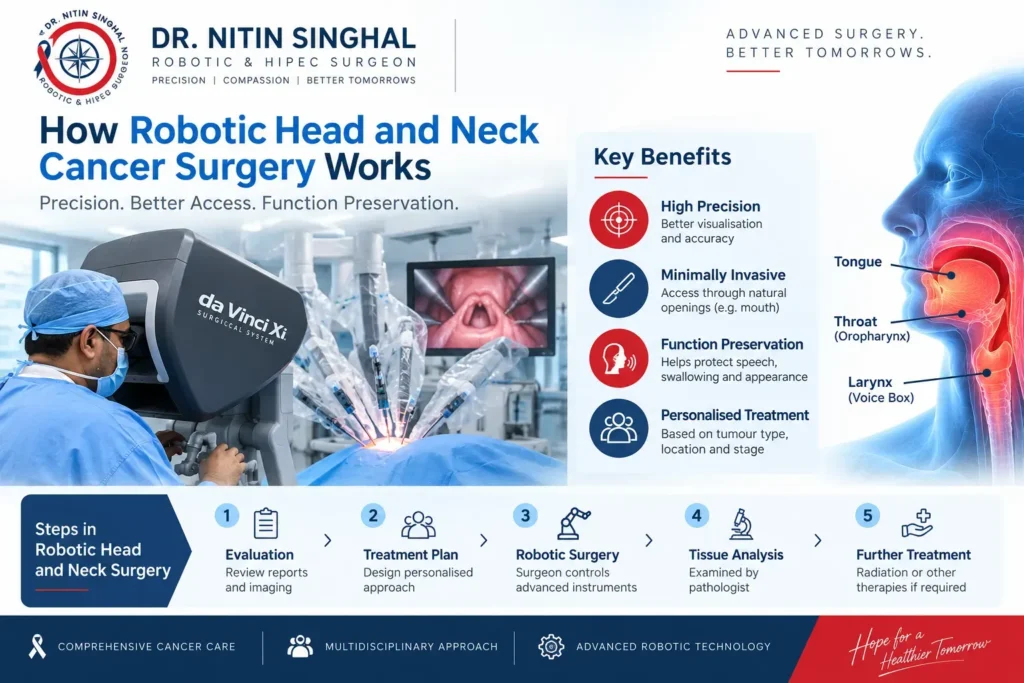
Head and neck cancers can affect important areas involved in speaking, swallowing, breathing and eating. Because these structures are closely connected, treatment needs to address the cancer while considering the preservation of important functions whenever possible.
Depending on the type, location and stage of cancer, treatment may involve surgery, radiation therapy, chemotherapy, targeted therapy, immunotherapy, or a combination of treatments.
In selected patients, robotic-assisted surgery may be considered as a minimally invasive surgical approach. One example is Transoral Robotic Surgery (TORS), where the surgeon uses robotic instruments through the mouth to reach certain tumours in the throat and related areas.
For patients searching for a robotic head and neck cancer surgeon in Ahmedabad, understanding the procedure, potential benefits, limitations and recovery process can help them have a more informed discussion with their cancer specialist.
What Is Head and Neck Cancer?
Head and neck cancer is a broad term used for cancers that develop in different areas of the head and neck.
These may include cancers of the:
- Mouth and oral cavity
- Tongue
- Throat and oropharynx
- Hypopharynx
- Larynx or voice box
- Nasal cavity and paranasal sinuses
- Salivary glands
- Other structures of the head and neck
One of the common groups of head and neck cancers is squamous cell carcinoma, which develops from the thin cells lining areas such as the mouth and throat.
Risk factors can include tobacco use, heavy alcohol use and certain HPV infections. However, having a risk factor does not necessarily mean a person will develop cancer.
What Is Robotic Head and Neck Cancer Surgery?
Robotic head and neck cancer surgery is a type of robotic-assisted minimally invasive surgery used in selected cases.
The robotic system does not independently perform the operation. Instead, the surgeon controls the robotic instruments from a console. A camera provides a magnified view of the surgical area, while specialised instruments allow controlled movements.
For some tumours in the throat and oropharynx, Transoral Robotic Surgery (TORS) may allow the surgeon to approach the tumour through the mouth rather than making a traditional external neck incision.
However, robotic surgery is not appropriate for every head and neck cancer. The decision depends on factors such as tumour location, size, cancer stage, involvement of surrounding structures, previous treatments and the patient’s overall health.
How Does Robotic Head and Neck Cancer Surgery Work?
The exact procedure varies according to the location and type of cancer.
A typical treatment pathway may include the following steps:
1. Detailed Evaluation
The surgeon reviews your symptoms, medical history, biopsy reports and previous treatment.
2. Imaging and Cancer Staging
Tests such as CT, MRI or PET scans may be recommended to understand the location and extent of the disease.
3. Treatment Planning
The cancer team determines whether surgery is appropriate and whether a robotic approach may be suitable.
4. Robotic-Assisted Procedure
If robotic surgery is appropriate, the surgeon controls specialised robotic instruments to remove the tumour.
5. Lymph-Node Assessment
Depending on the cancer, lymph nodes in the neck may need to be assessed or removed as part of treatment.
6. Pathology Examination
The removed tissue is examined by a pathologist. The findings can help determine tumour characteristics, margins and whether additional treatment may be required.
7. Additional Cancer Treatment
Depending on the pathology and cancer stage, some patients may require radiation therapy, chemotherapy, targeted therapy or immunotherapy.
What Is Transoral Robotic Surgery (TORS)?
Transoral Robotic Surgery, commonly called TORS, is a robotic-assisted technique in which selected tumours of the mouth and throat are approached through the mouth.
The surgeon controls the robotic instruments while viewing the surgical area through a specialised camera system.
One potential advantage of this approach is that selected patients may avoid a traditional external incision in the neck.
However, TORS is not suitable for every tumour. The tumour’s location, size, extent and relationship with surrounding structures need to be evaluated before this approach is considered.
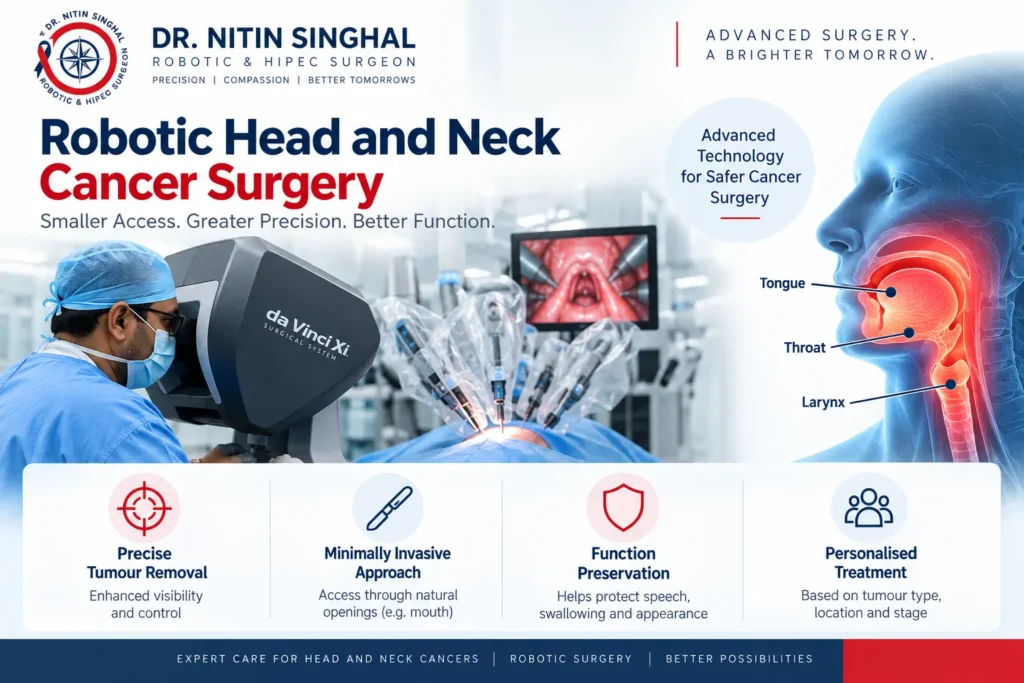
Which Head and Neck Cancers May Be Considered for Robotic Surgery?
Robotic techniques may be considered for selected cancers depending on their location and stage.
Oral Cavity and Tongue Cancer
Cancers affecting parts of the mouth or tongue may require surgery depending on their size, location and extent.
Treatment planning also considers how surgery could affect functions such as speech, swallowing and eating.
Oropharyngeal Cancer
Selected cancers involving the oropharynx, including certain tonsil and tongue-base tumours, may be evaluated for transoral robotic surgery.
Throat Cancer
Some tumours involving areas of the throat may be approached using minimally invasive techniques when anatomically suitable.
Laryngeal Cancer
Treatment for laryngeal cancer depends heavily on the tumour location and stage. Surgery, radiation therapy and other treatments may be considered.
Neck Lymph-Node Disease
Some patients with head and neck cancer require surgery to evaluate or remove lymph nodes in the neck. The extent of surgery depends on the cancer and lymph-node involvement.
Salivary Gland Tumours
Salivary gland tumours may require surgery depending on their type, location and whether they are benign or malignant.
Potential Benefits of Robotic Head and Neck Surgery
Robotic surgery can offer technical advantages in appropriately selected patients, although the potential benefits vary from person to person.
Some robotic approaches allow access through natural openings such as the mouth or through smaller incisions.
Enhanced Visualisation
The robotic system provides a magnified view of the operative area, which may help the surgeon work around delicate anatomical structures.
Instrument Flexibility
Specialised robotic instruments can provide controlled movement in confined surgical spaces.
Minimally Invasive Approach
When appropriate, a minimally invasive approach can reduce the amount of tissue disruption compared with certain open procedures.
Consideration of Functional Outcomes
Head and neck cancer treatment requires careful consideration of functions such as swallowing, speech and breathing.
It is important to understand that robotic surgery does not guarantee better cancer outcomes for every patient. The suitability of the approach depends on the individual cancer.
Robotic Surgery vs Traditional Open Surgery
Robotic and open surgery are different approaches, and the appropriate method depends on the patient’s cancer.
| Feature | Robotic-Assisted Surgery | Open Surgery |
|---|---|---|
| Surgical access | Minimally invasive in selected procedures | May require a larger external incision |
| Visualisation | Camera-assisted magnified view | Direct surgical view |
| Instruments | Robotic-assisted instruments | Conventional surgical instruments |
| Incisions | Smaller or transoral in selected procedures | May require larger incision |
| Suitability | Depends on tumour location and stage | Used when required by tumour characteristics |
| Recovery | Depends on procedure and patient | Depends on extent of surgery |
The objective of either approach is appropriate cancer treatment based on the patient’s individual diagnosis.
What Happens Before Robotic Head and Neck Cancer Surgery?
Before surgery, your cancer team may review:
- Biopsy and pathology reports
- CT, MRI or PET scans
- Tumour location and size
- Cancer stage
- Lymph-node involvement
- Previous cancer treatment
- General health
- Current medications
- Nutritional status
- Dental and oral health where relevant
- Speech and swallowing function where appropriate
Depending on the cancer, specialists such as surgical oncologists, medical oncologists, radiation oncologists, radiologists, pathologists, speech therapists and dietitians may contribute to treatment planning.
This multidisciplinary approach can be important because head and neck cancer treatment can affect speaking, eating, swallowing and breathing.
Recovery After Robotic Head and Neck Cancer Surgery
Recovery depends on the type and extent of surgery.
Some patients may experience:
- Throat discomfort
- Swelling
- Temporary difficulty swallowing
- Changes in eating patterns
- Voice changes depending on the procedure
- Fatigue
- Need for nutritional support
- Temporary activity restrictions
Your surgical team will provide specific instructions regarding pain management, diet, wound care, activity and follow-up.
For some patients, speech or swallowing rehabilitation may be part of the recovery process.
The recovery period cannot be predicted solely from the fact that surgery was robotic. The exact procedure, tumour location, cancer stage and individual health all influence recovery.
Risks and Considerations
Like any cancer surgery, robotic head and neck surgery has potential risks.
Depending on the procedure, these may include:
- Bleeding
- Infection
- Swelling
- Pain
- Difficulty swallowing
- Changes in speech or voice
- Nerve-related problems
- Nutritional difficulties
- Need for additional treatment
- Cancer recurrence
Patients should discuss the specific risks associated with their proposed operation with their surgical team.
Is Robotic Head and Neck Cancer Surgery Suitable for Everyone?
No.
Robotic surgery is an option for selected patients and is not a universal treatment for all head and neck cancers.
The surgeon may consider:
- Tumour location
- Tumour size
- Cancer stage
- Involvement of nearby structures
- Lymph-node involvement
- Whether the tumour can be safely reached robotically
- Previous surgery or radiation
- Overall health
- Expected functional outcomes
In some cases, traditional surgery, radiation therapy, chemotherapy, immunotherapy or a combination of treatments may be more appropriate.
The treatment approach should be selected based on the individual cancer and patient’s circumstances.
Why Experience Matters in Robotic Cancer Surgery
Robotic surgery requires more than access to a robotic surgical platform.
When discussing treatment with a surgeon, patients can ask about:
- Surgical oncology training
- Experience with the relevant cancer type
- Experience with robotic procedures
- Hospital facilities
- Multidisciplinary cancer care
- Pathology and imaging support
- Post-operative care
- Rehabilitation services
- Experience managing complex cancer cases
Dr. Nitin Singhal – Robotic & Surgical Oncologist in Ahmedabad
Dr. Nitin Singhal is a Robotic and Surgical Oncologist in Ahmedabad with 18+ years of surgical experience and a focus on advanced cancer surgery.
His professional profile includes expertise in robotic cancer surgery and surgical oncology, with training in MCh Surgical Oncology from Tata Memorial Centre, Mumbai.
For patients diagnosed with head and neck cancer, a consultation can help determine the diagnosis, stage, available treatment options and whether a robotic approach may be appropriate.
Questions to Ask Your Robotic Head and Neck Cancer Surgeon
Before making a treatment decision, consider asking:
- What type of head and neck cancer do I have?
- What is the stage of my cancer?
- Where exactly is the tumour located?
- Is surgery recommended in my case?
- Am I a candidate for robotic surgery?
- Would TORS be appropriate for my tumour?
- What are the alternatives to robotic surgery?
- Will I need radiation or chemotherapy?
- How could surgery affect my speech or swallowing?
- What will recovery involve?
- Will lymph nodes need to be removed?
- What complications should I be aware of?
- How much experience does the surgical team have with this procedure?
- Would getting a second opinion be useful?
A second opinion can help patients understand different treatment approaches before making a major cancer-treatment decision.
When Should You See a Head and Neck Cancer Specialist?
Persistent or unexplained symptoms should be medically evaluated.
Possible warning signs can include:
- A mouth ulcer that does not heal
- Persistent sore throat
- Difficulty swallowing
- A lump in the neck
- Persistent hoarseness
- Unexplained weight loss
- Persistent ear pain
- Changes in the voice
- Difficulty chewing
- A lump or growth in the mouth
These symptoms can also occur with conditions other than cancer, but persistent symptoms should be evaluated by a qualified healthcare professional.
Robotic Head and Neck Cancer Surgery in Ahmedabad
For patients in Ahmedabad and Gujarat, specialist cancer evaluation can help determine whether surgery, radiation therapy, systemic treatment or a combination may be appropriate.
Dr. Nitin Singhal provides information and consultation related to robotic cancer surgery and surgical oncology in Ahmedabad.
During a consultation, patients should bring available:
- Biopsy reports
- CT/MRI/PET scans
- Pathology reports
- Previous treatment records
- Medication list
- Previous surgery reports
Having these records available can help the cancer team understand the diagnosis and plan the next steps.
FAQ
What is robotic head and neck cancer surgery?
It is a minimally invasive surgical approach in which a surgeon controls robotic instruments to operate on selected head and neck cancers.
Is robotic surgery used for throat cancer?
It can be considered for selected throat and oropharyngeal cancers. TORS allows surgeons to access certain tumours through the mouth.
What does TORS stand for?
TORS stands for Transoral Robotic Surgery. It is a robotic-assisted technique used to access selected tumours through the mouth.
Does the robot perform the surgery by itself?
No. The robotic system is controlled by the surgeon. It does not independently make surgical decisions or perform the operation.
Is robotic surgery suitable for every head and neck cancer?
No. Suitability depends on the tumour’s location, size, stage, surrounding structures and the patient’s overall health.
Does robotic surgery mean there will be no scar?
Not necessarily. Some transoral procedures may avoid an external neck incision, while other robotic procedures may require small external incisions.
Is robotic surgery less painful?
Some minimally invasive procedures may involve less tissue disruption, but pain varies depending on the operation and individual patient.
How long does recovery take?
Recovery depends on the type and extent of surgery, cancer location and individual health. Your surgeon can provide a more specific estimate after evaluation.
Can robotic surgery cure head and neck cancer?
Robotic surgery is a surgical technique used to remove cancer in selected patients. Whether treatment can achieve a cure depends on factors such as cancer type, stage, spread and response to treatment. Additional treatments may also be required.
Conclusion
Robotic head and neck cancer surgery is an advanced minimally invasive approach that may be suitable for selected patients. Techniques such as Transoral Robotic Surgery (TORS) can provide access to certain tumours through the mouth while allowing the surgeon to work with specialised instruments and magnified visualisation.
However, robotic surgery is not automatically the right choice for every patient. Tumour location, cancer stage, size, lymph-node involvement, overall health and expected functional outcomes all need to be considered.
If you or a family member has been diagnosed with head and neck cancer, discussing the diagnosis and available treatment options with a qualified surgical oncology team can help you understand the next steps.
For patients looking for a robotic head and neck cancer surgeon in Ahmedabad, Dr. Nitin Singhal offers specialist consultation for cancer evaluation and treatment planning.
Book a Consultation
Discuss your diagnosis, treatment options and whether robotic surgery may be appropriate for your condition.
Medical Disclaimer: This article is intended for general educational purposes only and should not be considered a substitute for professional medical diagnosis or treatment. Treatment decisions should be made after consultation with a qualified healthcare professional.