
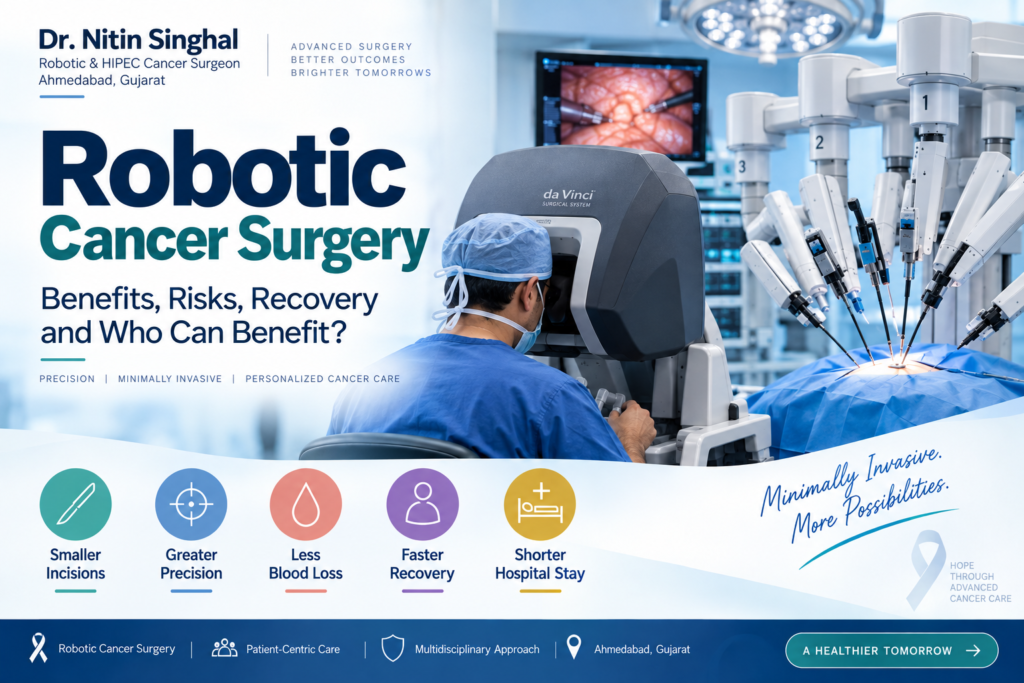
Robotic cancer surgery is an advanced form of minimally invasive surgery used for selected cancer procedures. It combines the expertise of a trained cancer surgeon with robotic technology that can provide magnified visualization, precise instrument control and enhanced dexterity during surgery.
For patients considering robotic cancer surgery in Ahmedabad, understanding how the procedure works, its potential benefits and risks, recovery process and suitability is important before making a treatment decision.
Dr. Nitin Singhal, a robotic and HIPEC cancer surgeon in Ahmedabad, specializes in advanced robotic and minimally invasive cancer surgery. His website states that he has completed MCh in Surgical Oncology from Tata Memorial Centre, Mumbai, and has more than 18 years of experience and over 5,000 major cancer surgeries. His practice includes robotic treatment across gastrointestinal, gynecological, urological, thoracic, head and neck and other cancer specialties.
Robotic surgery is not performed independently by a machine. The surgeon remains in control of the robotic system throughout the procedure.
What Is Robotic Cancer Surgery?
Robotic cancer surgery is a minimally invasive surgical approach in which a surgeon controls specialized robotic instruments from a console.
The system generally includes:
- A high-definition camera
- Robotic surgical instruments
- A surgeon-controlled console
- Magnified 3D visualization
- Instruments designed for precise movement
According to Mayo Clinic, robotic surgery can provide the surgeon with enhanced precision, flexibility, control and visualization during appropriately selected procedures.
On Dr. Nitin Singhal’s robotic surgery website, the da Vinci robotic surgical system is described as one of the technologies used for advanced robotic cancer procedures. The site highlights 3D visualization, instrument flexibility and tremor-filtering technology as features that can assist the surgeon during complex procedures.
The important point is that the robot does not decide how the operation is performed. Dr. Nitin Singhal or the operating surgeon controls the robotic system and performs the procedure with the support of the surgical team.
How Does Robotic Cancer Surgery Work?
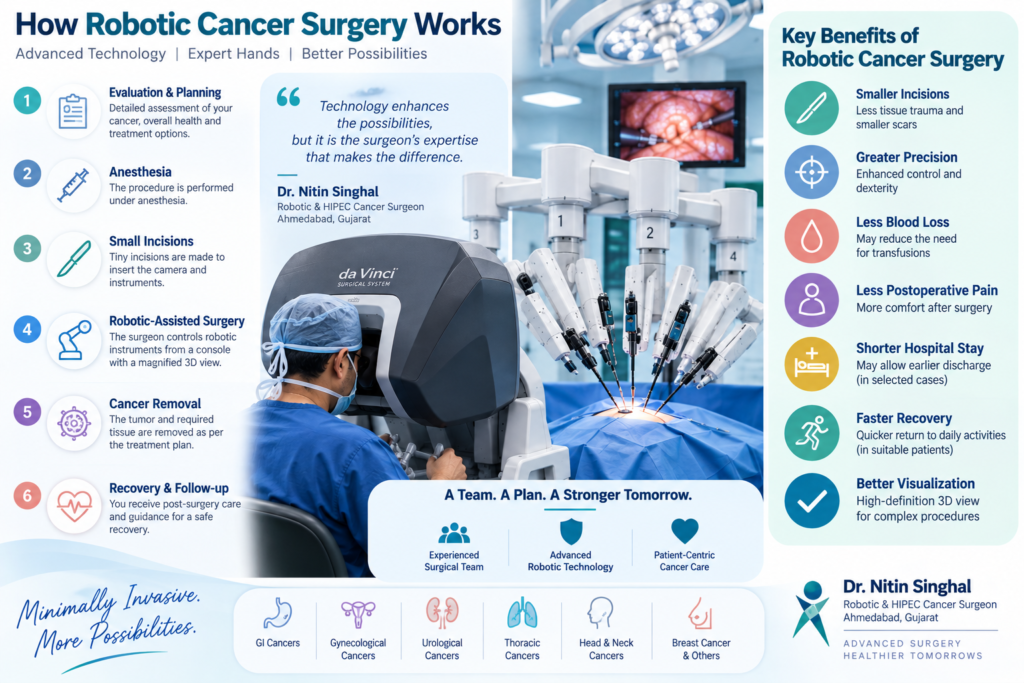
Although the exact procedure differs according to the cancer and operation, robotic surgery generally follows several stages.
1. Detailed evaluation
Before surgery, the cancer diagnosis and overall health are assessed.
Depending on the cancer, this may include:
- Biopsy reports
- CT scans
- MRI scans
- PET scans when appropriate
- Blood tests
- Cancer staging
- Previous treatment records
- Medical and surgical history
The purpose is to determine the most appropriate treatment strategy.
2. Treatment planning
Dr. Nitin Singhal and the multidisciplinary cancer team can evaluate whether surgery is appropriate and whether a robotic approach is suitable for the patient’s specific cancer.
Not every patient or cancer is a candidate for robotic surgery.
3. Anesthesia
Robotic cancer procedures are generally performed under anesthesia. The anesthesia plan depends on the type and complexity of the surgery.
4. Small surgical incisions
For minimally invasive robotic surgery, the surgeon generally works through several small incisions through which the camera and surgical instruments are introduced.
5. Robotic-assisted surgery
The surgeon operates from the console while viewing a magnified, high-definition image of the surgical area.
The robotic instruments translate the surgeon’s hand movements into controlled movements inside the patient’s body.
6. Tumor removal
The surgical team removes the tumor and, when medically appropriate, surrounding tissue and lymph nodes according to the planned cancer operation.
Cancer surgery may be used to remove localized tumors, reduce tumor burden or relieve symptoms, depending on the individual situation.
7. Recovery and follow-up
After surgery, the patient receives postoperative care and follow-up.
Depending on the cancer type, pathology results and stage, additional treatments such as chemotherapy, radiation therapy or other systemic treatments may be recommended.
What Types of Cancer Can Be Treated With Robotic Surgery?
Robotic surgery is not appropriate for every cancer. However, it may be considered for selected procedures across several cancer specialties.
At Dr. Nitin Singhal’s robotic cancer surgery practice in Ahmedabad, the website lists robotic procedures across several specialties.
Robotic GI Cancer Surgery
The website lists robotic treatment for selected gastrointestinal cancers, including:
- Colon and rectal cancer
- Esophageal cancer
- Stomach cancer
- Pancreatic cancer
- Liver cancer
- Gallbladder cancer
- Anal canal cancer
Robotic Gynecological Cancer Surgery
Selected gynecological cancers include:
- Uterine cancer
- Ovarian cancer
- Cervical cancer
- Vulvar cancer
Robotic Urological Cancer Surgery
The website includes robotic treatment for selected:
- Prostate cancer
- Kidney cancer
- Urinary bladder cancer
- Neobladder procedures
- Partial nephrectomy
- Radical nephrectomy
Robotic Thoracic Cancer Surgery
Selected thoracic procedures may include:
- Lung cancer surgery
- Mediastinal cancer surgery
Robotic Head and Neck Cancer Surgery
The practice also provides information about:
- Transoral robotic surgery (TORS)
- Robotic thyroid surgery
- Selected head and neck cancer procedures
Other Robotic Cancer Procedures
Dr. Nitin Singhal’s website also highlights robotic breast cancer surgery and other advanced robotic cancer procedures, including selected sarcoma and HIPEC-related treatment pathways.
Benefits of Robotic Cancer Surgery
Robotic surgery can provide technical advantages to the surgeon and potential benefits associated with minimally invasive surgery.
However, the benefits depend on the specific operation and patient.
1. Smaller incisions
Robotic procedures are commonly performed through small incisions.
Compared with some open operations, smaller incisions may mean less tissue disruption and smaller scars.
2. Magnified 3D visualization
A robotic system can provide a magnified, high-definition 3D view of the surgical field.
This can help the surgeon visualize anatomical structures during complex procedures.
3. Greater instrument control
Robotic instruments can provide a range of motion and control that can be useful during technically demanding minimally invasive procedures.
4. Potentially less blood loss
Minimally invasive approaches may be associated with less blood loss in selected procedures compared with certain open operations.
5. Potentially less postoperative pain
Smaller incisions may contribute to less postoperative pain for some patients compared with comparable open procedures.
6. Potentially shorter hospital stay
Some robotic procedures may allow patients to leave the hospital sooner than after comparable open surgery.
However, hospital stay depends strongly on the type and complexity of the cancer operation.
7. Potentially faster recovery
Minimally invasive robotic surgery can allow some appropriately selected patients to recover and return to normal activities sooner.
This should not be interpreted as a guaranteed recovery time. Recovery varies from patient to patient.
What Are the Risks of Robotic Cancer Surgery?
Robotic surgery is still major surgery and is not risk-free.
Potential complications can include:
- Bleeding
- Infection
- Pain
- Blood clots
- Anesthesia-related complications
- Injury to nearby organs or tissues
- Wound complications
- Urinary or bowel complications depending on the procedure
- Need for additional treatment
- Conversion to another surgical approach when necessary
The National Cancer Institute notes that cancer surgery can involve risks such as pain, infection, bleeding, damage to nearby tissues and reactions to anesthesia.
Robotic surgery can carry many of the same general surgical risks as conventional minimally invasive or open surgery.
Therefore, patients should discuss the specific risks of their proposed procedure with their surgeon.
Is Robotic Cancer Surgery Better Than Open Surgery?
There is no single surgical technique that is best for every cancer patient.
Robotic surgery may offer minimally invasive advantages for selected procedures, but open surgery remains an important treatment option when it is more appropriate for the cancer or patient.
The decision depends on:
- Cancer type
- Cancer stage
- Tumor size
- Tumor location
- Involvement of nearby structures
- Previous surgeries
- Overall health
- Surgical complexity
- Experience of the treating team
The American Cancer Society notes that the type of cancer surgery depends on factors such as the type, location and size of the cancer, and that some operations may be performed using smaller-incision techniques while others require open surgery.
The goal should be appropriate cancer treatment, not simply choosing the newest technology.
Who Can Benefit From Robotic Cancer Surgery?
Robotic cancer surgery may be considered when a surgeon believes that a minimally invasive robotic approach is appropriate for the patient’s cancer.
Potential candidates may include selected patients with:
- Gastrointestinal cancers
- Colorectal cancers
- Stomach cancer
- Esophageal cancer
- Urological cancers
- Prostate cancer
- Kidney cancer
- Bladder cancer
- Gynecological cancers
- Lung cancer
- Selected head and neck cancers
- Selected breast cancer procedures
However, having a particular type of cancer does not automatically mean robotic surgery is appropriate.
A specialist must assess the individual diagnosis.
Factors Dr. Nitin Singhal May Consider Before Robotic Surgery
Treatment planning is individualized.
Important considerations include:
Cancer stage
The extent of cancer can influence whether surgery is appropriate and which surgical approach should be used.
Tumor location
The position of the tumor can affect whether robotic surgery provides a useful surgical approach.
Tumor size and involvement
Large or locally advanced tumors may require a different surgical strategy.
Previous surgery
Previous operations can cause adhesions or changes in anatomy that may affect surgical planning.
General health
Heart, lung and other medical conditions can influence whether a patient can safely undergo a particular procedure.
Overall cancer treatment plan
Surgery may be one part of a larger treatment plan involving chemotherapy, radiation therapy or other treatments.
Robotic Cancer Surgery Recovery
Recovery depends on the type and extent of surgery.
A patient undergoing a relatively limited minimally invasive procedure may have a different recovery experience from someone undergoing a complex gastrointestinal, urological or gynecological cancer operation.
Recovery can be influenced by:
- Type of cancer
- Type of surgery
- Extent of tumor removal
- Lymph-node surgery
- Overall health
- Previous treatments
- Postoperative complications
- Need for additional treatment
The National Cancer Institute notes that recovery after cancer surgery varies according to the type and extent of surgery and other individual factors.
What Happens After Robotic Cancer Surgery?
After surgery, the medical team monitors the patient and provides instructions regarding:
- Pain management
- Wound care
- Diet
- Physical activity
- Medication
- Follow-up appointments
- Warning signs of complications
- Returning to work and normal activities
Pathology results are also important because they help the cancer team determine the next stage of treatment.
Does Robotic Cancer Surgery Cure Cancer?
Robotic surgery is a method of performing surgery, not a separate cure for cancer.
Whether surgery can remove all detectable cancer depends on the individual cancer, including its type, stage, location and extent.
For some solid tumors that are localized, surgery can be an important part of treatment. In other situations, surgery may need to be combined with other cancer treatments.
Therefore, patients should be careful about claims that robotic surgery guarantees a cure or guarantees better cancer outcomes.
Why Consider Dr. Nitin Singhal for Robotic Cancer Surgery in Ahmedabad?
Dr. Nitin Singhal is a robotic and HIPEC cancer surgeon based in Ahmedabad.
According to his official website, his qualifications include MBBS, MS in General Surgery and MCh in Surgical Oncology from Tata Memorial Centre, Mumbai. The website currently states that he has 18+ years of experience and has performed more than 5,000 major cancer surgeries.
His practice focuses on advanced cancer surgery, including robotic procedures across gastrointestinal, gynecological, urological, thoracic and head and neck oncology.
The practice also emphasizes:
- Robotic and minimally invasive cancer surgery
- HIPEC procedures
- Multidisciplinary cancer care
- Advanced robotic systems
- Patient-focused treatment planning
- Surgical care for patients from Ahmedabad, Gujarat and other regions
Dr. Nitin Singhal’s website also highlights his training at Tata Memorial Centre and his experience in complex oncological procedures.
Important: A surgeon’s experience does not mean that robotic surgery is automatically the right option for every patient. The appropriate treatment should be determined after reviewing the patient’s diagnosis and clinical condition
Questions to Ask Before Robotic Cancer Surgery
Before making a treatment decision, consider asking your cancer surgeon:
- Is robotic surgery suitable for my cancer?
- What is the stage of my cancer?
- What is the goal of surgery?
- What are the alternatives to robotic surgery?
- What are the risks of my specific operation?
- How experienced is the surgical team with this procedure?
- How long might I stay in the hospital?
- What should I expect during recovery?
- Will I need chemotherapy or radiation therapy?
- What follow-up care will I need?
A detailed discussion helps patients understand their options before choosing a treatment approach.
FAQ | Robotic Cancer Surgery
1. What is robotic cancer surgery?
Robotic cancer surgery is a minimally invasive surgical technique in which a surgeon controls specialized robotic instruments to perform selected cancer operations. It can provide magnified visualization and precise instrument control.
2. Does a robot perform the cancer surgery?
No. The robotic system is controlled by the surgeon. The surgeon remains responsible for the procedure and leads the operating team.
3. What are the benefits of robotic cancer surgery?
Potential benefits can include smaller incisions, less blood loss, less postoperative pain, smaller scars and potentially shorter recovery for selected procedures.
4. Is robotic cancer surgery safe?
Robotic surgery can be appropriate for selected patients, but like other major operations, it carries potential risks. Your surgeon should explain the risks specific to your procedure.
5. How long does robotic cancer surgery recovery take?
There is no universal recovery time. It depends on the cancer, procedure, extent of surgery and the patient’s overall health.
6. Can every cancer be treated with robotic surgery?
No. Robotic surgery is not suitable for every cancer or every patient. The decision depends on the individual clinical situation.
7. Is robotic surgery better than open surgery?
Not necessarily. Robotic surgery may provide minimally invasive benefits in selected procedures, while open surgery may be more appropriate in other cases.
8. Can robotic surgery completely remove cancer?
In selected cancers, surgery may be performed with the goal of removing the tumor. However, whether all cancer can be removed depends on the individual disease.
9. Will I need chemotherapy after robotic cancer surgery?
Possibly. Additional treatment depends on the cancer type, stage, pathology results and overall treatment plan. Surgery may be combined with chemotherapy, radiation therapy or other cancer treatments.
10. Who should I consult for robotic cancer surgery in Ahmedabad?
Patients considering robotic cancer surgery can consult a qualified surgical oncologist who has appropriate training and experience in the specific procedure being considered. Dr. Nitin Singhal is a robotic and HIPEC cancer surgeon in Ahmedabad whose official profile describes experience in advanced robotic and oncological surgery.
Conclusion
Robotic cancer surgery combines advanced surgical technology with the expertise of a trained surgeon. For appropriately selected patients, robotic techniques may offer the advantages of minimally invasive surgery, including smaller incisions, enhanced visualization and precise instrument control.
However, robotic surgery is not automatically the best option for every cancer patient.
The decision should be based on the type and stage of cancer, tumor location, overall health, treatment goals and the experience of the surgical team.
For patients exploring robotic cancer surgery in Ahmedabad, Dr. Nitin Singhal provides specialized robotic and minimally invasive cancer surgery, with expertise across multiple cancer specialties. His official profile lists MCh Surgical Oncology training from Tata Memorial Centre, Mumbai, 18+ years of experience and more than 5,000 major cancer surgeries.
The best next step is an individualized consultation in which your diagnosis, reports and available treatment options can be reviewed.