
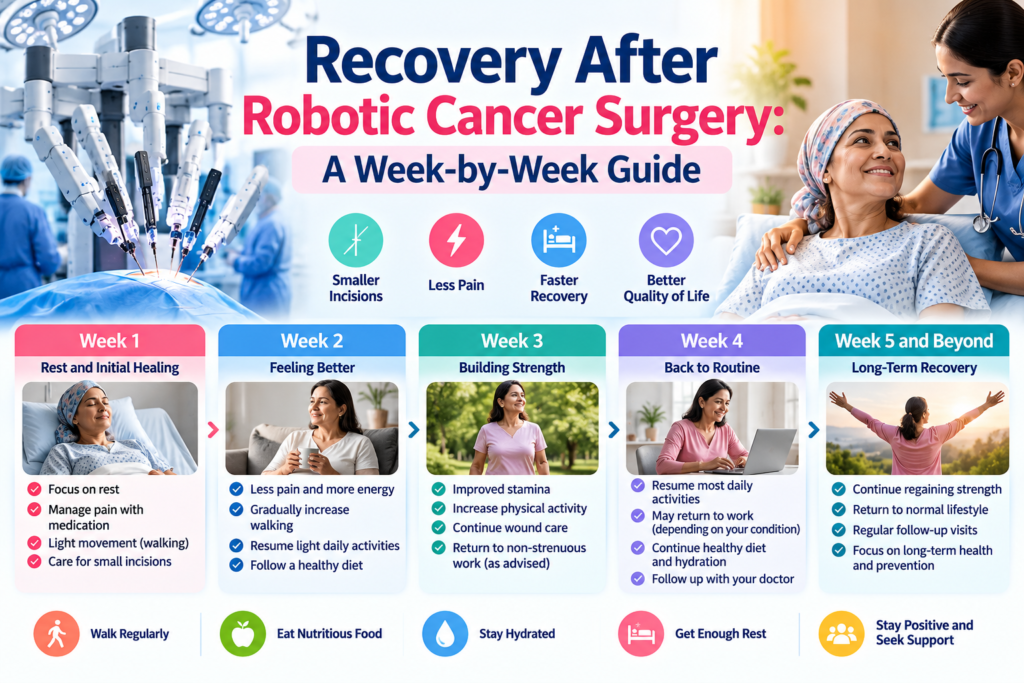
Before surgery: prepare your body
Recovery starts before the operation. Patients who prepare usually recover faster.
- Walk every day. Even 20–30 minutes improves lung and heart fitness.
- Stop smoking and tobacco as early as possible. It reduces chest infections and wound problems.
- Eat enough protein: dal, paneer, curd, eggs, milk and pulses help healing.
- Practise deep breathing. Your team may give you a breathing exerciser (spirometer).
- Control sugar and blood pressure if you have diabetes or hypertension.
Day 0–2: in the hospital
- You will wake up in the recovery room or ICU, depending on the operation.
- Most patients are helped to sit up and walk within the first day. Early walking prevents blood clots and chest infections and helps the bowel start working.
- Pain is usually controlled with tablets or a drip. Tell the nurse if the pain stops you from walking or breathing deeply.
- Clear liquids are usually started early, then a soft diet, depending on the surgery.
- Drains or a urinary catheter may be in place for a few days.
Day 2–7: going home
Many patients go home within a few days after robotic surgery. Major operations such as oesophagectomy, Whipple or bladder removal need a longer stay. Before discharge, the team checks that you can walk, eat, pass urine and manage pain with tablets.
At home:
- Walk 5–6 times a day, increasing a little each day.
- Keep the small wounds clean and dry. Follow the dressing advice you are given.
- Do not lift anything heavier than a few kilograms.
- Eat small, frequent meals.
Week 2–4: getting back to routine
- Most people feel noticeably stronger in the second week.
- Light household work and short outings are usually fine.
- The final biopsy report usually comes at this stage. Your surgeon will explain it and tell you if you need chemotherapy, radiation or only follow-up.
- Desk jobs can often be resumed in 2–4 weeks. Physical work takes longer.
Week 4–8: back to normal life
- Most patients return to normal daily activities.
- Avoid heavy lifting and strenuous exercise until your surgeon allows it.
- Driving is usually possible when you can brake hard without pain and are not taking strong painkillers.
Diet after cancer surgery
- Start with liquids and soft food, then move to normal home food.
- Protein at every meal helps wound healing.
- After bowel surgery, you may have loose stools or changed bowel habits for some weeks. This usually settles.
- After stomach or oesophagus surgery, small meals 6–8 times a day work better than three large meals.
- Patients with a stoma can read our existing guide on living with a colostomy after rectal cancer surgery.
Warning signs: call your doctor
Contact the surgical team immediately if you have:
- Fever above 100.4°F (38°C) or chills
- Increasing pain, redness or pus from a wound
- Vomiting, swelling of the stomach, or no motion or gas for more than a day
- Breathlessness or chest pain
- Swelling or pain in one leg
- Bleeding
Frequently asked questions
How long is the hospital stay after robotic surgery? It depends on the operation. Many patients go home in 2–5 days; major operations take longer.
When can I take a bath? Usually after a few days, once your surgeon says the wounds can get wet.
Will I have scars? You will have a few small scars, usually 1–2 cm each, which fade with time.
When will I know if the cancer is fully removed? The final pathology report, usually within 1–2 weeks, tells your surgeon about margins and lymph nodes.
Your recovery is part of the treatment
Dr. Nitin Singhal and his team guide patients from preparation through recovery and follow-up. If you are planning surgery, also read robotic vs laparoscopic vs open cancer surgery and our guide to robotic surgery cost and insurance. For questions, contact the clinic or call +91 75061 14222.