
A cancer diagnosis can lead to many questions, especially when surgery is recommended. Patients often want to know which surgical approach is appropriate, whether robotic surgery is suitable for their cancer, how recovery may differ, and most importantly, how to choose the right surgeon.
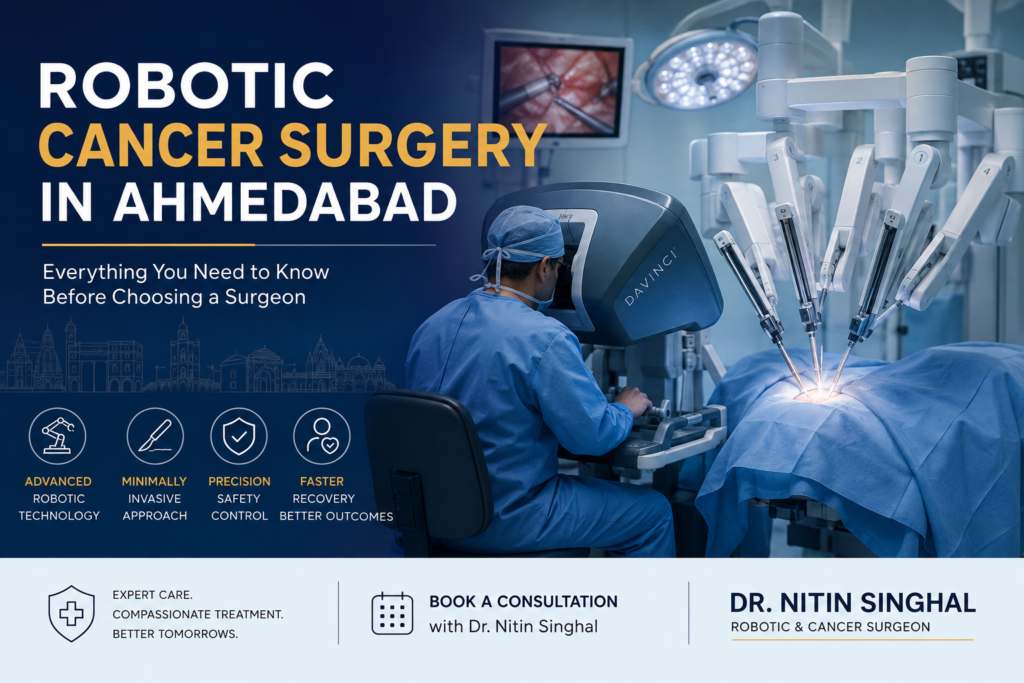
Robotic cancer surgery is an advanced form of minimally invasive surgery in which a surgeon controls specialised robotic instruments from a console. Systems such as the da Vinci Surgical System can provide magnified three-dimensional visualisation and precise instrument movement during selected procedures.
However, robotic surgery is not automatically the right choice for every patient or every cancer. The suitability of robotic surgery depends on factors such as the type and stage of cancer, tumour location, anatomy, previous treatments, overall health, and the surgeon’s assessment.
For patients considering robotic cancer surgery in Ahmedabad, understanding the technology is only the first step. The surgeon’s experience, hospital infrastructure, multidisciplinary cancer care, and treatment planning are equally important.
What Is Robotic Cancer Surgery?
Robotic cancer surgery is a minimally invasive surgical approach used for selected cancer procedures.
Unlike traditional open surgery, which may require a larger incision, robotic-assisted procedures are generally performed through several small incisions. The surgeon operates the robotic instruments rather than the robot performing surgery independently.
The robotic platform can provide:
- High-definition, magnified visualisation
- Three-dimensional views of the surgical field
- Flexible instrument movement
- Fine control during complex surgical steps
- Access to difficult-to-reach anatomical areas in selected procedures
It is important to understand that robotic surgery is surgeon-controlled surgery. The robotic system does not independently diagnose cancer, decide where to operate, or perform surgery without the surgeon.
How Is Robotic Surgery Different From Open Surgery?
The main difference is the surgical approach.
Open Cancer Surgery
Open surgery generally involves a larger incision that allows the surgeon direct access to the area being treated.
It can still be the most appropriate approach for certain cancers, particularly when extensive access or removal is required.
Robotic Cancer Surgery
Robotic surgery generally uses smaller incisions and specialised instruments controlled by the surgeon.
For appropriately selected patients, minimally invasive surgery may offer advantages such as smaller incisions and potentially easier postoperative recovery.
However, the benefits vary between procedures and individual patients.
Is Robotic Surgery Always Better Than Open Surgery?
No.
A common misconception is that robotic surgery is automatically superior to open surgery. The most appropriate technique depends on the individual patient’s disease and treatment plan.
In some cases, open surgery may be more suitable. In others, robotic or conventional laparoscopic surgery may be considered.
The important question is not simply:
“Is robotic surgery better?”
Instead, patients should ask:
“Is robotic surgery appropriate for my specific cancer and situation?”
Why Are Patients in Ahmedabad Considering Robotic Cancer Surgery?
Ahmedabad has developed into an important healthcare destination for patients from Gujarat and surrounding regions.
Patients may consider Ahmedabad for cancer treatment because they can access specialised surgical oncology services, advanced surgical technology, diagnostic facilities, intensive care, and multidisciplinary treatment teams.
Robotic surgery can be one part of this broader cancer-care system.
For patients travelling from other parts of Gujarat, the decision should not be based only on the availability of a robotic system. The complete treatment pathway matters, including diagnosis, staging, surgery, pathology, oncology consultation, postoperative care, and follow-up.
What Cancers Can Be Treated With Robotic Surgery?
Robotic surgery can be used in selected cancer procedures across different specialties.
Depending on the patient’s diagnosis and the surgeon’s assessment, robotic-assisted surgery may be considered for conditions involving areas such as:
Gastrointestinal Cancers
Robotic techniques may be used in selected procedures involving cancers of the digestive system, including certain colorectal, stomach, oesophageal, pancreatic, and other gastrointestinal cancers.
Urological Cancers
Robotic surgery can be considered for selected procedures involving cancers such as prostate, kidney, and bladder cancer.
Gynecological Cancers
Certain cancers affecting the female reproductive system may be treated using minimally invasive or robotic-assisted approaches in appropriately selected patients.
Thoracic Cancers
Robotic-assisted approaches may be considered for selected cancers involving structures within the chest, depending on tumour characteristics and the planned procedure.
Head and Neck Cancers
The availability and suitability of robotic surgery should always be determined after reviewing the patient’s imaging, pathology, stage, anatomy, and overall health.
Robotic techniques may be used in selected head and neck cancer procedures, depending on the tumour’s location and extent.
Potential Benefits of Robotic Cancer Surgery
When robotic surgery is appropriate, minimally invasive surgery may provide certain advantages.
Smaller Incisions
Robotic procedures generally use small surgical openings rather than the larger incision associated with many open procedures.
Enhanced Visualisation
The robotic platform can provide magnified, three-dimensional visualisation, which may help the surgeon identify anatomical structures during technically demanding procedures.
Precise Instrument Control
Robotic instruments are designed to allow controlled movements within the surgical field.
Potentially Less Surgical Trauma
Because the procedure is minimally invasive, selected patients may experience less tissue disruption compared with some open procedures.
Recovery
Some patients may experience a shorter hospital stay and faster return to normal activities after minimally invasive surgery. However, recovery varies significantly according to the type and complexity of surgery, the patient’s health, and whether additional treatments are required.
These potential benefits should not be interpreted as a guarantee of a particular outcome.
What Should You Look for in a Robotic Cancer Surgeon?
Choosing the surgeon may be one of the most important decisions you make.
Instead of choosing a doctor solely because a hospital has robotic technology, consider several factors.
1. Cancer Surgery Training
Ask about the surgeon’s formal training and experience in surgical oncology and the specific cancer procedure being considered.
Robotic technology is a tool. Expertise in cancer surgery remains essential.
2. Experience With Your Specific Procedure
A surgeon may have experience with robotic surgery generally, but patients should also ask about experience with the specific type of cancer and operation they require.
For example, experience in robotic prostate surgery does not necessarily mean the same level of experience in robotic gastrointestinal cancer surgery.
3. Surgical Volume and Case Experience
Experience with relevant procedures can be an important consideration.
Patients can ask:
- How frequently do you perform this operation?
- How often do you use robotic surgery for this cancer?
- What factors determine whether you recommend robotic surgery?
- What happens if robotic surgery is not appropriate?
4. Hospital Infrastructure
Robotic cancer surgery should be supported by appropriate hospital infrastructure.
Look for access to:
- Advanced imaging
- Intensive care
- Experienced anaesthesia teams
- Pathology services
- Oncology specialists
- Postoperative monitoring
- Emergency care
- Multidisciplinary cancer management
5. Multidisciplinary Cancer Care
Cancer treatment often involves more than surgery.
Depending on the cancer, treatment may include medical oncology, radiation oncology, pathology, radiology, nutrition, rehabilitation, and other specialists.
A coordinated team can help ensure that surgery is considered within the patient’s complete treatment plan
Why Choose Dr. Nitin Singhal for Robotic Cancer Surgery?
Dr. Nitin Singhal Robotic Cancer Surgeon provides robotic and minimally invasive cancer surgery in Ahmedabad.
According to his official website, Dr. Nitin Singhal is a Robotic and HIPEC Surgeon with 15+ years of experience and 5,000+ major cancer surgeries. His stated areas of expertise include gastrointestinal, gynecological, and urological malignancies, advanced robotic surgery, and HIPEC procedures.
His website also describes experience with robotic procedures across areas including GI, gynecological, urological, thoracic, head and neck, and other cancers.
For a patient considering surgery, however, credentials and technology should be considered alongside the individual diagnosis. A consultation is important to determine whether robotic surgery is actually suitable for the specific cancer.
Questions to Ask Your Robotic Cancer Surgeon Before Surgery
Before making a decision, consider asking:
- What type and stage of cancer do I have?
- Is surgery recommended in my case?
- Am I a suitable candidate for robotic surgery?
- Why are you recommending robotic surgery instead of open or laparoscopic surgery?
- How frequently do you perform this specific procedure?
- What are the possible risks and complications?
- Could the operation need to be converted to open surgery?
- What should I expect during recovery?
- Will I require chemotherapy or radiation before or after surgery?
- What other treatment options are available?
These questions can help you understand your treatment rather than making a decision based solely on the word “robotic.”
What Happens During a Robotic Cancer Surgery Consultation?
The consultation generally begins with a review of your diagnosis and medical history.
Your surgeon may evaluate:
- Biopsy or pathology reports
- CT, MRI, PET, ultrasound, or other imaging
- Cancer stage
- Previous operations
- Previous chemotherapy or radiation
- General health and medical conditions
- Nutritional and functional status
The surgeon can then discuss whether surgery is appropriate and whether a robotic, laparoscopic, or open approach is suitable.
In some cases, additional tests or multidisciplinary review may be required before making a final treatment decision.
Does Robotic Surgery Mean the Cancer Will Be Cured?
No.
Robotic technology is a surgical method, not a guarantee of cancer cure.
Cancer outcomes depend on many factors, including:
- Cancer type
- Stage of disease
- Tumour location
- Tumour biology
- Spread of cancer
- Completeness of cancer removal
- Response to other treatments
- Overall patient health
The purpose of robotic surgery, when appropriate, is to help the surgeon perform the planned operation through a minimally invasive approach. Cancer prognosis cannot be determined from the surgical technology alone.
Robotic Cancer Surgery Recovery: What Can Patients Expect?
Recovery depends on the exact procedure.
Factors that can influence recovery include:
- Type of cancer surgery
- Extent of the operation
- Patient’s age and overall health
- Previous treatment
- Complications
- Nutrition and physical condition
- Need for chemotherapy or radiation
Some patients may return to daily activities sooner after minimally invasive surgery than after comparable open procedures, but recovery timelines should always be discussed individually with the surgical team.
Is Robotic Cancer Surgery Safe?
Robotic surgery is an established surgical approach, but like every operation, it has potential risks.
Possible risks may include:
- Bleeding
- Infection
- Blood clots
- Injury to nearby structures
- Anaesthesia-related complications
- Problems related to the specific organ or procedure
- Need for additional treatment or intervention
The actual risk depends on the patient’s condition and the type of operation.
A surgeon should explain the expected benefits, limitations, alternatives, and risks before surgery.
FAQ | Robotic Cancer Surgery in Ahmedabad
Is robotic cancer surgery available in Ahmedabad?
Yes. Robotic-assisted cancer surgery is available in Ahmedabad for selected procedures. Whether it is appropriate depends on the cancer type, stage, anatomy, previous treatment, and the surgeon’s evaluation.
Is robotic surgery better than open cancer surgery?
Not necessarily. Robotic surgery may offer advantages for selected patients, but open surgery remains important for many cancer operations. The appropriate approach depends on the individual case.
What is da Vinci robotic surgery?
The da Vinci system is a robotic-assisted surgical platform that allows a trained surgeon to control specialised instruments while viewing the surgical field through an advanced visualisation system.
Does robotic surgery mean the robot performs the operation?
No. The surgeon controls the robotic system throughout the procedure. The robot does not independently make surgical decisions or perform surgery by itself.
How long does recovery take after robotic cancer surgery?
There is no single recovery time for all patients. Recovery depends on the cancer, operation, patient’s health, and whether complications occur. Your surgeon can provide a more relevant estimate after evaluating your case.
Is robotic cancer surgery suitable for everyone?
No. Some patients may be better suited to open or conventional laparoscopic surgery. The decision depends on the patient’s diagnosis, tumour characteristics, anatomy, previous treatment, and overall condition.
How do I choose a robotic cancer surgeon in Ahmedabad?
Look beyond the availability of robotic equipment. Consider cancer-surgery training, experience with your specific procedure, relevant surgical volume, hospital infrastructure, multidisciplinary cancer care, and the surgeon’s ability to clearly explain treatment options.
Should I get a second opinion before cancer surgery?
A second opinion can be useful, particularly when you are uncertain about the diagnosis, treatment approach, or surgical options. It can help you better understand the available choices before making an important treatment decision.
Conclusion
Robotic cancer surgery can be an important option for appropriately selected patients. Its advanced visualisation and minimally invasive approach may offer meaningful benefits in certain procedures.
But robotic surgery is not automatically the best choice for every cancer patient.
When considering robotic cancer surgery in Ahmedabad, focus on the complete picture: the surgeon’s cancer-specific experience, the complexity of your disease, the hospital’s infrastructure, multidisciplinary support, and the treatment plan recommended for your individual situation.
If you have been diagnosed with cancer and are considering robotic surgery, a detailed consultation can help you understand whether this approach is appropriate for you.
To discuss your diagnosis and explore your surgical options, book a consultation with Dr. Nitin Singhal.
About the Author & Medical Reviewer
Dr. Nitin Singhal
Robotic & Cancer Surgeon | Surgical Oncologist
Dr. Nitin Singhal is a robotic and HIPEC surgeon based in Ahmedabad. His official website states that he has 15+ years of experience and 5,000+ major cancer surgeries, with expertise in gastrointestinal, gynecological, and urological malignancies, advanced robotic surgery, and HIPEC procedures.
Author: Dr. Nitin Singhal
Medical Reviewer: Dr. Nitin Singhal
Website: drnitinsinghalroboticsurgeon.com
Medical Disclaimer
This article is intended for general educational purposes only and should not be considered a substitute for personalised medical advice, diagnosis, or treatment. Robotic cancer surgery may not be appropriate for every patient. Treatment decisions depend on the type and stage of cancer, tumour characteristics, overall health, previous treatments, anatomy, and other individual factors.
Patients should consult a qualified cancer surgeon for a personalised evaluation before deciding on any surgical treatment.