
The Robotic Whipple Procedure: High-Tech Precision for Complex Pancreatic Surgery
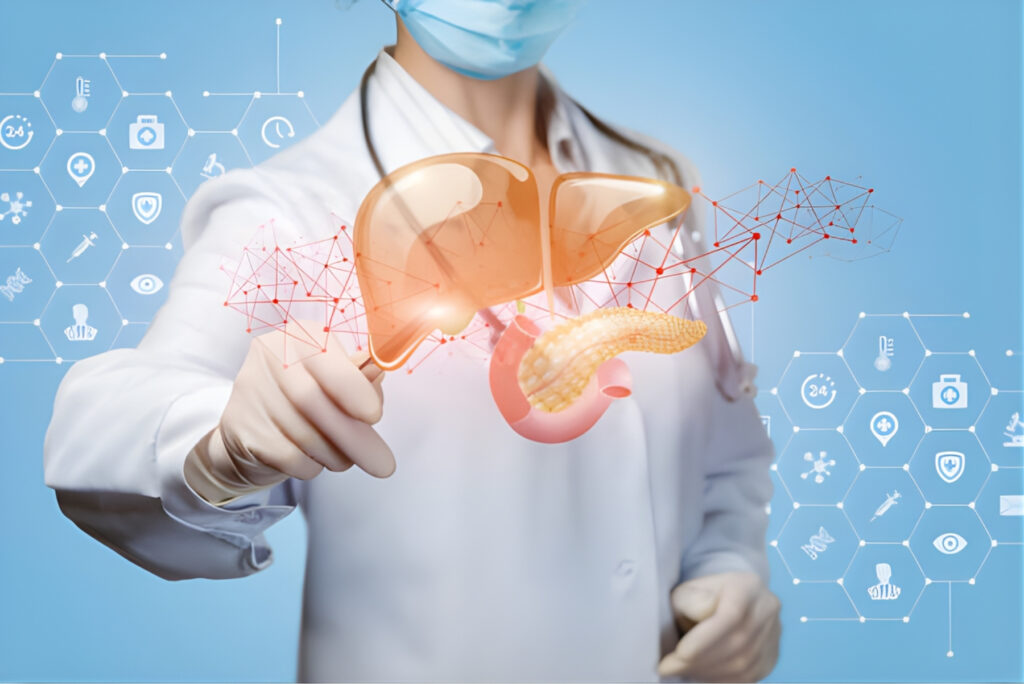
What Exactly Happens During a Whipple?
To understand the value of the robot, we first have to understand the complexity of the task. The pancreas sits in a very “crowded neighborhood,” tucked behind the stomach and surrounded by major blood vessels. In a standard Whipple procedure, the surgeon must remove:
- The head of the pancreas.
- The first part of the small intestine (duodenum).
- The gallbladder and part of the bile duct.
- Nearby lymph nodes.
Once the tumor is out, the “reconstruction” begins. The surgeon must carefully sew the remaining pancreas, bile duct, and stomach back to the small intestine so that the patient can still digest food.
The Robotic Edge: Why "High-Tech" Means "Better Care"
The da Vinci Robotic System used by Dr. Nitin Singhal isn’t a replacement for the surgeon; it is a sophisticated tool that enhances his natural capabilities. Here is how that precision translates to patient benefits:
1. 10x Magnified 3D Vision :
In traditional surgery, the surgeon looks into the abdomen with the naked eye. The robot provides a high-definition, 3D view that magnifies the surgical field up to ten times. This allow Dr. Singhal to see tiny blood vessels and nerves that are nearly invisible during open surgery, ensuring the tumor is removed with “clear margins” while sparing healthy tissue.
2. Wristed Dexterity in Tight Spaces :
The human hand has limit – it can’t rotate 360 degrees or fit into the tiny crevices around the pancreas without a large opening. The robotic instruments have “EndoWrists” that can move with more agility than a human hand. This is particularly vital for the reconstruction phase, where the surgeon must make waterproof stitches in ducts that are sometimes only 3 millimeters wide.
3. Eliminating the Tremor :
Even the most skilled surgeon has a microscopic natural tremor in their hands. The robotic system filters this out completely, providing a level of steadiness that is critical when working near the portal vein and the aorta.
Why Choose Robotic Over Traditional Surgery?
For many patients, the choice of a robotic approach under an expert like Dr. Nitin Singhal comes down to the recovery experience.
Who is ideal Patient for this surgery?
While the robotic Whipple offers incredible benefits, Dr. Nitin Singhal emphasizes that the best surgery is the one that is safest for the individual. During a consultation, Dr. Singhal evaluates the tumor’s size, its proximity to major blood vessels, and the patient’s overall health to determine if the robotic approach is the most effective path forward
A Message of Hope
Pancreatic cancer is a formidable opponent, but technology is closing the gap. By combining world-class training from Tata Memorial Hospital with the precision of robotic surgery, Dr. Nitin Singhal is providing patients in Gujarat with treatment options that were once only available in the world’s most advanced medical centers.
Are you or a family member seeking a second opinion on pancreatic surgery?
Precision is the key to better outcomes. Reach out to Dr. Nitin Singhal’s team to schedule an in-depth evaluation and see if the robotic approach is right for your journey to recovery.