
Precision in the Chest: The Role of Robotic Surgery in Thoracic Oncology
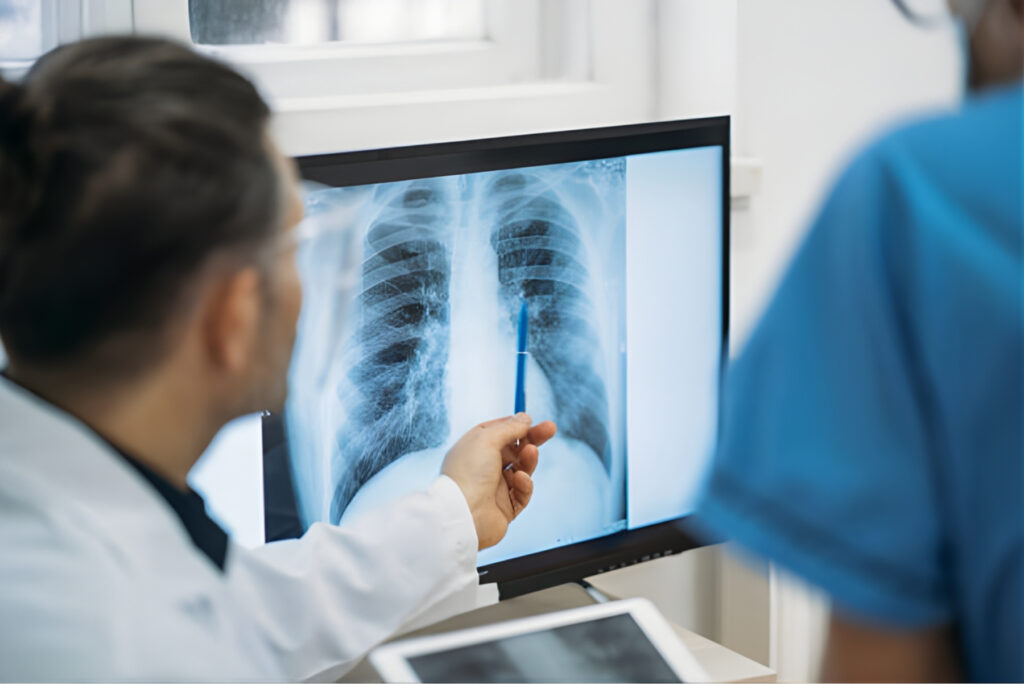
The human chest is often described by surgeons as a “crowded neighborhood.”
Packed tightly within the ribcage are some of the body’s most critical structures: the heart, the lungs, major blood vessels like the aorta, and the esophagus. They all live millimeters apart, moving constantly as we breathe and our hearts beat.
For a cancer surgeon, operating in this delicate space requires a level of steadiness and precision that borders on the artistic.
In the past, accessing these organs meant “open” surgery – large incisions and significant recovery time. But today, the field of Thoracic Oncology has been revolutionized by technology.
As a leading Robotic Cancer Surgeon in Ahmedabad, Dr. Nitin Singhal is at the forefront of this shift. By combining his extensive training from Tata Memorial Hospital with advanced robotic systems, he is changing how complex chest cancers are treated – prioritizing not just survival, but quality of life.
The Challenge: Why Chest Surgery is Difficult
Traditionally, if a patient needed lung cancer surgery (like a lobectomy) or esophageal surgery, surgeons performed a procedure called a Thoracotomy.
This involves a long incision on the side of the chest, often spanning 6 to 10 inches. To reach the lungs, the surgeon must spread the ribs apart. While this method is effective for removing tumors, the trauma to the muscles and ribs is significant. Recovery can be painful, and it often takes weeks for patients to return to their normal breathing patterns and daily routines.
The Solution: Enter the Robot
There is a common misconception that “robotic surgery” means a machine is performing the operation. This is not the case.
In Dr. Nitin Singhal’s operating room, the robot is not the surgeon it is a high-tech extension of his hands.
Using the da Vinci Surgical System, Dr. Singhal sits at a specialized console just a few feet away from the patient. He controls robotic arms that are positioned over the patient with absolute command. Every movement he makes with his hands is translated instantly and precisely to the instruments inside the patient. Here is why this technology changes the game for thoracic cancer:
1. Seeing the Unseen (3D Visualization) :
In traditional “keyhole” surgery (like standard VATS), surgeons look at a flat 2D monitor. It’s similar to watching a movie; depth perception is often lost.
With the robotic system, Dr. Singhal looks into a viewfinder that provides a magnified, high-definition, 3D view inside the chest. He can see tiny blood vessels, nerves, and tissue planes as if he were standing right inside the ribcage. This clarity is crucial when peeling a tumor off a vital structure like the windpipe or the aorta.
2. Wristed Instruments for Tight Spaces :
The human hand is amazing, but it has limits. It cannot rotate 360 degrees, and it is too large to fit into tiny spaces without a large incision.
The robotic instruments used by Dr. Singhal are miniaturized about the size of a wrist and feature “EndoWrists.” These instruments can bend and rotate far beyond the capabilities of the human hand. This allows Dr. Singhal to navigate around the heart or behind the esophagus to remove lymph nodes with incredible precision, without needing to force the ribs apart.
Why "Precision" Matters for the Patient
When Dr. Singhal talks about precision, he isn’t just discussing technical skill. He is talking about the patient’s life after surgery.
- Significantly Less Pain: Because the ribs are not spread, post-operative pain is drastically reduced. Patients are often surprised at their comfort levels just days after the procedure.
- Faster Recovery: Smaller incisions mean less trauma to the body. Patients undergoing robotic thoracic surgery typically leave the hospital sooner and return to their families and work much faster than those who undergo open surgery.
- Better Cancer Outcomes: The superior 3D view allows for a more thorough removal of lymph nodes (lymphadenectomy), which is essential for accurate cancer staging and reducing the risk of recurrence.
What Conditions Does Dr. Singhal Treat Robotically?
Dr. Nitin Singhal utilizes this advanced technology for a variety of complex thoracic conditions, including:
- Lung Cancer: Procedures like Lobectomies (removing a lobe of the lung) or Segmentectomies (removing smaller segments).
- Esophageal Cancer: Complex surgeries such as Esophagectomy, where part of the food pipe is removed and reconstructed.
- Mediastinal Tumors: Removal of masses like Thymomas (tumors of the thymus gland) which sit directly over the heart.
A Human Touch Behind High-Tech Care
While the technology is impressive, Dr. Singhal always emphasizes a core truth: A robot is only as good as the surgeon controlling it.
Cancer surgery is not just about cutting; it is about decision-making. Knowing when to operate, how to spare healthy tissue, and how to ensure the cancer is completely removed comes from years of experience, not a machine.
Dr. Nitin Singhal uses the robot as a tool to deliver that expert care with the gentlest touch possible.