
Best Robotic Cancer Surgery Hospital in Ahmedabad
Choose a hospital that brings together advanced robotic technology, NABH-accredited care and an experienced team. Dr. Nitin Singhal, with 18+ years of experience, treats patients here, and every plan is built around your diagnosis and overall health.
- 18+ YearsExperience with the lead surgeon
- NABH-AccreditedQuality and patient safety standards
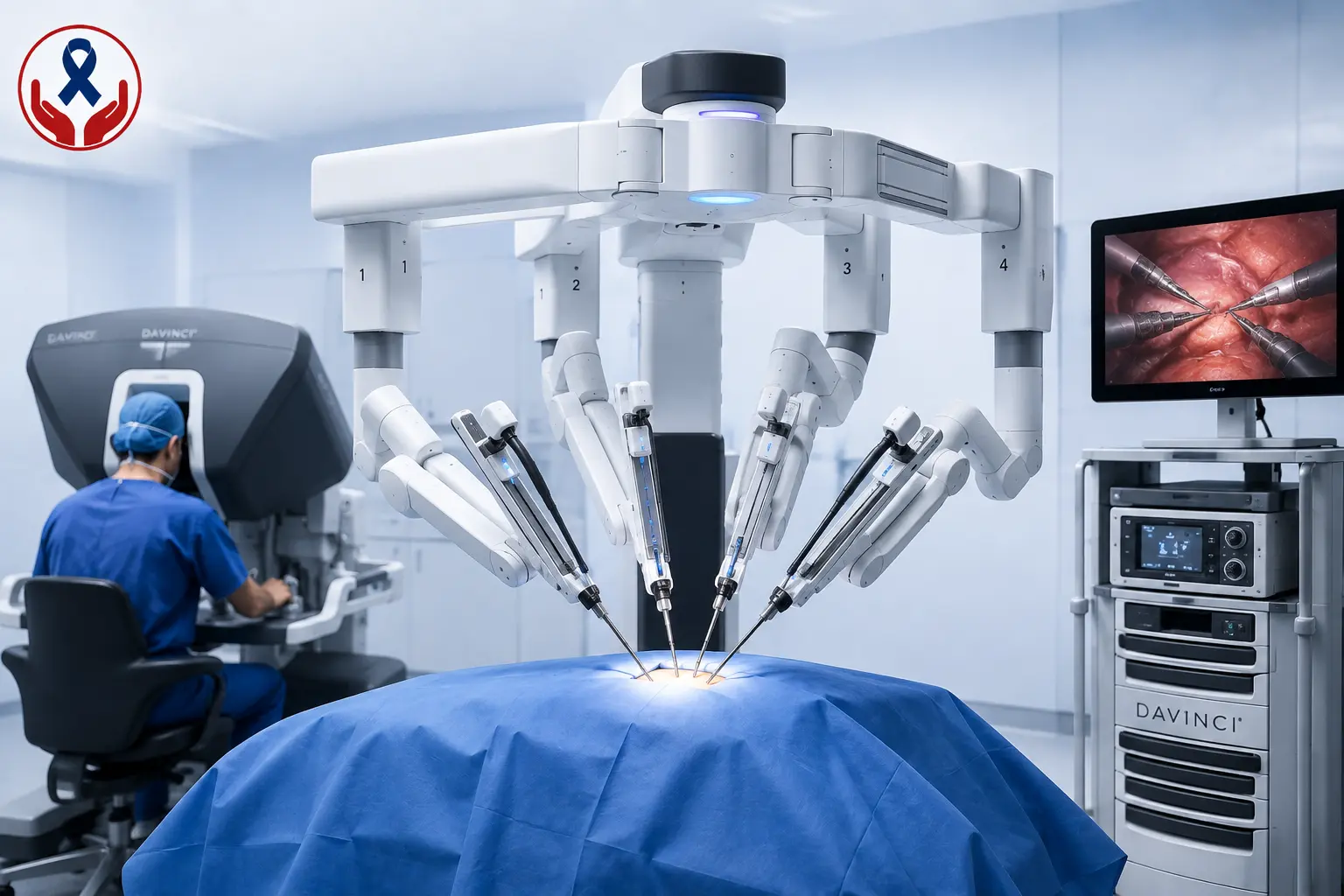
- da Vinci XRobotic system in regular use
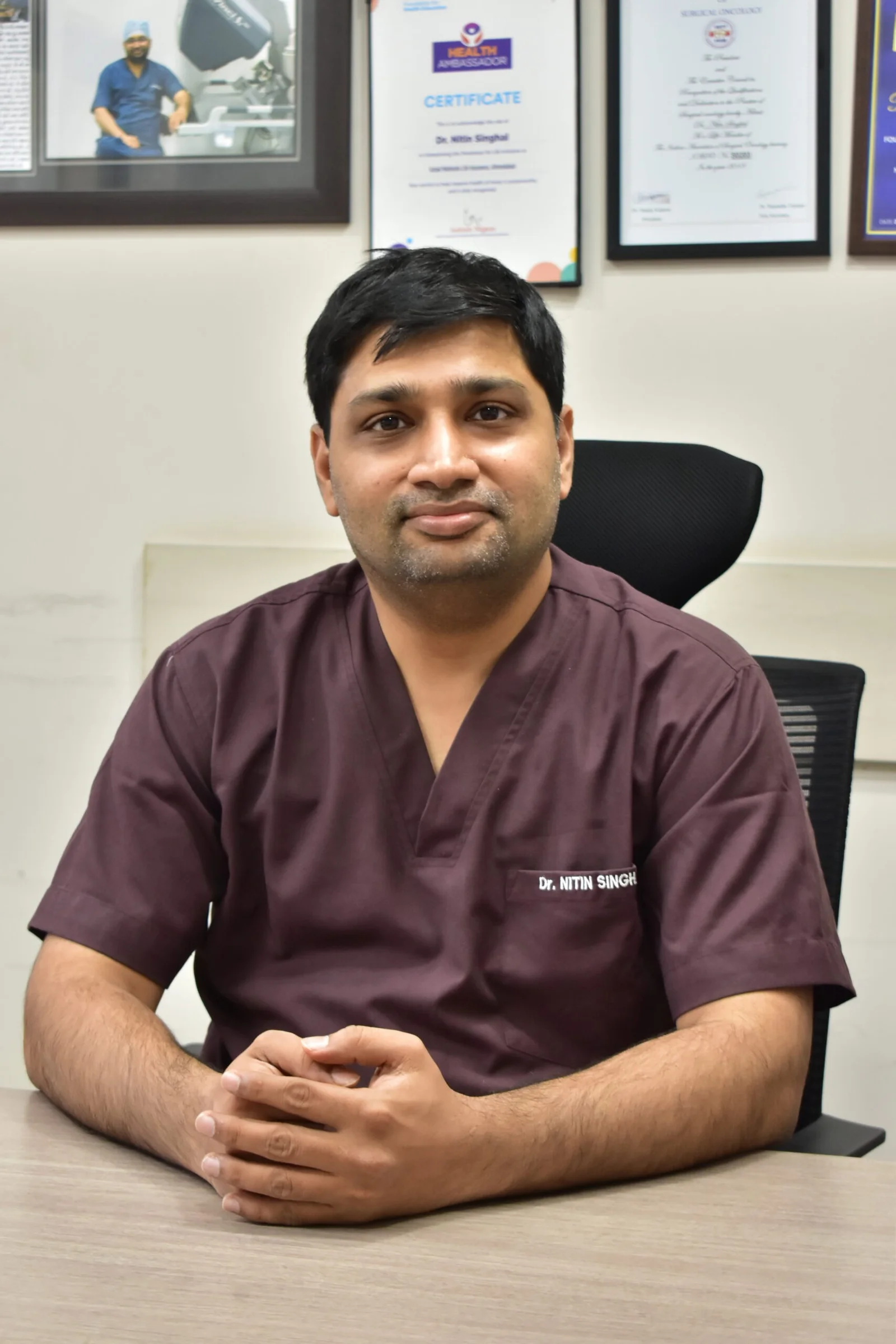
Dr. Nitin Singhal
Dr. Singhal trained at one of India's best-known cancer institutions in Mumbai and has more than 18 years of overall experience in cancer surgery. He starts every consultation by explaining your diagnosis in plain language and setting out each reasonable option before recommending one.
A Robotic Hospital in Ahmedabad Built Around Patient Safety
Our hospital brings robotic technology, accredited care and an experienced team together in one place. A robotic system gives the surgeon a magnified 3D view and fine, wrist-like instrument control, which helps most in the tight spaces of the pelvis and abdomen.
Whether a robotic, laparoscopic or open approach is right for you is decided only after a full evaluation. The aim is always the safest and most complete treatment for your condition.
What Is a Robotic Hospital?
A robotic hospital is one that has a robotic surgical system in regular use, along with the operating rooms, trained staff and support services needed to use it safely. The technology is only one part of the picture — it works best with a skilled team around it.
The robot never makes decisions or moves by itself. The surgeon sits at a console beside the operating table, every movement follows the surgeon's hands, and the surgical team stays at the patient's side throughout.
What Makes the Best Hospital in Ahmedabad?
No single ranking fits every patient. These are the things worth checking before you choose a hospital — ask each one the same questions, so you can compare them fairly.
Recognized Accreditation
Look for quality and patient safety standards such as NABH.
Current Robotic Technology
A modern robotic system that the team uses regularly.
Experienced Surgeons
Ask about years of experience and how many similar cases they handle.
Team-Based Planning
Surgeons, oncologists, anesthesiologists and other specialists planning together.
Modern Imaging & Operating Rooms
Good imaging supports planning before and after treatment.
Clear Communication
Plain-language explanations of your options, risks and a written cost estimate.
Why Choose Our Robotic Hospital in Ahmedabad?
Dr. Singhal treats patients at both campuses of our hospital, Gurukul and Sindhu Bhavan. A good outcome depends on the surgeon, the technology and the team around the operation.
da Vinci X Robotic System
Used here for robotic-assisted procedures.
NABH Accreditation
The hospital is accredited for quality and patient safety standards.
Modern Operating Rooms & Imaging
Advanced imaging supports planning before and after surgery.
Team-Based Planning
Care is planned alongside medical oncology and other specialists.
Outstation & International Support
Ask the team about travel and stay when you enquire.
Cancer Services at Our Robotic Hospital
Dr. Singhal treats a wide range of cancers. Whether surgery is advised, and whether it is robotic, laparoscopic or open, is decided only after a full evaluation of your reports.
Robotic Cancer Surgery
Minimally invasive procedures on the da Vinci X system, planned case by case.
HIPEC Surgery
Heated chemotherapy given during surgery for selected cancers that have spread within the abdomen.
Gastrointestinal Cancers
Stomach, colorectal, esophageal and pancreatic cancer surgery, with sphincter preservation where possible.
Gynecological Cancers
Ovarian, cervical and endometrial cancers, including robotic and HIPEC approaches.
Urological Cancers
Kidney, bladder and prostate cancers, using minimally invasive robotic surgery.
Head & Neck Cancers
Mouth, throat and larynx cancers, with attention to speech and swallowing.
Thoracic Cancers
Surgery for selected cancers of the chest, planned with the wider care team.
Pediatric Oncology
Surgical removal of solid tumors in children, with support for the whole family.
The full list of treatments is on our main website.
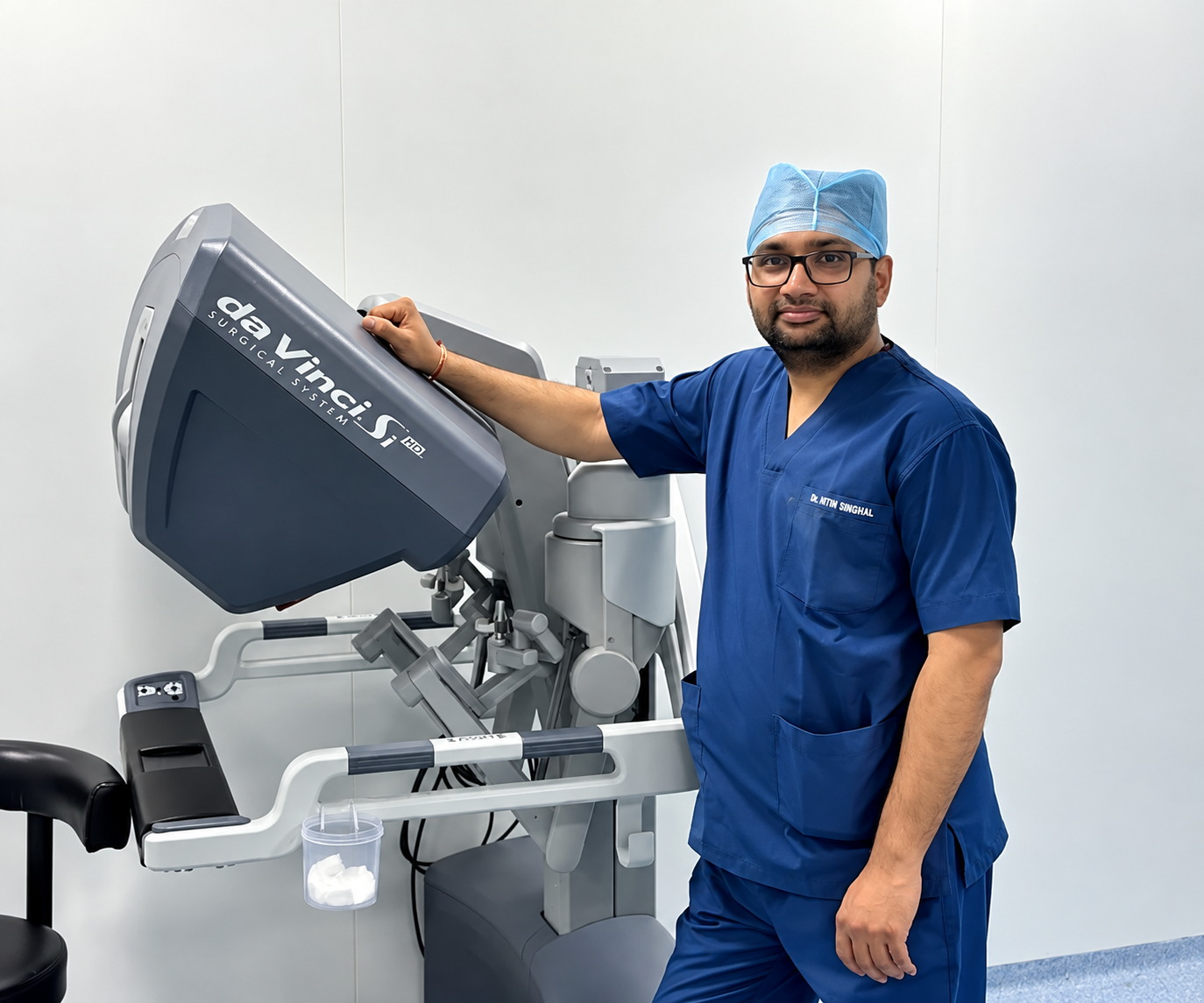
Dr. Nitin Singhal
Lead Surgeon · 18+ years of experience
Dr. Singhal trained at one of India's best-known cancer institutions in Mumbai and has more than 18 years of overall experience in cancer surgery. His practice covers a wide range of conditions, and the full list of treatments is on our home page.
He starts every consultation by explaining your diagnosis in plain language and setting out each reasonable option before recommending one.
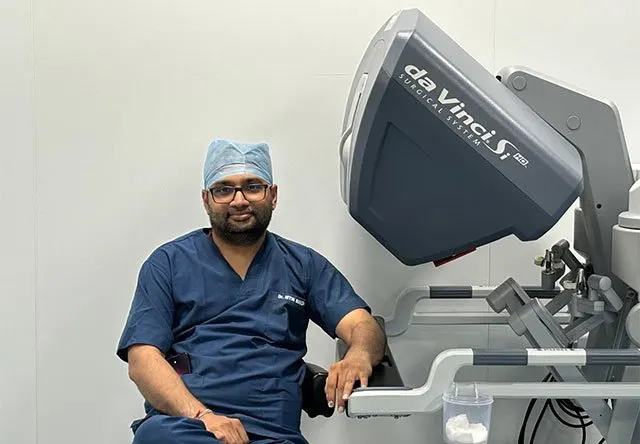
How Robotic Technology Works at Our Hospital
The surgeon makes several small incisions, usually 8 mm to 12 mm long. Through them go a 3D camera and thin robotic instruments. Gas is used to gently lift the abdominal wall and create working space.
From the console, the surgeon sees a magnified, high-definition 3D view. The system turns hand movements into smaller, steadier movements of the instruments and filters out natural hand tremor.
If the surgeon finds during the operation that it is not safe to continue robotically, the operation can be converted to an open one. This is done only for patient safety.
Only the surgeon controls the robot. It cannot act on its own.
Robotic Hospital vs Hospital Without a Robotic System
Both types of hospital can deliver excellent care. The differences are mainly in the technology available to the surgeon and the range of approaches offered.
| Feature | Robotic Hospital | Hospital Without a Robotic System |
|---|---|---|
| Technology | Robotic system available for suitable cases | Open and laparoscopic methods only |
| Surgeon's View | Magnified 3D high-definition view | Direct view in open surgery, 2D screen in laparoscopy |
| Instrument Control | Wristed instruments with tremor filtering | Hand-held or rigid instruments |
| Choice of Approach | Robotic, laparoscopic or open, chosen for your case | Limited to the approaches available |
| Cost | Usually higher, so ask for a written estimate | Usually lower |
These are general patterns, not guarantees. Laparoscopic and open approaches remain excellent choices for many patients, and your surgeon will explain which one is safest for you.
Your Journey at Our Robotic Hospital
Here is what to expect from your first visit to discharge. Your surgeon will explain the details for your own operation.
Consultation and tests — Dr. Singhal reviews your reports and examines you. Scans, blood tests and a fitness check are arranged if needed.
Planning — the team confirms the stage and decides on the best approach, and whether chemotherapy or radiotherapy is needed before surgery.
Admission and anesthesia — you are admitted a day before or on the day of the operation, which is done under general anesthesia.
Procedure day — small incisions are made and the surgeon works from the console. The removed tissue is sent for pathology.
Monitoring and recovery — you are looked after by the hospital team, and you are encouraged to walk soon after surgery.
Pathology review — the final pathology report guides whether any further treatment is needed.
Recovery and Care at Our Hospital
Recovery depends on the operation, your health before surgery, and whether you need other treatment. These are typical patterns, and your surgeon will give you a plan for your own case.
In Hospital
You are encouraged to sit up and walk soon after surgery. Pain is controlled with medicines, and the stay is often shorter than after open surgery.
The First Few Weeks
You rest at home, take short walks, and avoid heavy lifting. Small incisions usually heal without much trouble.
Eating & Daily Routine
Diet is advanced gradually, and the team will guide you on nutrition. Many patients return to light routine activities within a few weeks.
Follow-Up
You return for wound review and to discuss the final pathology report. Regular check-ups continue after that.
Further Treatment
Chemotherapy, radiotherapy or other treatment may be advised depending on the pathology and stage.
Cost at a Robotic Hospital in Ahmedabad
The cost is different for every patient, so this page does not quote a fixed price. Ask the hospital team for a written estimate after your consultation.
Check with your insurer or TPA whether robotic procedures are covered under your policy, and what pre-authorization is required.
What affects the cost
Type and extent of the operation
Room category and length of hospital stay
Robotic instruments and consumables used
Tests, medicines and any ICU care
Additional procedures
A Multidisciplinary Team Behind Every Patient
Surgery is one part of care. Many patients also need chemotherapy, radiotherapy, or both, and the order of treatment matters. Where appropriate, Dr. Singhal plans your care together with other specialists so the whole treatment fits together.
- Lead Surgeon
- Medical Oncologist
- Radiation Oncologist
- Radiologist
- Pathologist
- Anesthesiologist
- Nutritionist
- Physiotherapist
If you are travelling to Ahmedabad for treatment, ask the team about travel and stay when you enquire. You can send your reports on WhatsApp before you arrive.
Patient Testimonials
Patients and their families often say that clear explanations and steady support made the hardest part of treatment easier.
Frequently Asked Questions
Which is the best robotic cancer surgery hospital in Ahmedabad?
The best hospital is the one that suits your diagnosis, so it is worth comparing accreditation, technology, surgeon experience and team support. Our hospital is NABH-accredited and uses the da Vinci X robotic system. Dr. Nitin Singhal, who has 18+ years of experience, treats patients here at the Gurukul and Sindhu Bhavan campuses in Ahmedabad. Please confirm the campus and date when you book.
What is a robotic hospital?
A robotic hospital has a robotic surgical system in regular use, together with the operating rooms, trained team and support services needed to use it safely. The surgeon controls the system at every step, and it cannot act on its own.
How do I choose the best hospital in Ahmedabad for robotic procedures?
Check for accreditation such as NABH, ask which robotic system is used, and ask about the surgeon's experience with your type of case. Find out whether specialists plan your care together, and ask for a written cost estimate. Taking a second opinion is always reasonable.
Is a robotic approach suitable for every patient?
No. Suitability depends on the type and stage of the condition, its location, your anatomy and your overall health. A full evaluation, including scans and pathology reports, is needed before a robotic approach is recommended.
Are robotic procedures safe?
Robotic-assisted procedures are widely used and are considered safe in suitable patients when performed by a trained team. Like any major operation they carry risks such as bleeding, infection and anesthesia-related problems. Your surgeon will explain the risks for your specific operation before you decide.
How long is the hospital stay and recovery?
It depends on the operation and your general health. Hospital stay after a robotic-assisted procedure is often shorter than after open surgery, and many patients return to light routine activity within a few weeks. Your surgeon will give you an expected range for your own case.
How much does treatment cost at a robotic hospital in Ahmedabad?
The cost depends on the type of operation, room category, length of stay, consumables and any additional procedures. Ask the hospital for a written estimate after your consultation, and check with your insurer whether robotic procedures are covered.
Does the hospital support outstation and international patients?
Yes. The team can guide you on travel and stay when you enquire. You can also send your reports on WhatsApp before you arrive.
What should I bring to my first consultation?
Bring all scans (CT, MRI or PET), biopsy or pathology reports, blood test results, a list of current medicines and any records of earlier treatment.
How do I book an appointment with Dr. Nitin Singhal?
Call or WhatsApp +91 75061 14222, or email dr.nitinsinghal@gmail.com. The team will confirm a time and the hospital campus.
Ready to Book a Visit?
If you or a family member needs advanced treatment, an early conversation about your options helps you decide with confidence.
Book a Visit to the Best Robotic Cancer Surgery Hospital in Ahmedabad
If you or a family member needs advanced treatment, an early conversation about your options helps you decide with confidence. Send your reports on WhatsApp, or bring them to your visit.